As an Amazon Associate, we earn from qualifying purchases. Some links on this site are affiliate links at no extra cost to you. Our recommendations are based on thorough research and editorial judgment.

Extending the Season With Row Covers and Cold Frames

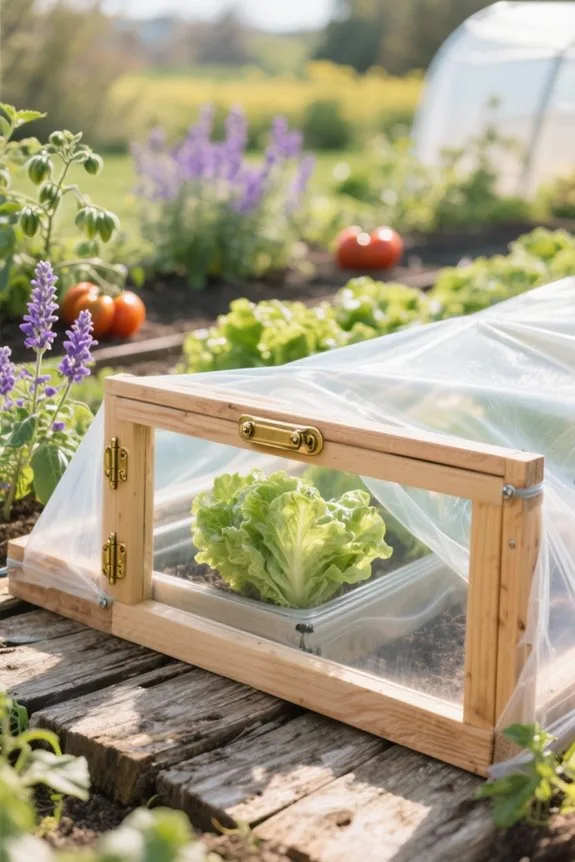
Row covers and cold frames are effective for extending the growing season. Row covers can increase daytime temperatures by up to 15°F and protect against light frosts. Cold frames, built from untreated wood and recycled windows, create greenhouse-like conditions and enhance warmth retention. Both methods allow for earlier planting and harvesting of cold-hardy crops, such as kale and carrots. Utilizing these tools can remarkably improve yields, and further strategies for maximizing their effectiveness are available.
Key Takeaways
- Row covers can increase temperatures by up to 15°F, extending the growing season and allowing for earlier planting in spring.
- Cold frames create greenhouse-like conditions, enhancing warmth retention and protecting plants from cold nights.
- Utilize black plastic mulch to warm soil temperatures and combine with row covers for accelerated growth.
- Regularly monitor humidity and moisture levels to ensure healthy plants and optimal growth conditions within covers.
- Select cold-hardy crops, such as kale and carrots, to maximize yields during cooler weather and late fall.
Benefits of Row Covers for Season Extension
Although gardening typically ceases in cooler months, the use of row covers can greatly extend the growing season for various plants. These covers can increase daytime temperatures by up to 15°F, creating favorable conditions for growth. Lightweight floating row covers protect against insects and light frosts, while heavier options offer frost protection down to 28°F. By using row covers, gardeners can plant earlier in spring and continue harvesting into fall, which mitigates the impact of unexpected weather events. Additionally, hooped row covers allow for airflow and easy access, providing essential temperature control without obstructing plant growth. Overall, row covers serve as effective tools to enhance plant health, improve seed germination, and guarantee a prolonged gardening season. For those looking to optimize water usage in their gardens, soaker hose systems can save up to 70% of water compared to traditional watering methods, making them an excellent complement to row covers for efficient gardening.
Building and Using Cold Frames
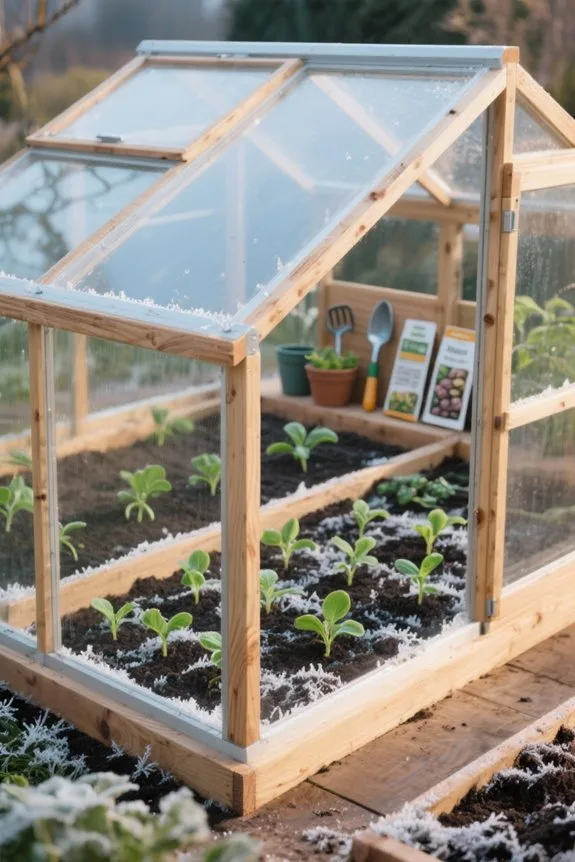
Building a cold frame can greatly enhance winter gardening efforts, providing plants with essential protection and extending the growing season. Typically crafted from rot-resistant untreated wood, a cold frame can utilize old windows for an eco-friendly approach. When positioning the cold frame, select a south-facing area to maximize sunlight exposure, critical for raising soil temperatures. This can greatly promote healthy growth, even in colder months. Ventilation is essential; incorporating a mechanism to open the lid on sunny days prevents overheating and maintains an ideal environment for plant health. Regular maintenance is necessary, as monitoring humidity levels and soil moisture helps avoid issues like waterlogging, ensuring successful winter gardening and continued crop development throughout the season. Consider implementing solar automatic drip irrigation systems to further optimize the watering process, as these systems provide customizable and eco-friendly solutions for maintaining soil moisture levels effectively.
Selecting the Right Crops for Cooler Weather
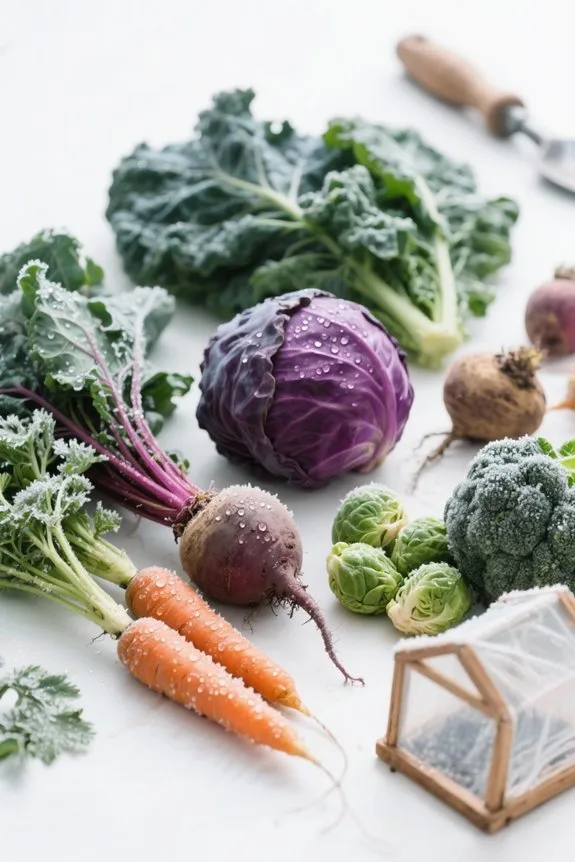
Selecting the right crops for cooler weather is vital for maximizing harvests during the fall and winter months. Cold-hardy greens like kale, spinach, arugula, and tatsoi thrive in lower temperatures, tolerating frost and even improving in flavor after it. Carrots, which withstand temperatures down to 20°F, require mulch for winter protection. Timing is important; planting spinach directly in early September allows it to establish before cold temperatures settle in. Additionally, selecting cold-tolerant varieties can greatly boost yields, letting crops produce well into late fall and early spring. Understanding local growing areas will help in choosing suitable crops for season extension, ensuring a bountiful harvest even in challenging conditions. Proper selection maximizes the potential of your cooler weather garden. For those looking to preserve their seeds for future planting, using airtight containers in a cool, dry place is essential to maintain seed viability.
Techniques for Warming Up the Soil
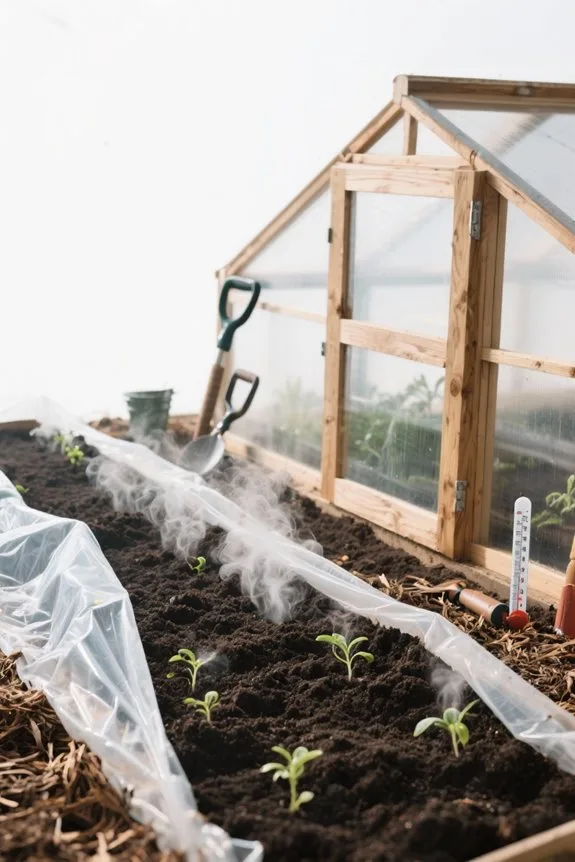
Warming up the soil is an essential step in preparing a garden for successful planting during cooler months, especially after selecting appropriate crops. Removing winter mulch in early spring can enhance sun exposure, consequently promoting faster soil warming. Utilizing raised beds is another effective technique, as they improve drainage and maximize sunlight access. Covering cold soil with black plastic can raise temperatures by several degrees, which supports seed germination and root development. For best results, combining black plastic mulch with floating row covers can further enhance growth rates of heat-loving plants. Additionally, applying garden fabric in the fall helps retain soil heat, extending the growing season and keeping warm-season crops viable for longer periods. Selecting cold-tolerant varieties of seeds, such as certain organic broccoli seeds, can also contribute to successful growth in cooler conditions by ensuring that the plants can withstand lower temperatures.
Protecting Plants From Frost Damage
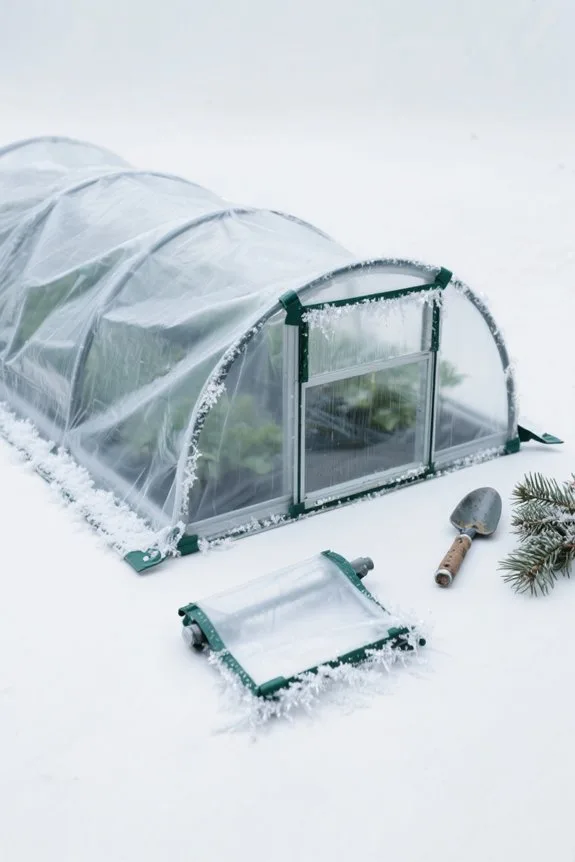
Protecting plants from frost damage is essential for maintaining a healthy garden during the cooler months. Row covers and cold frames offer effective solutions by creating a microclimate that traps heat and insulates crops against low temperatures. Floating row covers can raise surrounding temperatures by up to 15°F, vital for preventing frostbite on sensitive plants. Heavyweight row covers provide protection down to 28°F, while cold frames maintain higher internal temperatures, even on cold nights. Regular monitoring of frost forecasts is important; one night at 32°F can jeopardize plant viability. Properly constructed cold frames, using untreated wood and clear tops, greatly extend the growing season by safeguarding crops against early frosts, allowing for continued cultivation of tender varieties. Solar-powered garden step lights, which are rated for all weather conditions, can also enhance visibility and safety in your garden during the colder months.
Enhancing Plant Growth With Shade and Wind Protection
Creating an ideal environment for plant growth involves careful consideration of shade and wind protection strategies. Implementing shade netting over young plants can greatly reduce heat stress, enhancing growth and diminishing bitterness in greens. Additionally, utilizing windbreaks, such as fences or windbreak netting, protects plants from strong winds that may hinder root development and overall growth. Plants covered with garden fabric often demonstrate twice the growth compared to those left unprotected, thanks to reduced wind exposure and increased warmth. For heat-loving crops, black plastic mulch can elevate soil temperatures by several degrees, promoting earlier growth and harvests. Positioning shade structures and windbreaks according to prevailing wind directions is essential for maximizing protection and optimizing growth conditions for sensitive plants. Utilizing a 60FT Drip Irrigation System with a water timer can further enhance plant growth by providing precise watering schedules, ensuring plants receive adequate moisture without waste.
Maintaining Your Season Extension Tools
To maintain the effectiveness of season extension tools, regular inspections and appropriate adjustments are necessary. Growers should regularly check the internal temperature of cold frames, confirming it does not exceed 60°F to protect young plants from overheating. Ventilation is essential; employing temperature-sensitive hinges or manually opening the lid on warm days allows for adequate airflow and minimizes moisture buildup. Inspect row covers and cold frames for any tears or wear, as damaged areas can no longer protect plants from frost or pests. Make certain the soil inside cold frames remains moist but not soggy, avoiding over-watering which may cause root rot. Periodically clean plastic or glass surfaces to enhance sunlight penetration, promoting peak growth during colder months. For indoor herb gardening, maintaining high germination rates is crucial for successful growth, ensuring that herbs thrive even during less optimal seasons.
Frequently Asked Questions
What Is the 70/30 Rule in Gardening?
The 70/30 rule in gardening states that 70% of gardening success hinges on environmental factors, while 30% results from gardener intervention, guiding crop planning for ideal plant health and yield optimization through seasonal adjustments.
Do Row Covers Protect From Frost?
Row covers effectively serve as frost protection methods, enhancing crop health effects through temperature regulation. They address condensation concerns while also employing seasonal extension techniques and pest deterrence strategies, thereby safeguarding plants during colder conditions.
What Is the 3 Year Rule in Gardening?
The 3 Year Rule in gardening advocates for crop rotation, enhancing soil health and pest management. By diversifying plant spacing and utilizing companion planting, gardeners optimize seasonal vegetables and prevent pest buildup, ultimately enriching ecological balance.
What Are the Disadvantages of Row Covers?
The disadvantages of row covers include light limitation and moisture retention, which can lead to temperature fluctuation. Additionally, handling difficulties may arise, and certain materials may compromise durability while attracting pests, impacting plant health negatively.