As an Amazon Associate, we earn from qualifying purchases. Some links on this site are affiliate links at no extra cost to you. Our recommendations are based on thorough research and editorial judgment.

How to Program a Sprinkler Timer for Early Morning Watering

To program a sprinkler timer for early morning watering, first verify the current time and date. Select Program A, then set the start time between 4 AM and 6 AM. This timing reduces evaporation and promotes soil absorption. Input run times of 5-15 minutes for each zone, based on your sprinkler type. Schedule watering days according to local restrictions, typically three times weekly in spring and fall. Adjust settings based on seasonal conditions to maximize efficiency. Further adjustments can optimize your system.
Key Takeaways
- Verify the current time and date on your sprinkler timer for accurate scheduling.
- Select Program A to focus on early morning watering.
- Set the start time between 4 AM and 6 AM to minimize evaporation.
- Establish run times of 5-15 minutes depending on your sprinkler type.
- Schedule watering days according to local restrictions, ideally three days a week.
Understanding Sprinkler Timer Terminology
Understanding the terminology associated with sprinkler timers is essential for effective irrigation management. A valve is a vital component that regulates water flow through the irrigation system, activated by the sprinkler timer. Each station corresponds to a specific valve, allowing distinct zones—like a flower bed or lawn—to be irrigated simultaneously. A zone encapsulates a designated area where watering takes place, optimizing water distribution. Programs within the sprinkler timer store settings for when and how long each station operates, ensuring organized irrigation. The start time is the specified moment programmed into the timer, determining when watering cycles commence for all scheduled programs. Mastering these terms helps users maximize the functionality of their irrigation system, promoting healthier landscapes. Integrating smart home integration with models like the Rain Bird ARC6 allows users to control their irrigation system using voice commands through devices like Alexa and Google Assistant.
Setting Up Your Sprinkler Timer
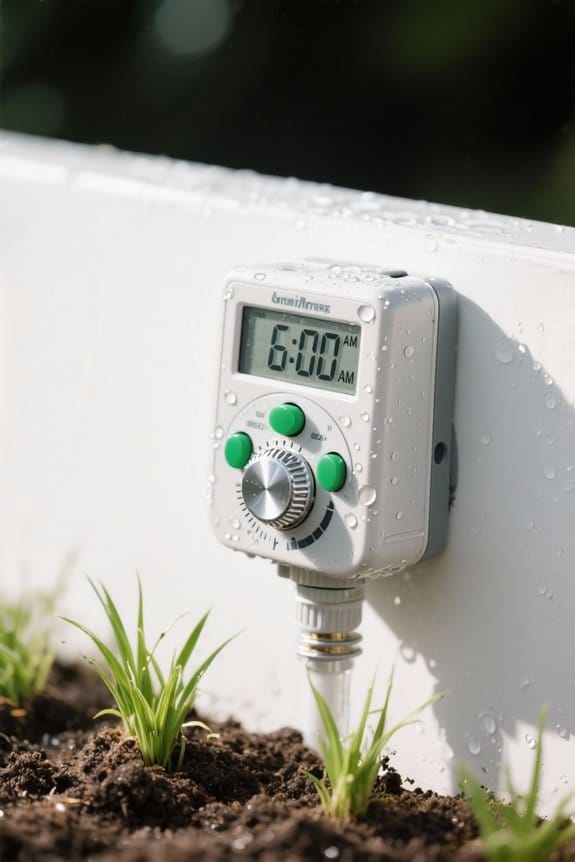
To set up a sprinkler timer effectively, one must first verify that the current time and date are accurately configured, as this foundation is essential for proper scheduling. Next, select program A for early morning watering, which is usually the most suitable for plant needs. Set the start time between 4 AM and 6 AM, guaranteeing minimal evaporation while optimizing water absorption. Establish run times for each zone, typically allocating 5-15 minutes depending on the type of sprinkler head being used. Finally, confirm the watering days align with the planned schedule, making sure to take into account local watering restrictions that may apply. This method guarantees efficient usage of resources while maintaining a healthy lawn and garden. For gardeners looking to enhance their spaces, integrating wildflower seed mixes can attract essential pollinators and promote biodiversity.
Recommended Products
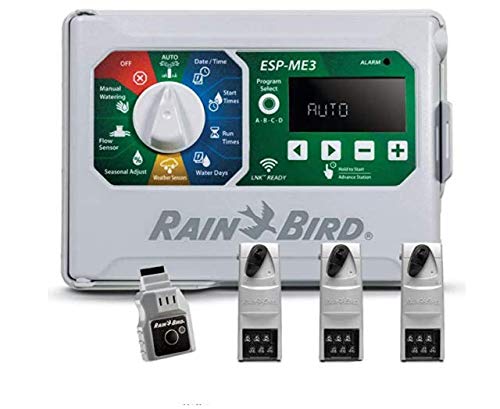
With 4 to 22 stations, the ESP-ME3 provides the station count options customers need. Install the same controller on residential and light commercial sites. Add station modules when expanding irrigation without removing or even powering down the controller.
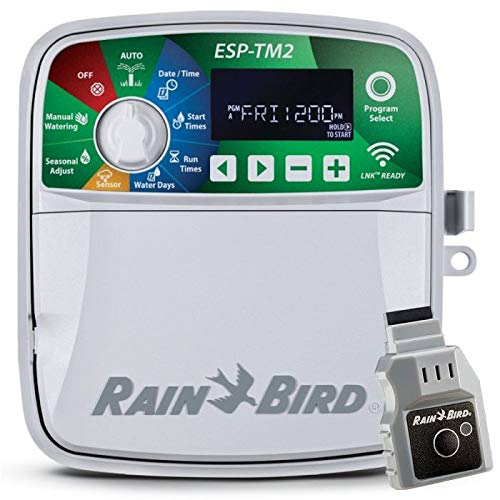
Controls up to 12 sprinkler zones, Quick to Install, Suitable for indoor or outdoor installations, Factory installed 6’ outdoor rated power cord for your convenience

DITCH THE DIAL – Upgrade to smart irrigation with the free Rachio app for precise, easy control.
Selecting the Right Program
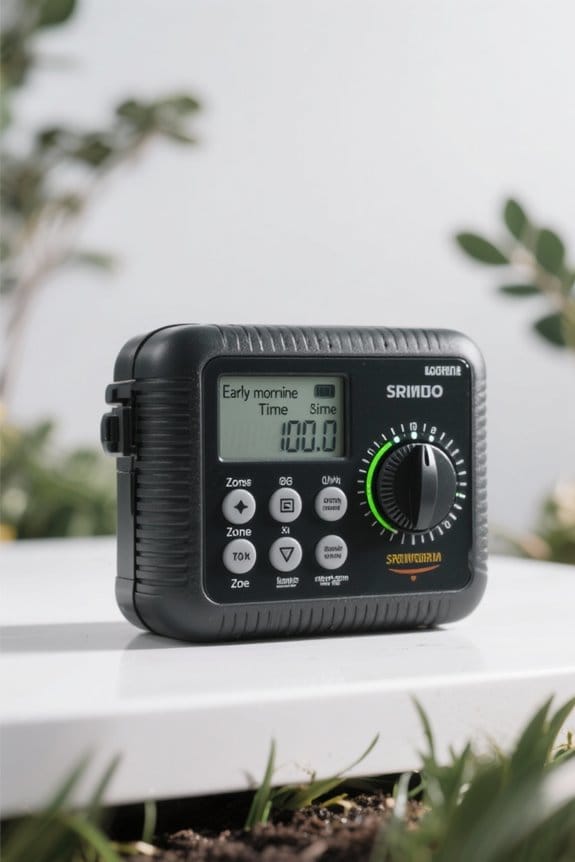
To choose the most suitable program for your sprinkler timer, first, select Program A, B, or C based on your specific irrigation needs. For effective early morning watering, set the start time between 4 AM and 6 AM. This reduces evaporation and wind interference. Next, adjust the run time for each zone to match the type of sprinkler heads in use; for example, pop-up heads typically require 5-7 minutes, while rotor heads need 12-15 minutes of watering. Additionally, modify the watering days according to local regulations and seasonal needs, usually three days per week in Spring and Fall. If using multiple programs, ascertain overlapping zones are set to zero minutes in secondary programs to prevent unnecessary watering. Consider timers with rain delay mechanisms that allow you to pause scheduled watering for up to 72 hours during rainy conditions, ensuring water conservation and efficient usage.
Recommended Products

Controls 8 sprinkler zones, Quick to Install, Suitable for indoor or outdoor installations, Factory installed 6’ outdoor rated power cord for your convenience
Controls 6 sprinkler zones, Quick to Install, Suitable for indoor or outdoor installations, Factory installed 6’ outdoor rated power cord for your convenience

WI-FI CAPABLE SMART CONTROL WITH HYDRAWISE: Upgrade to Wi-Fi with the plug-in WAND module (sold separately), connect to Hydrawise software for remote irrigation management, monitor and adjust watering schedules anytime from your smartphone or desktop.
Establishing Start Times for Early Morning Watering
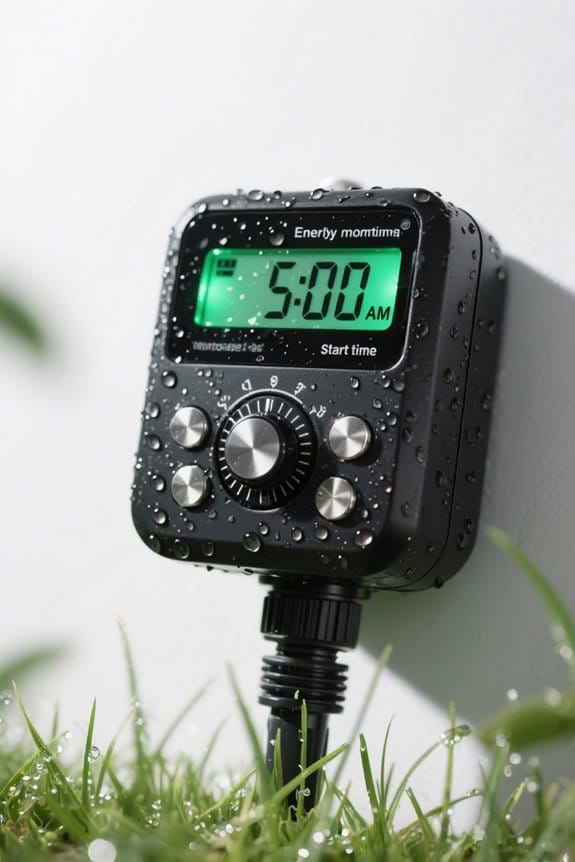
Selecting an ideal start time for early morning watering greatly influences the efficiency of a sprinkler system. A start time between 4:00 AM and 6:00 AM minimizes evaporation, allowing for better moisture absorption. When programming your sprinkler system, choose an appropriate program—such as Program A—to guarantee all designated zones are targeted during the set start time. Confirm the AM/PM settings to avoid watering at the wrong time. Adjust the run time for each zone, allocating about 5-7 minutes for pop-up heads and 12-15 minutes for rotor heads. Regularly monitor effectiveness to optimize water usage and promote lawn health. Scheduling early morning watering can considerably improve the overall condition of the lawn while guaranteeing efficient resource management. Additionally, using smart timers like Orbit B-hyve XD can optimize irrigation by utilizing local weather data, enhancing water conservation and efficiency.
Recommended Products

For battery-powered operation of up to 4 automatic sprinkler or drip valves

Up to 6 watering cycles can be programmed per day and per valve.

Manual activation of each channel
Inputting Run Times for Each Zone
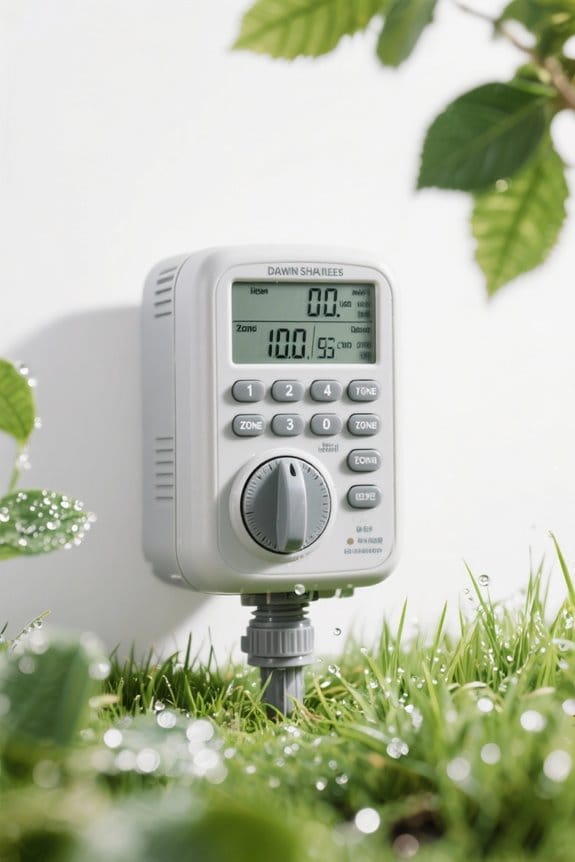
When programming a sprinkler timer, inputting the correct run times for each zone is essential for guaranteeing effective watering. The duration should reflect the type of sprinkler head; for example, pop-up heads require 5-7 minutes, rotor heads need 12-15 minutes, and drip systems should run for 15-20 minutes. Each zone must have run times assigned that support deep watering without causing runoff. Zones should be tailored to specific plant needs and local soil conditions to optimize moisture levels. Additionally, zero out run times for any zones not included in the watering program. After all run times have been set, review and confirm each entry on the timer to guarantee accurate and efficient morning watering. To ensure durability and reliability, it is advisable to secure all connections to prevent leaks and water loss, as highlighted in the knowledge about swing arm sprinklers.
Scheduling Watering Days
Setting up an effective watering schedule is as important as determining run times for each zone. When scheduling watering days, compliance with local watering restrictions is essential to avoid fines. It is recommended to water early in the morning, ideally between 4 AM and 6 AM, to reduce evaporation and wind interference. In spring and fall, plan for three watering days a week, while mid-summer may require four days based on water temperature and plant needs. Utilize the “schedule” function on your sprinkler timer to create a customized watering routine by selecting individual days or intervals. Additionally, monitor soil moisture regularly and adjust watering days accordingly to prevent overwatering, ensuring ideal growth and health for your plants. Consider implementing drip irrigation systems to enhance water efficiency and reduce runoff, as they deliver water directly to the root zones.
Testing and Saving Your Settings
After completing the programming of a sprinkler timer, it is crucial to verify that all settings function correctly. Begin by manually running each zone to test each spray head, confirming they adequately sprinkle water as intended. It is important to double-check that the start times are programmed for early morning, ideally between 4 AM and 6 AM, to reduce evaporation losses. Customizable watering schedules enhance care for different plant types, ensuring each zone receives the appropriate amount of water at the right time. After confirming effective settings, set the timer dial to “AUTO,” allowing the system to operate in automatic mode at the designated times. If any adjustments are made during testing, revisit all settings, including start time, run time, and watering days. Regularly monitor the system to guarantee all zones continue to function effectively throughout the changing seasons.
Recommended Products

CUSTOMIZABLE WATER CONSERVATION - Manage your irrigation with precision using the Intermatic R8816P101C Timer, offering 44 ON/OFF operations every 24 hours for efficient water usage

3 independent programs per channel

EFFICIENT SPRINKLERS FOR YARD - Add wireless sprinklers easily with our battery-powered controller and 1" FPT jar-top valve.
Utilizing Manual Overrides and Seasonal Adjustments
Utilizing manual overrides and seasonal adjustments can enhance the efficiency of a sprinkler timer system. Manual overrides allow users to temporarily operate specific valves outside the programmed schedule, enabling on-the-spot watering or system inspections. Seasonal adjustments, often accessed through a controller’s adjust buttons, modify watering percentages based on current temperature and moisture levels. For effective early morning watering, set start times for between 4 AM and 6 AM to reduce evaporation risks. Employing manual overrides alongside seasonal adjustments assists in conserving water during cooler months or rainy conditions by reducing the watering duration. Regular assessment of manual overrides and seasonal adjustments according to weather patterns is essential for maintaining peak efficiency in the irrigation system while promoting water conservation. Consider using solar-powered lights to enhance your outdoor space while maintaining energy efficiency.
Best Practices for Effective Watering
Effective watering practices are integral to maintaining a lush and healthy landscape. Water early, ideally between 4 AM and 8 AM, to minimize evaporation and enhance soil absorption. This timing supports deep watering, promoting deeper root growth, which solidifies plants’ resilience to drought and stress. Utilizing the scheduling feature on your sprinkler timer allows for consistent watering, freeing time for other tasks. Additionally, adjusting watering schedules based on local weather reports can considerably conserve water and prevent unnecessary irrigation during rainfall. Early watering also reduces the potential for fungal diseases that may proliferate in humid, late-day conditions, ensuring improved moisture retention in the soil and healthier plants overall. Many smart watering controllers offer weather intelligence features that automatically adjust watering schedules based on real-time data, enhancing efficient irrigation practices.
Frequently Asked Questions
What Is the Best Time to Run Sprinklers in the Morning?
The best time to run sprinklers in the morning is between 4 AM and 10 AM, ensuring ideal watering through improved soil moisture retention, reduced evaporation rates, and enhanced lawn health, while promoting plant growth and water conservation.
How Early Can I Turn on My Sprinkler System?
At 3:00 AM, a homeowner activates their sprinkler system, maximizing water efficiency and ensuring lawn health. Automated timers refine irrigation practices, enhancing soil moisture retention while considering weather conditions enhances schedule flexibility for ideal results.
What Is the 1/2/3/2:1 Watering Method?
The 1/2/3/2:1 watering method optimizes watering efficiency by improving soil moisture absorption and supporting root development. This cyclical approach enhances drought resistance, lowers evaporation rates, and promotes overall plant health through effective water conservation and scheduling tips.
How to Set a Sprinkler System Schedule?
Setting a sprinkler system schedule requires understanding your garden’s needs. Adjust timer features for ideal irrigation frequency, ensuring soil moisture aligns with spray patterns. Incorporate zone management and seasonal adjustments while prioritizing water conservation and maintenance tips.