As an Amazon Associate, we earn from qualifying purchases. Some links on this site are affiliate links at no extra cost to you. Our recommendations are based on thorough research and editorial judgment.


Replacing Rechargeable Batteries in Old Solar Garden Lights

Replacing rechargeable batteries in old solar garden lights is essential for peak performance and safety. Common battery types include NiMH, which are eco-friendly and offer consistent performance. Signs of battery failure include diminished runtime, inconsistent light activation, and physical signs like corrosion. To replace the batteries, power down the light, open the compartment, and install new batteries while maintaining correct polarity. Regular maintenance and high-quality replacements can enhance performance. Further insights on battery selection and maintenance can enhance longevity.
Key Takeaways
- Identify the battery type in your solar lights, commonly AA or AAA rechargeable batteries, typically NiMH for the best performance.
- Safely power down the solar lights and open the battery compartment, taking care to note any screws or locking mechanisms.
- Replace old batteries with high-quality rechargeable options, ensuring correct polarity is maintained during installation.
- Position the lights in direct sunlight for 6-8 hours post-replacement to ensure full charging and optimal performance.
- Regularly clean solar panels and inspect for corrosion to maintain efficiency and prolong battery life in future seasons.
Importance of Battery Replacement
Replacing batteries in solar garden lights is an important maintenance task that guarantees continued performance and safety. These lights depend on rechargeable batteries to store sunlight energy, offering illumination at night without relying on grid power. Over time, the performance of these batteries diminishes due to chemical breakdown and repeated charge cycles, often requiring replacement every 1-2 years. Failure to replace batteries showing low capacity can lead to flickering lights, reduced runtime, and compromised lighting effectiveness, which could pose safety risks. Additionally, regular maintenance guarantees that malfunctioning fixtures are addressed promptly, preventing unnecessary expenses. It is vital to select compatible replacement batteries that meet the voltage and capacity specifications of the original units, preserving the expected performance of solar garden lights. Incorporating crimson clover into your garden can enhance biodiversity and soil fertility, complementing the sustainability efforts of solar garden lights.
Common Types of Rechargeable Batteries for Solar Lights
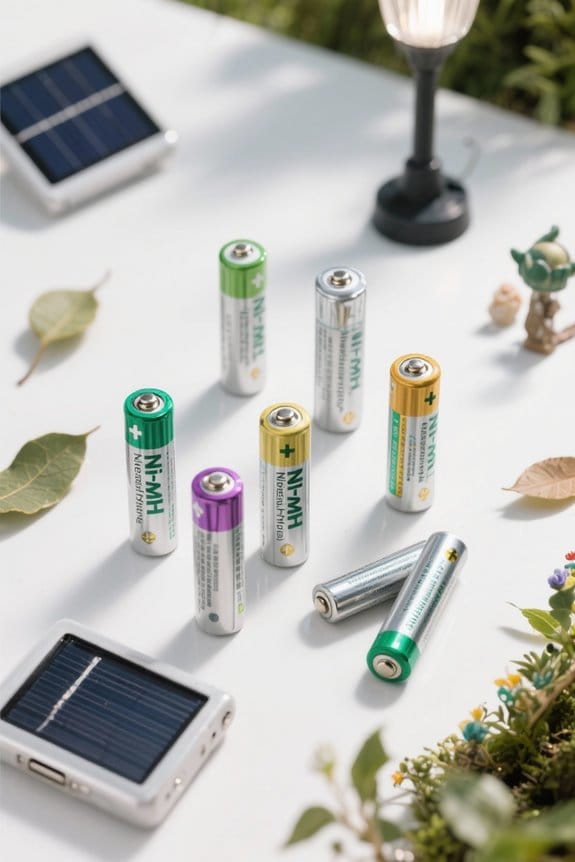
Understanding the common types of rechargeable batteries used in solar lights is important for effective maintenance. NiMH batteries are the most popular for rechargeable solar light applications due to their eco-friendliness and consistent performance. Alternatively, NiCd batteries, although outdated, are still found in some older systems, but they suffer from a shorter lifespan and memory effect. For higher energy density, Li-ion batteries excel, particularly in extreme temperatures. LiFePO4 batteries offer long cycle life and enhanced safety features, making them suitable for demanding solar light batteries. Typically, solar lights operate on 1.2V capacity batteries, with common sizes including AA and AAA. AA batteries generally deliver a capacity between 200mAh and 750mAh, while AAA batteries range from 200mAh to 600mAh. In choosing solar lights, it’s beneficial to consider solar-powered options that blend into natural landscapes, providing both aesthetic appeal and energy efficiency.
Signs Your Solar Light Batteries Need Replacement
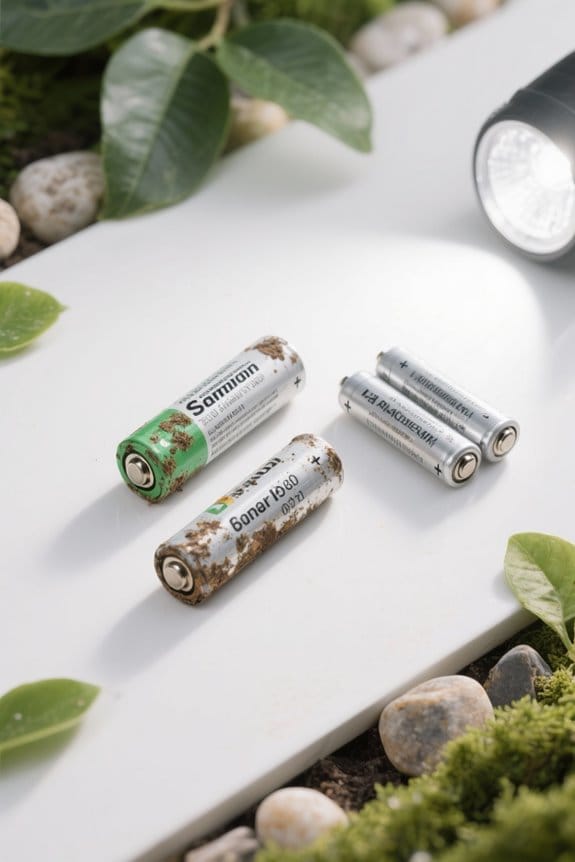
The condition of solar light batteries can greatly impact their performance and longevity. Signs indicating the need for battery replacement include diminished runtime, where lights turn off earlier than expected after a full day of sunlight. Inconsistent performance, such as lights failing to activate after sunny days, also signals battery degradation. Seasonal performance loss is common when lights function well during summer but struggle in winter, often due to inadequate energy storage. Additionally, physical deterioration, evident through corrosion, white residue, or bulging batteries, suggests serious failure and necessitates immediate action. Ultimately, if lights activate during the day, it may indicate a malfunctioning sensor, often linked to deteriorating batteries, and should prompt further examination. For optimal solar light performance, consider installing models with IP65 waterproof ratings, ensuring durability in various weather conditions.
Step-by-Step Guide to Replacing Solar Light Batteries

A straightforward approach to replacing rechargeable batteries in solar garden lights can greatly enhance their performance. To start, power down the light to guarantee safety during the procedure. Next, open the battery compartment, noting any screws or mechanisms, and carefully remove the old solar light battery. When replacing, install new rechargeable batteries, typically 1.2V NiMH or NiCd, verifying correct polarity is maintained. Once the new batteries are secured, position the solar light in direct sunlight for 6-8 hours to allow for full charging. This step is essential for peak functionality. Regularly cleaning the solar panel and inspecting seals ensures moisture protection and continued performance. Solar lights’ energy efficiency makes them a sustainable and cost-effective choice for outdoor illumination.
Recommended Products

【Solar Power Street Lights】product is equipped with four classic solar panels on each lamp head; solar panels are also covered in glass, which makes them more durable and won't get yellow. There is no need to worry about electric wires or bills. Turn all the 3 power switches ON, it will light up simultaneously at dusk and turn off at dawn.

DESIGNED FOR WOOD 4 X 4 POSTS - Bundle includes post cap lights; Each measures 5.75" x 5.75" x 2.76", Base measures 3.63" x 3.63". Fits 4 x 4 nominal wood posts, and 4 x 4 PVC or Vinyl posts with included adapter.
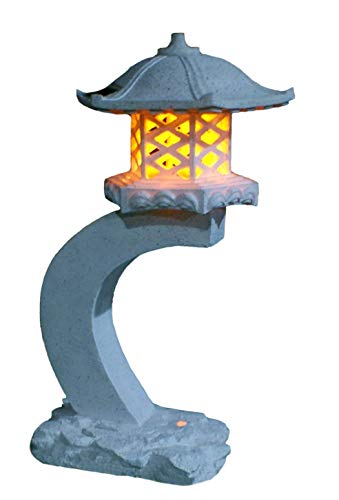
Japanese style solar lamp, handmade, stone finished, make your garden more interesting
Choosing the Right Batteries for Your Solar Lights
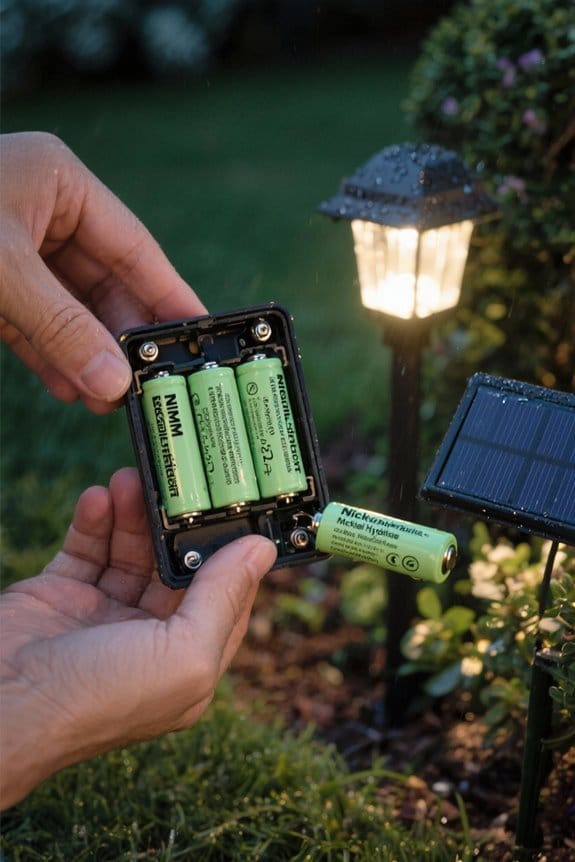
Choosing the right batteries for solar lights involves careful consideration of size, voltage, and chemistry to guarantee peak functionality. Most solar lights utilize 1.2V rechargeable batteries, with AA batteries being the most commonly applied size. When replacing batteries, it is vital to match the voltage and capacity; for instance, replacing AA NiCd with AA NiMH batteries of 600mAh secures optimal performance. Regular replacement is recommended every 1-2 years, as older batteries can diminish brightness and overall functionality. Additionally, selecting high-quality NiMH batteries can enhance performance in extreme temperatures. Always verify the specifications and capacities, as using incompatible sizes or types can lead to performance issues or potential damage to solar lights, affecting their longevity and efficiency. Consider using high-density polyethylene (HDPE) materials for their durability and resistance to UV rays, which are beneficial for outdoor applications.
Recommended Products

High-Performance solar lights - stays lit for up to 12 hours

High Performance solar lights – stays lit for up to 12 hours. Choose between warm and bright white light modes - includes Warm/Off/Cool switch

High Performance solar lights – stays lit for up to 10 hours
Benefits of Upgrading to NiMH or LiFePO4 Batteries
Upgrading to NiMH or LiFePO4 batteries can greatly benefit the performance of solar garden lights, especially when compared to traditional NiCd batteries. NiMH batteries typically offer energy capacities around 600mAh, considerably enhancing runtime compared to the 200-400mAh found in older models. This means longer-lasting illumination during the night. Additionally, LiFePO4 batteries exhibit a cycle life three to five times longer than NiMH, resulting in fewer replacements and less waste. They also maintain stable voltage and perform well in extreme temperatures, making them suitable for varied climates. Furthermore, NiMH batteries are more eco-friendly, lacking toxic heavy metals, which contributes to a lower environmental footprint over their lifespan. Soaker hoses, made from recycled materials, are another sustainable choice for garden maintenance. Overall, these upgrades can improve solar light efficiency and brightness.
How to Maintain Your Solar Light Batteries
Maintaining solar light batteries is essential for ensuring ideal performance and longevity. Users should regularly check and clean the solar panels, as debris can diminish sunlight absorption, which is vital for effective battery charging. It is advisable to replace rechargeable batteries every 1-2 years, since aging batteries can greatly hinder brightness. Inspect the battery compartment for water damage, ensuring it remains dry and free of corrosion; sealing the compartment after replacement will protect electrical components. To verify issues, test the LED bulbs with non-rechargeable batteries, confirming the problem lies within the batteries. Always use appropriate replacement batteries, such as 1.2V NiMH for AA or AAA sizes, to sustain performance and longevity in solar lights use. Regular maintenance can extend lifespan under harsh conditions and ensure the solar lights remain functional even during challenging weather scenarios.
Troubleshooting Solar Light Issues
Identifying issues with solar garden lights requires a systematic approach to troubleshooting. First, inspect the solar panel for dirt or debris, as a clean panel is vital for sunlight absorption. Next, check the battery compartment for corrosion, rust, or broken connections, which may indicate water damage or battery failure. Testing the LED bulbs using non-rechargeable batteries can help determine if the issue lies in the bulbs or the power source. If solar lights illuminate during the day, this may signal a faulty sensor; cleaning the mini solar panel can prevent false darkness detection. Regular maintenance and battery replacement every 1-2 years are fundamental to guarantee solar lights perform well and meet reliability expectations. For optimal performance, consider water efficiency features in garden setups, as these can contribute to long-term sustainability and reduced maintenance needs.
Recommendations for High-Quality Replacement Batteries
Choosing high-quality replacement batteries for solar garden lights can greatly improve their performance and longevity. Opt for rechargeable NiMH batteries with a capacity of at least 600mAh to guarantee peak performance. Batteries like the UltraLast 2/3AA rechargeable NiMH are tailored for solar applications, offering durable performance and efficiency. Additionally, consider using LiFePO4 batteries, such as the Gama Sonic 3.2V 3000mAh option, for enhanced safety and extended cycle life. Before making a selection, regularly check compatibility with the solar lights to guarantee proper voltage, typically 1.2V, along with the correct physical dimensions. It is recommended to replace batteries in pairs to maintain consistent performance, minimizing the potential for one weak battery to compromise overall functionality. For optimal results, ensure that your solar garden lights have a high brightness level of at least 60 lumens to provide effective illumination.
Recommended Products

Turn ON First – Automatically Lights Up Only at Night: This solar post cap light must be switched ON before it can start charging. Once activated, this solar post cap light will charge during the day and automatically light up only in the dark or at night—saving energy while providing reliable nighttime lighting. To test after charging, simply cover the solar panel with your hand and the solar fence post light should turn on instantly. No wiring or electricity needed—an easy upgrade for your deck, fence, or porch
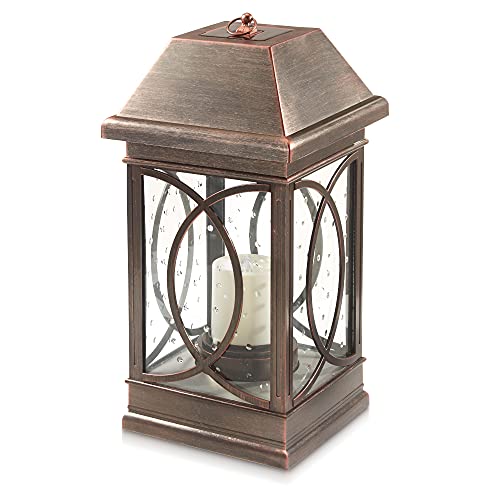
MODERN OUTDOOR SOLAR LANTERN: Sits on any surface or can be hung using the integrated hanging loop to provide eco-friendly, ambient lighting for your patio, deck, garden, front porch, or balcony

MODERN OUTDOOR SOLAR LANTERN: Sits on any surface or can be hung using the integrated hanging loop to provide eco-friendly, ambient lighting for your patio, deck, garden, front porch, or balcony
Preparing Your Solar Lights for Seasonal Changes
Preparation for seasonal changes is important for ensuring the ideal performance of solar garden lights. Before winter, owners should clean the solar lights to remove any debris that may obstruct sunlight absorption. Testing and potentially replacing worn-out rechargeable batteries is essential; high-capacity NiMH or LiFePO4 batteries enhance performance in colder temperatures. Additionally, positioning solar lights in areas with maximum sunlight exposure is critical since seasonal changes can create shadows from nearby trees or structures. After replacing batteries, allow solar lights to charge for 6-8 hours in direct sunlight to fully prepare for nighttime illumination. Regular inspection of solar panels for snow or ice is essential, as these elements can hinder charging capabilities and lead to prolonged runtime issues during winter months. Ensuring that your solar lights have a minimum IP65 waterproof rating is crucial for maintaining functionality in various weather conditions.
Frequently Asked Questions
Can You Replace Rechargeable Batteries in Solar Lights?
Yes, rechargeable batteries can be replaced in solar lights, enhancing solar efficiency and maintaining light output. Coincidentally, this practice also preserves garden aesthetics, ensuring that illumination remains vibrant while utilizing various battery types like NiMH and NiCd.
Is It Worth Replacing Batteries in Solar Lights?
Replacing batteries in solar lights is worth it due to significant cost benefits and enhanced battery lifespan. This DIY solution reduces environmental impact, prolonging the use of existing fixtures while maintaining outdoor lighting aesthetics and functionality.
Can You Buy Replacement Batteries for Solar Garden Lights?
Yes, various replacement options for solar garden lights are readily available, featuring battery types like AA and AAA. Engaging in solar light maintenance promotes eco-friendly practices by reducing waste and enhancing the longevity of outdoor lighting.
How Do You Make Old Solar Lights Work Again?
To revive old solar lights, apply maintenance tips, including replacing worn-out battery types, cleaning solar panels, and ensuring ideal sunlight exposure. Conduct a cost analysis to improve solar efficiency and extend overall functionality.