As an Amazon Associate, we earn from qualifying purchases. Some links on this site are affiliate links at no extra cost to you. Our recommendations are based on thorough research and editorial judgment.


The Impact of Outdoor Lighting on Local Wildlife and Insects

Outdoor lighting markedly disrupts local wildlife and insects by affecting their behaviors and survival rates. Light pollution compromises nocturnal cycles and diminishes pollination by disorienting insects. For instance, light leads to a 62% decline in insect visits to flowering plants, essential for 75% of plant species. Additionally, sea turtles suffer as artificial lights mislead hatchlings, reducing survival. Effective lighting strategies, such as using amber wavelengths and shielded fixtures, can mitigate these impacts. Further information explores practical solutions and community actions.
Key Takeaways
- Artificial lighting disrupts wildlife behaviors and natural circadian rhythms, impacting various species negatively.
- Light pollution significantly reduces pollination rates as nocturnal insects are drawn to streetlamps instead of flowering plants.
- Migratory birds face increased collision risks with illuminated structures, leading to millions of deaths each year.
- Hatchling sea turtles are misled by artificial lights, drastically reducing their survival rates during their crucial navigation phase.
- Shielded, low-wavelength outdoor lighting can mitigate the harmful effects of light pollution on ecosystems and local insect populations.
How Artificial Lights Disrupt Ecosystems
Artificial lights, while beneficial for human activities, greatly disrupt ecosystems by interfering with the natural behaviors of various wildlife species. Light pollution impacts wildlife, especially nocturnal animals, by altering their circadian rhythms, which can affect both feeding and mating patterns. For instance, research indicates that 70% of moths prefer streetlamps over flowering plants, leading to significant declines in pollination rates and ecological balance. In addition, migratory birds often collide with illuminated structures, resulting in millions of bird deaths annually. Moreover, artificial light at night increases predation risks for insects like fireflies, which may change their mating signals in response. These disruptions demonstrate the wide-ranging consequences of artificial lighting on ecological systems and highlight the need for thoughtful light management. In contrast, amber solar path lights are designed to emit warm tones that are less attractive to insects, potentially reducing the impact on local wildlife and ecosystems.
The Peril of Artificial Lighting for Sea Turtles
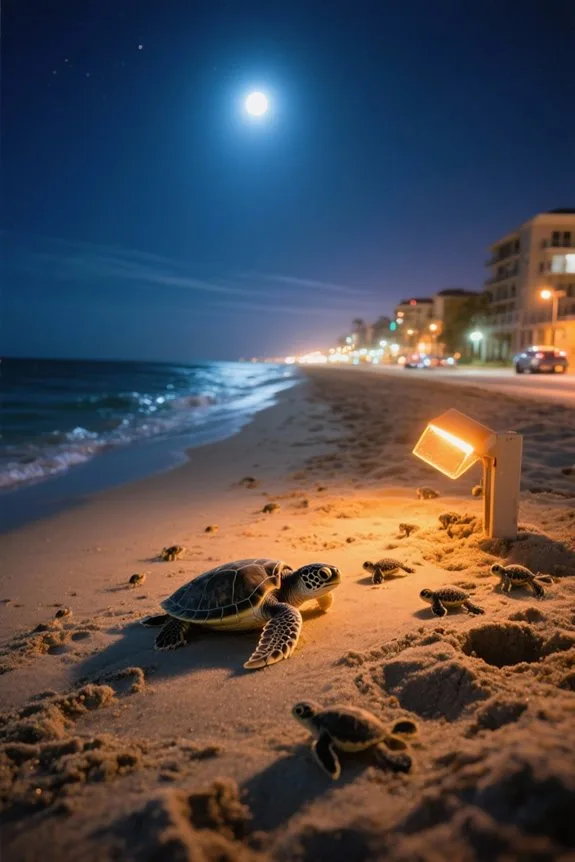
While the enchanting sight of sea turtles nesting along Florida’s coast may captivate many observers, artificial lighting poses a considerable threat to their survival. Hatchling loggerhead sea turtles depend on natural light from the horizon to navigate towards the ocean. However, light pollution from nearby developments can mislead them inland, considerably lowering their survival rates. Each year, millions of hatchlings face increased mortality due to these disruptions in their natural nesting behaviors. Research indicates that over 1,000 sea turtle nests are affected by artificial lighting, reducing hatchling success. To preserve wildlife habitats and protect these critically threatened populations, some Florida areas have implemented lighting ordinances that require specific wavelengths and shielding practices on beaches, fostering safer conditions for nesting sea turtles. To further support ecological balance and biodiversity, choosing certified organic options in gardening can help mitigate the ecological footprint of human activities.
Disorientation and Dangers for Bird Species
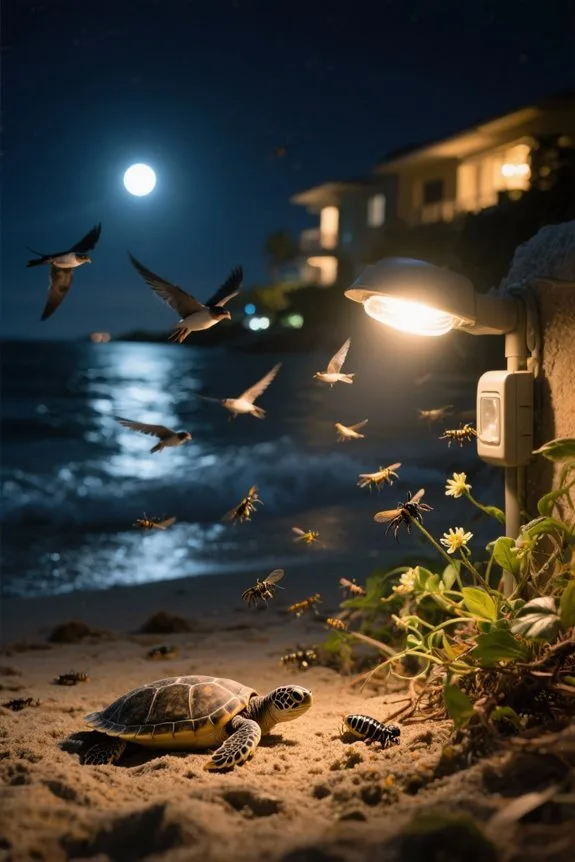
Through the night skies, migratory birds rely on natural cues for navigation, but urbanization has introduced challenges that considerably alter their flight patterns. Artificial light disrupts these signals, leading to disorientation, exhaustion, and higher collision rates with buildings. Studies show that millions of migratory birds die annually due to disorientation from illuminated structures during migration periods. Light pollution also affects seasonal cues, causing misalignment in migration, nesting, and foraging schedules, which are critical for survival. Particularly vulnerable, migratory songbirds depend on moonlight and starlight and are easily diverted by bright lights. Introducing wildlife-friendly lighting options such as lower-intensity fixtures and timers, along with adaptive gardening tools to reduce light exposure, can provide a safer environment for birds during their crucial migration seasons. Consequently, implementing wildlife-friendly lighting options, like lower-intensity fixtures and timers, can mitigate these harmful effects and support bird safety during migration seasons.
Recommended Products
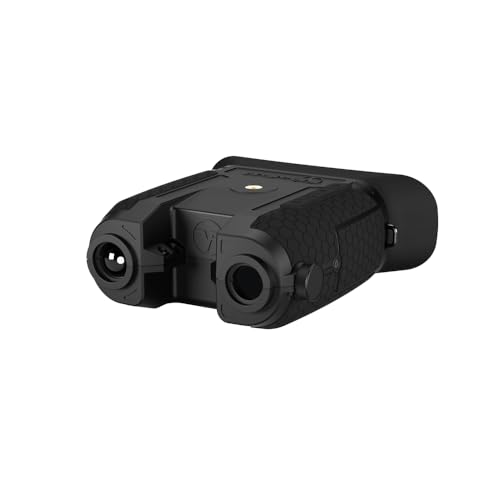
Cutting-Edge Technology: Hexcore HD features advanced 1280x720 CMOS digital night vision sensor for detailed nocturnal landscape observation. Equipped with a 640x360 TFT LCD display using Thin Film Transistor (TFT) technology for enhanced contrast.

Solar Outdoor Light with Motion Activation: This solar-powered feeder motion activated light brightens to a variety of different intensity levels based on the chosen mode when motion is detected.

Solar Outdoor Light with Motion Activation: This solar-powered feeder light features a motion-activated sensor that brightens to a variety of different intensity levels based on the chosen mode when motion is detected, providing reliable illumination for your hunting needs. The solar-powered design of this feeder light eliminates the need for electricity.
The Role of Insects in Ecosystem Health
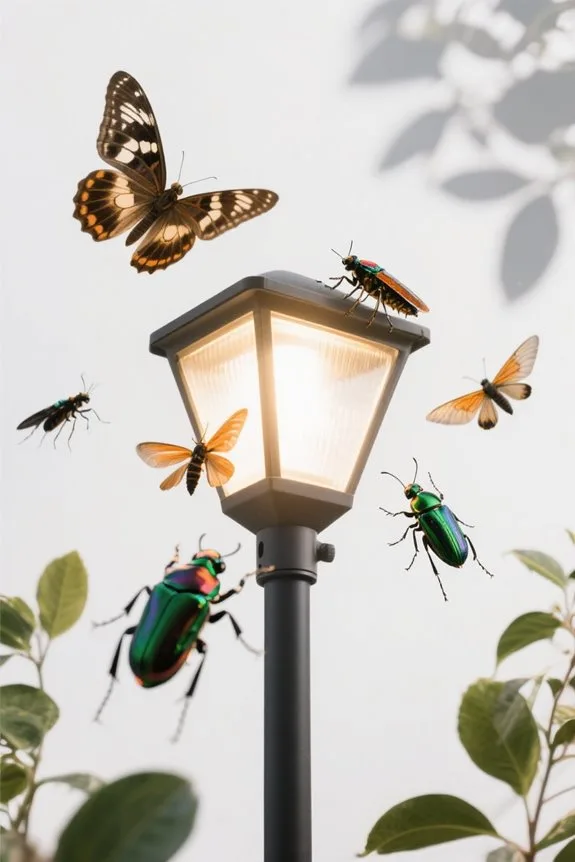
Often overlooked, insects serve as foundational components of ecosystem health, influencing various ecological processes. Insects are vital for pollination, impacting about 75% of the world’s flowering plants, essential for food production and ecosystem stability. However, declining insect populations, exacerbated by light pollution, present significant challenges. Artificial light disrupts nocturnal insects, causing them to cluster around bulbs, leading to exhaustion and decreased reproductive success. Consequently, light pollution affects pollination rates, with studies showing a 62% decline in insect visits to flowering plants. This decline threatens biodiversity, as many animals, including birds and bats, rely on insects for sustenance. Ultimately, the health of ecosystems hinges on maintaining robust insect populations to support food webs and ecological functions. To mitigate these declines, incorporating wildflower mixes into gardens can attract pollinators and support local ecosystems, enhancing biodiversity and providing essential habitats for insects.
Consequences of Light Pollution on Pollination
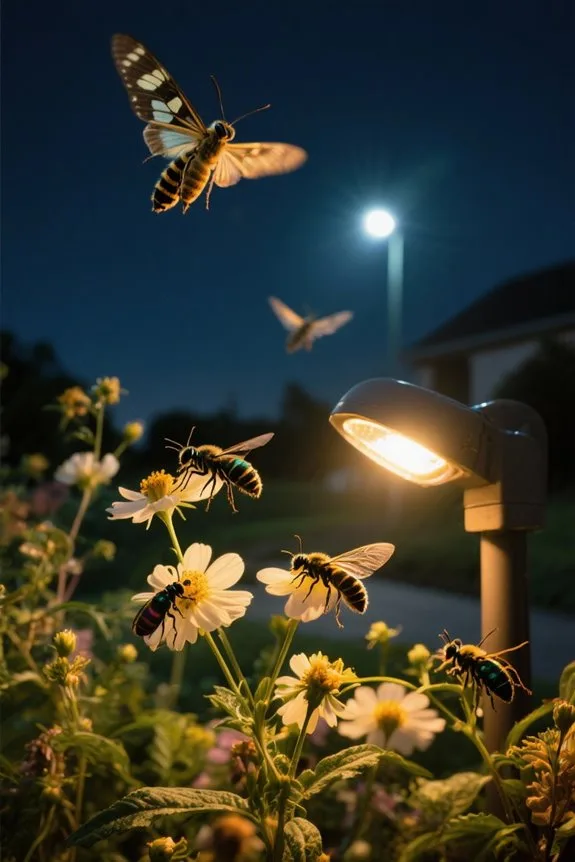
Light pollution greatly impacts pollination, disrupting essential interactions between insects and flowering plants. Research indicates a 62% decrease in insect visits to flowering plants under LED street lamps, emphasizing the harmful effects of artificial lighting on pollination rates. Nocturnal pollinators, particularly moths, are attracted to streetlights, which uses up their energy reserves, ultimately diminishing their pollination abilities. Additionally, light pollution disrupts the mating behaviors of fireflies, as artificial lights interfere with their natural flash patterns crucial for attracting mates. A study found that 70% of moths favored illuminated areas over natural ones, leading to decreased fruit production in several plants. Such declines in insect populations pose significant concerns for biodiversity and the stability of essential food webs reliant on effective pollination. Pendant solar lights with motion-sensing capabilities can improve energy efficiency and reduce unnecessary light pollution, providing a more wildlife-friendly lighting solution in outdoor spaces.
Recommended Products

True 4K Ultra HD Smart Bird Feeder with Camera- Experience bird watching like never before with smooth,true 4K ultra-high-definition live view at 30fps. The camera captures detailed 8MP HDR photos and videos in both daylight and low light, while portrait-orientation technology helps you see delicate feather textures and natural colors more clearly
Remote Control Convenience: Enjoy hands-free operation with the included 300+ yard remote control, making it easy to turn your lights on and off without needing to wait for an animal to trip the motion sensor!

AI-POWERED BIRDWATCHING APP: Premium Subscription required. The Bird Buddy app uses AI to identify bird species and individual birds, detect signs of illness, recognize other animal visitors, and provide real-time alerts when birds visit your feeder. Access advanced birdwatching features, personalized collections, and insights about your local wildlife through an active subscription.
Strategies for Implementing Wildlife-Friendly Lighting
To guarantee that outdoor lighting supports rather than harms local wildlife, various strategies can be implemented effectively. First, use IP65-rated fixtures, which offer durability and minimize light pollution. Choosing amber or red wavelengths above 560nm can notably reduce disruption to local wildlife, as these colors are less attractive to many insects. Additionally, shielded and fully cut-off lights direct illumination downwards, preventing light spillage. Dimming outdoor lights and using motion sensors further limit artificial lighting exposure, allowing wildlife to engage in natural behaviors. Community awareness is essential, in conjunction with adherence to local wildlife lighting standards, such as those set by the Florida Fish and Wildlife Conservation Commission, to maintain safe habitats and minimize environmental impacts. Selecting lights with a long lifespan can also help reduce the need for frequent replacements, thereby minimizing disturbance to wildlife and conserving resources.
Recommended Products

【SUPER BRIGHTNESS & ENERGY SAVING】Our 75w 8000 lumen outdoor flood light uses high quality LED lamp beads and professional filter lens, it has longer service life and brighter than normal beads. Saves over 89% on electricity compare to halogen light.

Halloween Decorations:Flood light bulbs will create a festive atmosphere for your Halloween,lights for halloween,making your home more beautiful during the festival.LED flood light bulbs for Halloween outdoor decorations

Bug Lights: Insects Free: Don’t attract insects while illuminating your porch and yard. Add the fun and lose the bugs yellow bug light bulbs outdoor LED that do not attract insects like other bulbs. Yellow Orange 2000k, give off a cozy yellow light, while repelling bugs and mosquitos.
Community Actions to Reduce Light Pollution
Community actions play a pivotal role in addressing the issue of light pollution, particularly when residents work collaboratively to implement effective strategies. Community engagement can lead to initiatives that greatly reduce energy consumption while protecting local wildlife. For instance, discussing light minimization with neighbors helps foster a collective approach to address artificial lighting concerns. Participating in local councils focused on light pollution can also amplify individual voices. Neighborhood outdoor lighting consultations allow residents to design fixtures that minimize disruption to local insects and migratory birds. Simple actions, such as utilizing blinds to block interior light or turning off unnecessary outdoor lights at night, greatly contribute to minimizing light pollution, benefiting the local ecosystem and ultimately enhancing habitat conditions. Using weather-resistant properties in outdoor lighting stakes ensures they endure various climates, further supporting long-term efforts in reducing light pollution.
The Importance of Protecting Natural Night Skies
Protecting natural night skies is crucial for maintaining the ecological balance that supports diverse wildlife populations. Light pollution has overwhelmed over 80% of the global population, obscuring roughly 100 billion stars and disrupting critical nighttime environments. With one-third of humanity unable to see the Milky Way, artificial light has drastically altered the nocturnal landscape. This disruption markedly affects wildlife, particularly nocturnal species such as fireflies and sea turtles, whose mating and foraging behaviors are essential for survival. The annual increase of 2.2% in artificial light exacerbates these issues, threatening natural rhythms encoded in DNA across many species. Organizations like the International Dark-Sky Association emphasize the importance of restoring natural night skies to enhance ecological balance and protect wildlife health. Solar garden stake lights offer an energy-efficient solution for outdoor lighting, reducing light pollution while illuminating spaces without impacting wildlife.
Frequently Asked Questions
How Does Outdoor Lighting Affect Urban Wildlife Differently Than Rural Wildlife?
Urban wildlife experiences dramatic adaptation due to outdoor lighting, altering species interactions and disrupting ecological balance, whereas rural behavior remains relatively intact. Light sensitivity varies, impacting how both urban and rural wildlife navigate their environments.
What Types of Lights Are Most Harmful to Wildlife and Insects?
Bright LED lights and UV lighting effects are most harmful, as they notably alter nighttime behavior and increase insect attraction factors, leading to ecological disruptions. Energy-efficient alternatives reduce these impacts, promoting healthier wildlife interactions.
Can Certain Colors of Light Minimize Disruption to Wildlife?
Certain colors of light, particularly those with lower color temperatures, can minimize disruption to wildlife. By aligning with the natural light spectrum, such colors may help preserve nocturnal behavior and migration patterns, consequently maintaining ecological balance.
How Does Light Pollution Connect to Climate Change and Species Survival?
Light pollution effects contribute to species migration challenges and alterations in nocturnal behavior, disrupting ecosystem balance. Additionally, urban heat islands exacerbate these issues, impacting species survival by altering habitat conditions essential for various organisms.
Are There Specific Times When Outdoor Lighting Is Most Detrimental to Wildlife?
During dusk and dawn, outdoor lighting disrupts nocturnal behavior, breeding cycles, and migration patterns. Predator-prey interactions are particularly affected, highlighting seasonal variations as specific times when outdoor lighting is most detrimental to wildlife’s survival.


