As an Amazon Associate, we earn from qualifying purchases. Some links on this site are affiliate links at no extra cost to you. Our recommendations are based on thorough research and editorial judgment.


Designing a Kitchen Garden Layout for Constant Harvests

To design a kitchen garden layout for constant harvests, first assess your family’s needs by identifying commonly consumed vegetables, herbs, and fruits. Measure your growing space, ensuring at least 6-8 hours of sunlight daily. Select productive crops like salad greens, tomatoes, and carrots for high yield. Implement succession planting every 10-14 days, utilizing vertical space with trellises for climbing plants. Maintain 18-24 inch wide pathways for accessibility. With careful planning, one can extend harvest seasons year-round. Further strategies can enhance your garden’s productivity.
Key Takeaways
- Implement succession planting by sowing seeds every 10-14 days to ensure a continuous supply of fresh produce throughout the growing season.
- Group crops with similar sunlight and water needs to optimize growth conditions and facilitate easier maintenance and irrigation.
- Integrate quick-growing varieties, like radishes and lettuce, to create space for slower-growing crops later in the season.
- Design the layout to include both cool-season and heat-loving varieties, transitioning as temperatures change to maximize seasonal yields.
- Utilize companion planting strategies to enhance space efficiency and support continuous harvests while reducing pest issues over time.
Assessing Your Family’s Needs
How can a family effectively evaluate their gardening needs? First, creating an inventory of the vegetables, herbs, and fruits consumed regularly is essential for establishing necessary crops. Families should track meal patterns for one week, identifying frequently utilized ingredients to tailor their planting list. Focusing on staples such as salad greens, tomatoes, and garlic will guarantee high utility in the kitchen. Prioritizing high-yield crops like carrots and potatoes can maximize production in limited spaces. Additionally, integrating multipurpose herbs like basil and cilantro not only enhances meals but also conserves garden space. By carefully evaluating their culinary preferences and seasonal availability, a family can successfully design a kitchen garden that meets their specific needs throughout the growing season. Families should also consider energy-efficient LED technology for any garden lighting to reduce energy costs and enhance the garden’s visibility during evening hours.
Understanding Your Growing Space and Climate

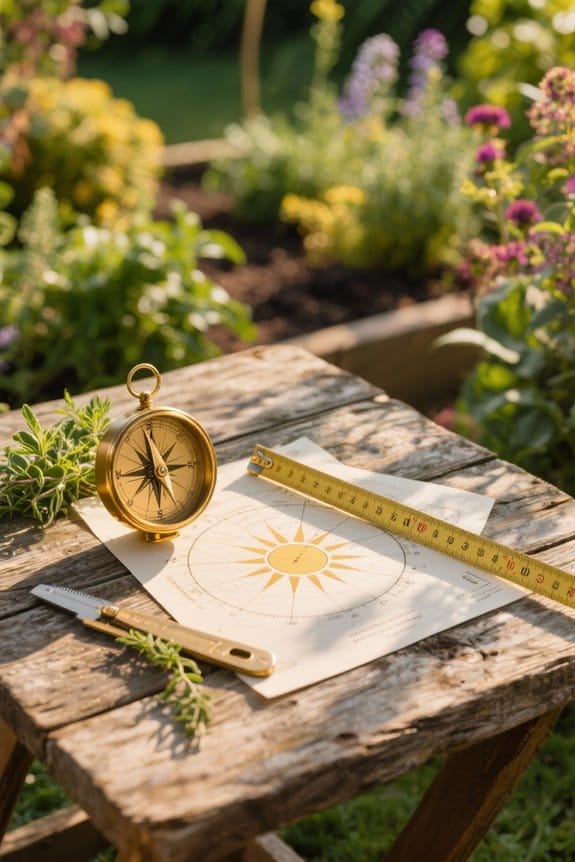
Evaluating the growing space and climate is fundamental for a successful kitchen garden. Gardeners should measure their area to determine if they will use raised beds, in-ground plots, or containers. Most vegetables require 6-8 hours of direct sunlight daily to thrive. Additionally, it’s important to monitor the USDA Plant Hardiness Zone, as it guides the selection of suitable crops and informs ideal planting times. Enhancing soil quality by incorporating compost and organic matter improves nutrient content and drainage, which supports healthier plants. Furthermore, setting accessible water sources, like hand watering or drip irrigation systems, guarantees adequate hydration. As part of the planning process, regular evaluations of garden layout and airflow can minimize resource competition, encouraging robust growth. Incorporating an automated irrigation system can further enhance efficiency by ensuring consistent watering schedules and reducing manual labor.
Selecting Productive and Multi-Use Crops
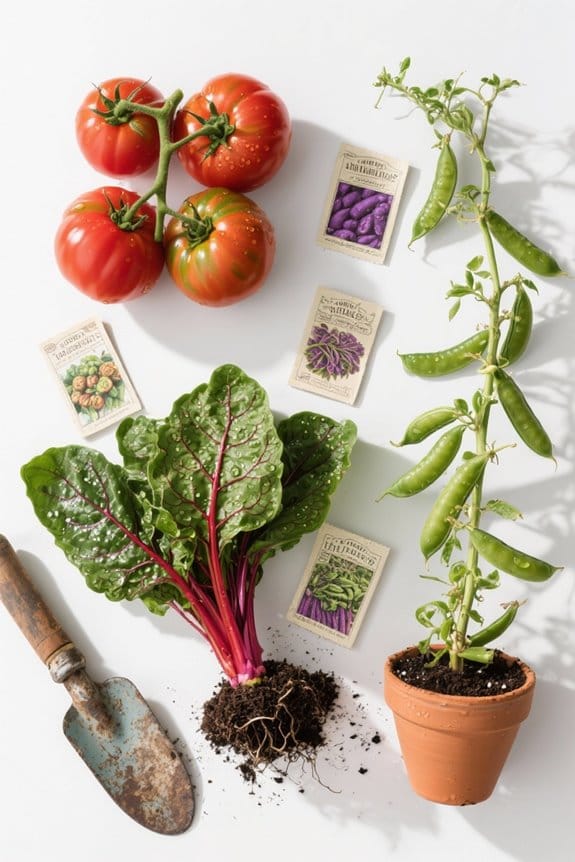
When planning a kitchen garden, selecting productive and multi-use crops can substantially enhance both yield and utility in the limited space available. High-yield crops like tomatoes, zucchini, and green beans provide multiple harvests throughout the growing season, contributing to continuous harvests. Herbs such as basil and cilantro serve dual purposes, enhancing dishes’ flavors while offering health benefits. Incorporating quick-growing varieties, including radishes and lettuce, not only maximizes yields but also allows for succession planting alongside slower crops like carrots. Additionally, planting perennial crops like asparagus or rhubarb guarantees long-term returns, as established plants deliver consistent harvests year after year without requiring replanting. To ensure efficient irrigation and minimize water waste, consider using strip sprinkler nozzles, which provide precise watering tailored to garden needs. This strategic selection of crops promotes efficient use of garden space and resources.
Mapping Out Your Garden Layout

Mapping a kitchen garden layout requires careful planning to guarantee ideal crop growth and maintenance efficiency. Begin by sketching out garden beds, emphasizing groupings based on plant heights to prevent shading; place tall plants, like tomatoes, on the north side. Confirm pathways are 18-24 inches wide for easy access and best sunlight exposure. Utilize companion planting by interspersing fast-growing crops, such as radishes, with slower-growing ones like carrots, maximizing space to grow. Create zones reflecting the specific sunlight and watering needs of plants, allowing similar requirements to be grouped together. Additionally, plan for crop rotation by designating areas for root vegetables, leafy greens, and legumes, promoting soil health while reducing pest issues over time. Consider implementing drip irrigation systems to maximize water efficiency by delivering moisture directly to plant roots, reducing evaporation and runoff.
Implementing Succession Planting Techniques

Implementing succession planting techniques enhances the productivity of a kitchen garden, allowing for a steady supply of fresh produce. This method involves sowing seeds or planting crops every 10-14 days, which enables continuous harvests throughout the season. Start with cool-season crops, such as spinach and peas, then shift to heat-loving varieties like tomatoes and peppers as temperatures warm. Quick-growing crops like radishes can be harvested within weeks, creating space for slower-growing crops, such as carrots. Additionally, after summer crops are removed, consider planting fall crops like beets or kale. Utilizing a detailed planting calendar based on USDA Zones will optimize crop timing, ensuring a well-structured vegetable garden layout that maximizes yield while reducing frost-related risks. Consider incorporating cover crops like Winter Rye to enhance soil health in between planting cycles, providing benefits such as improved soil structure and weed suppression.
Utilizing Vertical Space for Maximum Yield
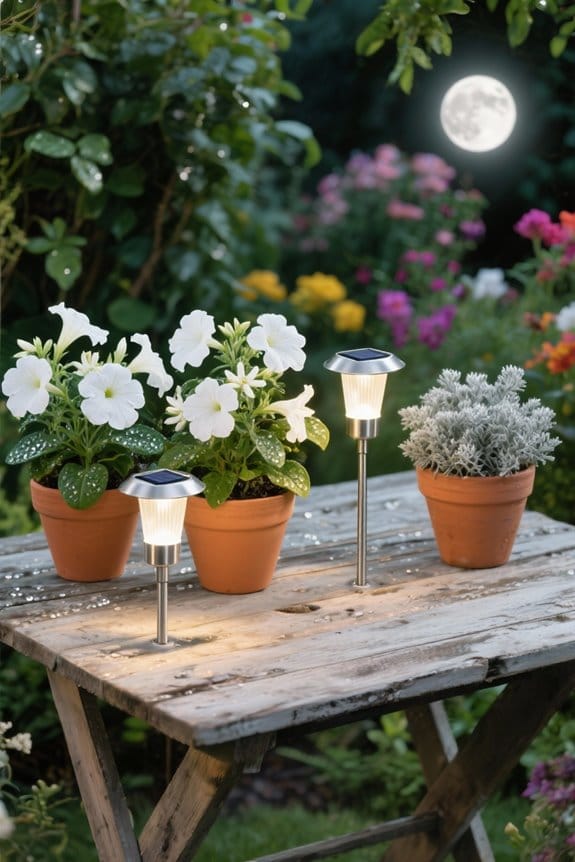
Vertical gardening techniques can greatly enhance a kitchen garden’s yield, making efficient use of limited space. Utilizing vertical space through trellises or A-frames allows climbing plants like cucumbers and beans to grow upwards, maximizing ground area. Height can also be effectively used by incorporating hanging baskets for strawberries and herbs. Multi-level planting systems enable layering, where taller plants provide shade for shade-tolerant ground-cover species. This setup not only promotes maximum yield but also improves air circulation and sunlight exposure, reducing disease risk. Additionally, attaching wall planters or shelves can further enhance vertical space, accommodating various herbs and vegetables even in confined areas. Such strategies guarantee that every inch of garden space contributes to productivity. Many solar pillar lights are designed with high IP ratings, ensuring durability and functionality even in varying weather conditions, which could be beneficial for illuminating garden spaces without additional electricity costs.
Efficiently Managing Pathways and Access
To guarantee a well-organized kitchen garden, maintaining pathways that are 18 to 24 inches wide is essential for comfortable access and efficient maintenance. These pathways allow for easy navigation when harvesting and caring for plants, ensuring neighboring plants are undisturbed. Strategically placing garden beds for ideal sunlight exposure enhances growth while minimizing wasted space between crops. For improved air circulation and plant health, keeping pathways narrow is beneficial, as it encourages better airflow. Additionally, positioning taller vegetable plants on the north side of the garden prevents shading of shorter plants. Using materials like wood chips or gravel for pathways enhances drainage and reduces soil compaction, supporting overall garden health and facilitating ease of movement throughout the kitchen garden layout. Incorporating a backflow preventer in your irrigation system is vital to protect against water contamination, ensuring the safety and health of your garden.
Adding Aesthetic Elements to Your Garden
Adding aesthetic elements to a kitchen garden not only enhances its visual appeal but also contributes to its functionality. Colorful flower borders, incorporating marigolds and zinnias, improve aesthetics while attracting beneficial pollinators. Vertical garden structures, such as trellises, can support climbing plants and maximize growing space, creating dimension. Decorative herbs like variegated basil and purple sage provide flavor and beauty, enriching an edible garden. Defined pathways using decorative stones or mulch facilitate navigation, contributing to an organized layout. Integrating edible plants with ornamental varieties can establish a foodscape design, ensuring constant harvests in a beautiful kitchen while harmonizing with the surrounding landscape. Incorporating eco-friendly solar garden lights, such as those with decorative lotus designs, can enhance the ambiance of your garden while promoting sustainable energy use. Overall, thoughtful inclusion of these elements creates a visually striking and highly productive garden.
Frequently Asked Questions
What Is the 70/30 Rule in Gardening?
The 70/30 rule in gardening allocates 70% to productive crops and 30% to aesthetics. Employing crop rotation, companion planting, and prioritizing soil health guarantees vitality, revealing a thriving garden that balances beauty with bounty’s yield.
What Is the Rule of 3 in Gardening?
The Rule of 3 in gardening promotes grouping plants in threes to enhance soil health, aid crop rotation, and support companion planting. This strategy improves overall yield while encouraging diverse plant selections for ideal growing conditions.
What Is the Most Common Mistake of First Time Gardeners?
First-time gardeners often err by neglecting soil preparation, similar to baking without measuring ingredients. Inadequate soil health leads to poor plant selection and ineffective pest management strategies, ultimately diminishing their chances for a successful harvest.
Is There an App to Plan a Garden Layout?
Yes, numerous garden planning apps offer intuitive garden design tools, enabling users to create virtual garden layouts. These applications assist in organizing plants, tracking growth, and optimizing gardening practices for successful outcomes.