As an Amazon Associate, we earn from qualifying purchases. Some links on this site are affiliate links at no extra cost to you. Our recommendations are based on thorough research and editorial judgment.

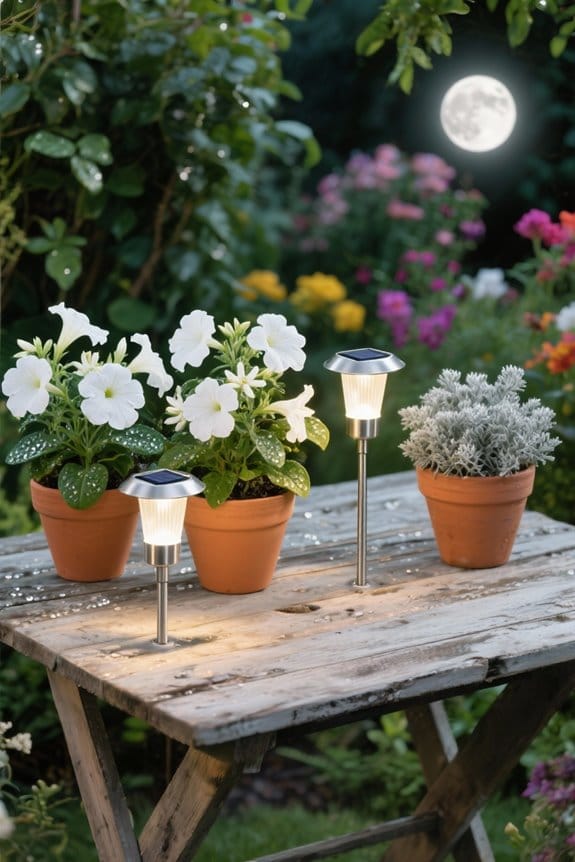
Planning a Moon Garden: White Flowers and Path Lighting

Planning a moon garden requires white, high‑reflectance blooms and silver foliage, placed to maximize 3–6 m sightlines and contrast. Paths should be pale gravel, 0.9–1.2 m wide, with low lighting at 10–30 lux for ambience. Space perennials 30–60 cm apart, group night‑bloomers in 3–5 specimens, and set silver plants 0.5–1 m apart to boost reflection. Include seating 1–2 m from paths, mulch 50 mm deep for moisture, continue for layout, plant lists, and lighting specifics.
Key Takeaways
- Choose high-reflectance white and pale blooms (annuals and perennials) visible at 3–6 meter sightlines for maximum moonlight impact.
- Include night-blooming, fragrant species (moonflower, evening primrose) grouped 3–5 plants to boost scent and nocturnal pollinator attraction.
- Plant silver-foliage companions (artemisia, lavender) every 2–3 meters to amplify reflectance and add texture and scent.
- Lay pale gravel paths 90–120 cm wide and place low, warm-white LED or bollard lights for soft, non-glare illumination.
- Arrange layered heights (groundcover, mid shrubs, small trees) with seating 1–2 meters from paths for comfortable moonlit viewing.
Why a Moon Garden Works
Because moon gardens are designed for nocturnal conditions, they concentrate on pale flowers and reflective foliage to maximize visibility. These designs also attract nighttime pollinators, adding ecological value. A typical layout uses three to six meter sightlines, 1.2 meter crushed gravel paths, and reflected light around 300 to 600 lux. Designers select native shrubs and small trees for shelter, yielding wildlife benefits like bat and moth foraging within ten to twenty meters. Night planting emphasizes fragrant species and water features, enhancing the sensory experience with 0.5 to two meter fountains and thirty to sixty centimeter ponds. Tool-free installation of water management solutions ensures ease in setting up efficient irrigation systems. Plant spacing of thirty to ninety centimeters permits airflow and access, mulch of five to seven centimeters retains moisture, and lighting of 0.5 to five lux is positioned 0.3 to 0.6 meters above grade for evening enjoyment.
Selecting White and Pale Blooms
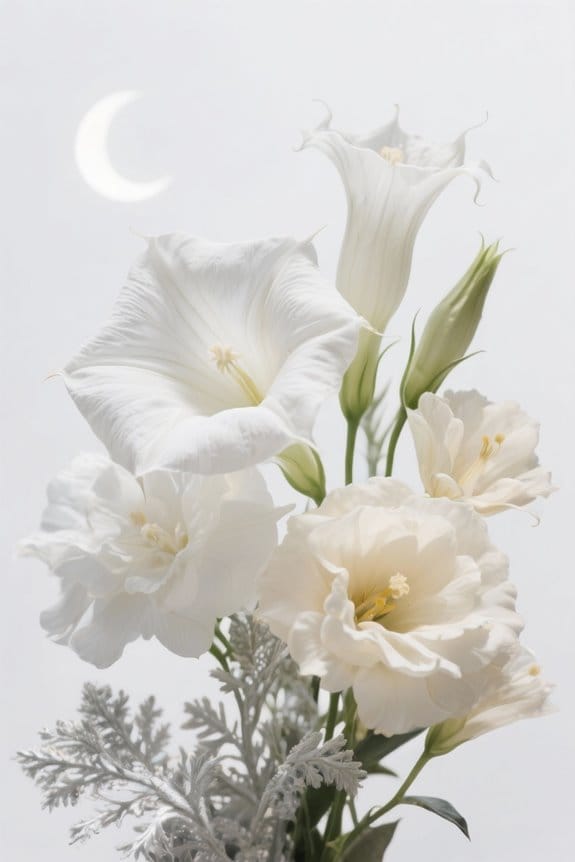
When selecting white and pale blooms for a moon garden, the gardener should prioritize high-reflectance flowers and foliage that are visible along 3 to 6 meter sightlines, and that contrast with surrounding dark massing. Choose a mix of annual varieties and perennial options to guarantee continuous visual impact from spring through frost, aiming for groupings of 3–5 plants per sightline repeat. Include white petunias, alyssum, polar bear zinnia and white cosmos for immediate color, and Stokes’ aster, white Echinacea, Shasta daisy and viburnum as structural perennials. Plant silver-foliage companions like lamb’s ear and Artemisia in 0.5–1 m masses to amplify reflectance. Space perennials 30–60 cm apart, mulch 50 mm deep, and place taller blooms at least 1.2 m behind low reflectors for prime viewing. These choices are especially effective because silver-leaved plants provide visual contrast in low light. For a vibrant display, consider mixing plantings of pollinator-friendly varieties like cosmos and alyssum, which will attract beneficial insects throughout the growing season.
Night-Blooming and Fragrant Choices

After arranging white and pale reflector plants for visual impact, gardeners should prioritize night-blooming, fragrant species to add scent and nocturnal interest. Examples include moonflower, queen of the night, evening primrose, four o’clock, night phlox, and chocolate daisy, each selected for bloom timing, scent intensity, and size. Moonflower vines reach 10 to 20, bloom late afternoon through night, emit a lemon scent carried hundreds of feet. Queen of the night opens once yearly at dusk, large flowers with jasmine-like fragrance. Evening primrose and four o’clock open each evening, providing continuous scent through summer, their flowers supplying nectar for moths and hummingbird moths. Plant in groups of 3–5, space at 12–36 inches, to maximize night blooming fragrances, and support pollinator attraction. Eco-friendly materials used in garden soaker systems can ensure that these plants receive adequate hydration with minimal water waste. Use trellises and stakes. Most night-blooming plants generally require full sun.
Silver Foliage and Companion Plants
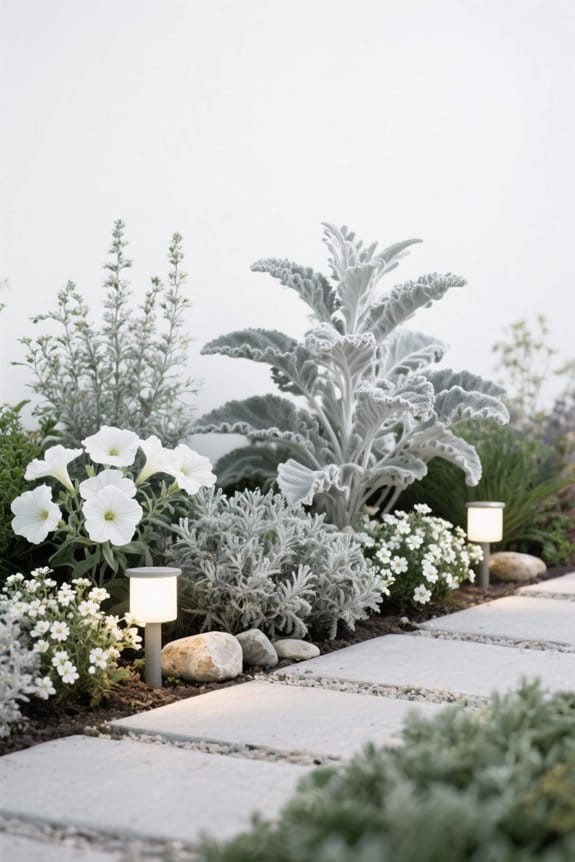
Although silver foliage is chosen primarily for its light-reflecting properties, it also offers texture, scent, and structural contrast in moon gardens. Artemisia species, over 500 cultivars available, include Silver Bullet groundcover 6–10 inches tall, Roman wormwood to 4 feet, and Silver King to 4 feet, all preferring full sun and well-drained soil. Salvias with silvery leaves, selected from native nurseries, provide fragrance, pollinator value, and edible uses. Many silver-leaved perennials like Artemisia are especially valued because they are drought tolerant. Companion planting pairs silver foliage with dark green hedges like boxwood, and with red, pink, or blue flowers, to enhance nocturnal contrast. Propagate Silver King and Silver Queen by cuttings or division, root cuttings in 4–6 weeks. Santolina, yarrow, and lavender add drought tolerance, aromatic leaves, and seasonal blooms from summer into autumn. Garden step lighting, such as solar-powered options, can enhance the aesthetic appeal of moon gardens and improve safety. Place plants 12–18 inches.
Garden Layout, Texture, and Height
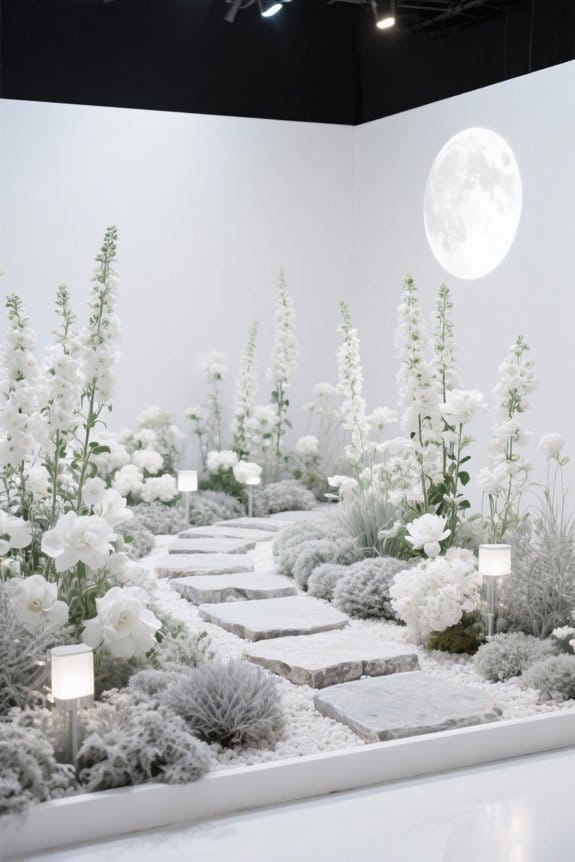
A moon garden layout should arrange plants and hardscape to maximize night visibility, using measured spacing, layered heights, and reflective surfaces. Plant arrangements should group like-water species within 60–90 cm clusters, and repeat white or silver specimens every 2–3 m to unify sightlines. Groundcover may remain 5–30 cm high, mid-layer shrubs 60–150 cm, with tall trees or structural shrubs reaching 2–4 m for backdrop framing. Paths of pale gravel or light stone, 90–120 cm wide, provide simple navigation and visual contrast. Texture contrast is achieved by mixing fine ferns, glossy hosta leaves, and matte gray Artemisia, which modulate reflected light. Using ergonomic tools like those mentioned in the knowledge can enhance comfort and ease during planting and maintenance. Leave 30–60 cm gaps between clusters to prevent overcrowding, and plan mature sizes to avoid future pruning. Include seating areas 1–2 m from paths. They are designed for enjoyment at night under moonlight.
Path Lighting and Moonlight Optimization
Typically, path lighting and moonlighting are placed high in trees or on pergola beams, casting downward, diffused illumination that mimics moonlight. Fixture placement at 10–15 feet provides dappled shadows, and mounting 2–3 feet above the lowest branch layer creates a soft, filtered wash on paths and beds. Path lights are spaced 6–10 feet apart to mark walkways without overlap, and downlights should aim straight down or at 15° to avoid glare. Choose wide-angle, low-voltage fixtures with 2700K light color or subtle silvery-blue tones, and limit output to 200–400 lumens per fixture for ambiance and safety. Use solar or 12V systems, position fixtures away from sightlines, and minimize spill to protect nocturnal wildlife. Incorporating solar-powered lights not only enhances energy efficiency but also aligns with eco-friendly gardening practices. Calibrate timers for 4–6 hours after dusk, and test angles seasonally annually. Consult Landscape Design Principles to integrate fixtures, scale, and planting for a cohesive nighttime composition.
Frequently Asked Questions
What Soil Amendments Do White-Flowering Moon Garden Plants Typically Need?
Like moonlight on stone, the garden needs compost, lime or sulfur to adjust soil pH, bone meal and balanced slow release fertilizer for nutrient requirements, perlite or sand for drainage, biochar, and two inches mulch
How Often Should I Water a Moon Garden at Night Versus Daytime?
They should water early morning twice weekly spring, every one to two days summer, tapering fall; night watering is occasional—using moon garden irrigation principles and nighttime watering techniques to reduce evaporation and fungal disease risk.
When Is the Best Season to Plant Perennials for Moon Gardens?
A medieval knight checking a glowing smartphone lantern: best seasons are spring planting for summer bloomers and fall preparation to establish roots; gardeners prefer spring for growth and autumn for cooler, moist conditions aiding establishment.
How Much Routine Pruning and Deadheading Is Required for White Blooms?
They require moderate, seasonal care: light pruning techniques in spring and occasional thinning through summer; deadheading frequency is weekly to biweekly for prolific bloomers, less for slow growers, with heavier pruning before or after flowering.
Are Any Moon Garden Plants Toxic to Pets or Children?
Yes, a moonlit bouquet hides venomous whispers: they note that several moon garden species are toxic plants (e.g., foxglove, oleander, angel’s trumpet), so gardeners prioritize pet safety by fencing, placement, education, signage, and supervision measures.