As an Amazon Associate, we earn from qualifying purchases. Some links on this site are affiliate links at no extra cost to you. Our recommendations are based on thorough research and editorial judgment.
Direct Sow vs. Transplanting: Which Method Suits Your Vegetables?

Direct sowing is best for hardy root vegetables like carrots and radishes, minimizing transplant shock and ensuring proper root development. Transplanting is ideal for tender vegetables like tomatoes and peppers, promoting faster growth and establishing stronger roots. Timing is essential; direct sowing should occur after the last frost when soil is warm, while transplants can be started indoors 8-10 weeks earlier. Understanding vegetable needs and garden preparations can enhance success in planting methods, providing a foundational basis for effective cultivation.
Key Takeaways
- Direct sowing is ideal for root vegetables like carrots and radishes to avoid transplant shock and promote healthy growth.
- Transplanting suits tender vegetables like tomatoes and peppers, allowing for earlier harvests and stronger root systems.
- Timing is crucial; sow seeds after the last frost and when the soil temperature is optimal for germination.
- Direct sowing often results in higher germination rates for crops like peas and beans, while seedlings ensure uniform growth when transplanted.
- Consider garden preparation and crop adaptability; some vegetables thrive with either method depending on conditions and timing.
Understanding Direct Sowing and Transplanting
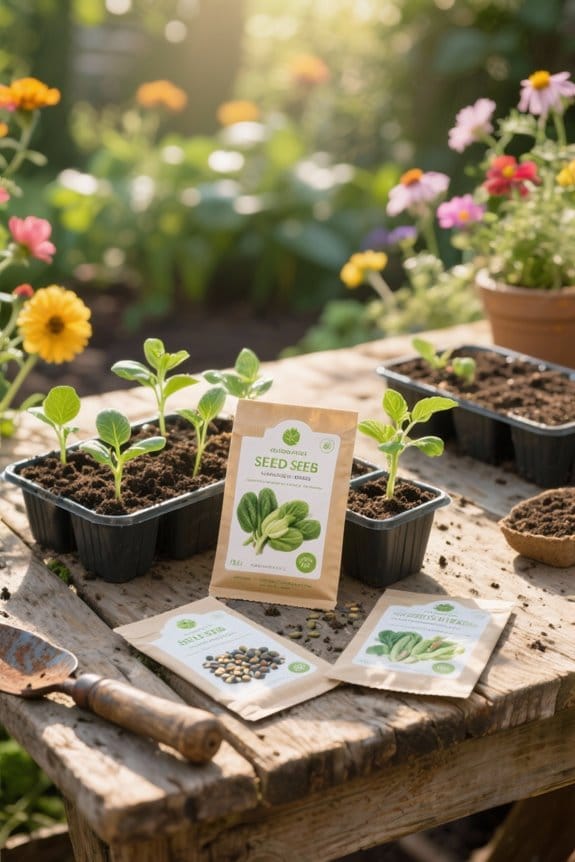
When gardeners consider their planting options, they often weigh the benefits of direct sowing against transplanting seedlings, as each method has distinct advantages. Direct sowing involves placing seeds directly into prepared garden soil, which is especially suitable for hardy vegetable plants such as corn and beans. This method requires thorough soil preparation, including removing debris and loosening the soil for ideal seed growth. Timing is essential; direct sowing should occur after the last frost, ensuring perfect conditions. In contrast, transplanting begins with seed starting indoors, allowing more delicate crops like tomatoes and peppers to thrive in a controlled environment. Layout planning also aids in proper spacing, vital for maximizing sunlight and nutrient access for developing plants. Additionally, integrating drip irrigation systems can enhance water efficiency and promote healthier plant growth when using either planting method.
Benefits of Transplanting Vegetables
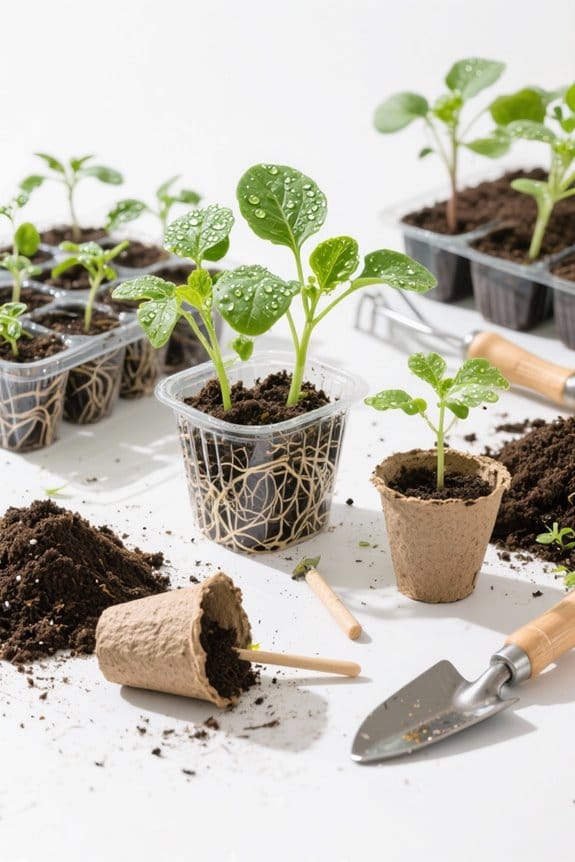
Transplanting vegetables offers several advantages that can greatly enhance a gardener’s yield and overall experience. By starting seedlings indoors 8-10 weeks before planting, gardeners can harvest crops like tomatoes and peppers weeks earlier than if seeds were direct sown. Established transplants typically develop stronger root systems, enabling plants to endure harsh weather conditions. Additionally, transplanting minimizes weed competition and reduces the risk of seedling damage, leading to healthier crop yields. This method also promotes uniformity in plant size and growth, particularly beneficial for crops such as beets and rutabagas. Gardeners can purchase these seedlings from a garden center, ensuring consistent starting conditions that contribute positively to their vegetable gardening success. By incorporating cover crop seeds like Hairy Vetch or Winter Rye in raised beds, gardeners can further enhance soil health and fertility, supporting the vigorous growth of transplanted vegetables.
Recommended Products
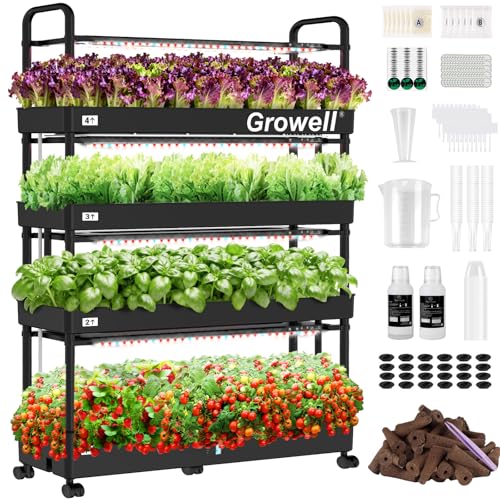
Large Hydroponics Growing System: Featuring 120 pods, the Growell vertical indoor garden allows you grow up to 120 plants at once, letting you cultivate vegetables, fruits, herbs, and flowers with ease. With a space-efficient size of 36.6''L*10.2''W*67.3''H, it maximizes yield while minimizing space. Compared to traditional soil gardening, it significantly reduces time, space, and water usage, speeding up growth cycles for efficient yields.
Dual Grow Light Mode, Increase Yield by 50%: Designed for urban farming enthusiasts, our smart hydroponics growing system kit features 53W LED dual grow light mode (16/22 hours). The 22-hour setting accelerates organic vegetables like tomatoes, boosting yields by 50% while enhancing sugar content—ideal for healthy eating or gifting as a unique gift. Enjoy fresh, nutrient-rich harvests year-round, even in balcony hydroponics setups.

Grow 88 Plants at Once — Big Harvest, Small Footprint This 3-tier system packs 88 large pods into a compact design. Grow enough veggies, herbs, and microgreens for your whole family — right on your kitchen counter. No yard? No problem.
Advantages of Direct Sowing

Recognizing the distinct benefits of direct sowing can greatly assist gardeners in making informed choices about their planting methods. Direct seeding is especially advantageous for root vegetables, such as carrots and radishes, as it minimizes root damage associated with transplanting. By planting seeds directly in garden soil during early spring, gardeners can utilize the specific natural conditions that promote a higher germination rate for crops like peas and beans. Additionally, seeds are generally less expensive than purchased plants, encouraging experimentation with various crops when starting your own seeds. Utilizing fertilizers like Jobe’s Organics Fast Start Granular during direct seeding can enhance plant strength. Finally, thinning seedlings post-sowing improves air circulation, benefitting the overall health and vigor of remaining plants. Using soaker hoses can further enhance direct sowing success by ensuring efficient and even water distribution directly to the roots, reducing water waste.
Factors to Consider for Each Planting Method

Choosing between direct sowing and transplanting involves understanding several important factors that can influence the success of a garden. For example, root crops like carrots and radishes prefer direct sowing as they thrive when seeds are planted directly into the soil, avoiding transplant stress. In contrast, tender vegetables such as tomatoes and peppers benefit from transplanting, allowing them to be started indoors 8-10 weeks before the last frost for an earlier harvest. Timing is essential; seeds must be sown when the soil is warm and the frost threat has passed. Additionally, some plants, like cucumbers and squash, adapt well to either method, thereby providing flexibility based on specific garden conditions and personal preferences. Proper garden preparation enhances seed germination and growth. It’s crucial to consider germination rates when selecting seeds, as high rates lead to more robust plant growth and successful gardening.
Recommended Products

CLEAR DOMES FOR OPTIMAL PROPAGATION: Tailored for seed, clone, and cutting propagation, our thin-wall dome offer a perfect balance of lightweight ease and enduring durability. Transparent for easy monitoring, these humidity domes for plants create an ideal environment for healthy germination and robust cloning. Suitable for both novice and experienced gardeners, humidity dome provides optimal conditions for seedling.

High-Quality durable BPA Free Polypropylene (#5) plastic with drain holes

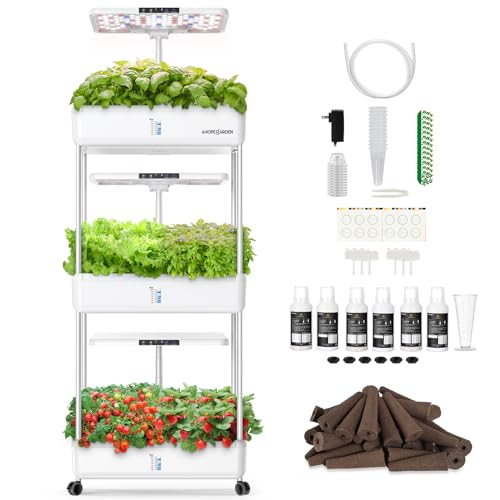
3X Growth Smart Dual Modes : Our Ahopegarden indoor garden is a versatile hydroponics growing system kit. It features "Vegetables" and "Fruits/Flowers" modes, each auto-setting the ideal 16h or 22h daily light cycle. The high-performance 30W full-spectrum grow light board unlocks hydroponic farming's potential, helping you achieve 3X speed and 40% higher yields. It's the perfect indoor gardening system for healthy eating enthusiasts growing nutrient-packed cherry tomatoes or leafy greens.
Best Vegetables for Transplanting

Certain vegetables exhibit distinct advantages when transplanted, particularly in the context of maximizing growth potential and yield. Common vegetables such as kale, early cabbage, broccoli, and cauliflower benefit greatly from transplanting. Seeds should be started indoors about six to eight weeks before the last frost, guaranteeing they are robust by the time they are moved outdoors. For pumpkins and watermelons, transplanting conserves seeds and minimizes thinning, optimizing a garden bed’s space. Transplanting these varieties gives them a head start in the growing season, leading to consistent crop sizes. To sum up, following these strategies guarantees that gardeners achieve the best way to plant vegetables, resulting in a reliable and bountiful harvest. Additionally, American Purple Top Rutabaga Seeds are known for their high germination rates and sweet, subtly spicy flavor, making them an excellent choice for transplanting in cooler climates.
Recommended Products

[ULTIMATE FOOD SECURITY]Massive 100,000+ Heirloom Seeds: Secure your family's future with a vast collection of 100+ diverse, open-pollinated fruit and vegetable varieties, ensuring a complete 5+ year harvest supply and long-term food security.

32 Types of USA-Sourced Heirloom Seeds Gardening Kit: The seed bank includes perennials like lavender daisy yarrow, nightshades like eggplant, tomatoes, 4 varieties of lettuce, windowsill herbs like basil parsley, fruit seeds, cold-hardy vegetables, companion plant seeds, leaf greens for year round planting.

Includes 100 Assorted Individual Packs of Seeds!
Best Vegetables for Direct Sowing
Direct sowing offers a practical method for planting a variety of vegetables directly into garden beds. Some of the best vegetables for this planting method include peas, which thrive when seeds germinate above 40°F, and grow successfully between 55° and 65°F. Spinach seeds should be sown directly outdoors in April to avoid summer bolting. Root vegetables, such as carrots, beets, and radishes, perform well when directly seeded, as this minimizes misshapen roots that can result from transplanting. Bush snap beans can be directly seeded every two weeks after frost danger, ensuring a continuous harvest. Summer squash and cucumbers also benefit from direct sowing in warm enough soils post-frost, promoting robust growth and high yields. Additionally, selecting grass seed with sunlight tolerance levels is crucial for establishing a lush lawn in shaded areas.
Recommended Products

Non-GMO Bulk Southeast Wildflower Seed Mix 25 Species of Wildflower Seeds

ORGANIC MATERIALS REVIEW INSTITUTE LISTED FOR TRUSTED GARDEN CARE Certified by OMRI for use in organic growing, GS Plant Foods Liquid Fish & Kelp Fertilizer delivers reliable, natural nutrition for vegetables, flowers, and shrubs.

Non-GMO Bulk Midwest Wildflower Seed Mix 25 Species of Wildflower Seeds
Tips for Successful Planting Methods
Successful planting methods depend on following specific guidelines to guarantee ideal growth and a bountiful harvest. For peak results, it is important to direct sow root crops like carrots and radishes, as they thrive when planted directly into the soil. When transplanting tender vegetables such as tomatoes and peppers, start seeds indoors 8-10 weeks prior, ensuring the soil is warm before moving them outdoors. To reduce transplant shock, always harden off seedlings by gradually exposing them to sunlight and outdoor conditions over a week. Additionally, when direct sowing, adhere to seed packet recommendations for depth and spacing; seeds should typically be planted twice as deep as their width. Mark rows for easy navigation and provide regular watering to enhance germination rates. For effective seed starting, consider using high germination rates seeds, ensuring a more reliable and successful growth cycle.
Recommended Products

Non-GMO Bulk Bulk Cornflower / Bachelor Button Seeds - "Tall Mix" Centaurea cyanus

Monarch Butterfly Wildflower Mix - 5 g Packet ~1,200 Seeds - Blend of: Milkweed seeds, Purple Coneflower seeds, Larkspur seeds, Zinnia seeds, Cosmos seeds, Marigold seeds, Liatris seeds, Wallflower seeds, Verbena seeds, Aster seeds, Indian Blanket seeds, and Mexican Sunflower seeds

🌱 Mini Clover Seeds – Non-GMO & Heirloom – Trifolium repens, a dwarf white clover with tiny leaves (1/3 to 1/2 the size of traditional clover). A low-growing, low-maintenance lawn alternative or cover crop. Perennial in Zones 3-10, annual elsewhere.
Frequently Asked Questions
Which Is Better, Direct Seeding or Transplanting?
Determining the better method depends on several factors: seed viability, germination rates, soil conditions, and weather considerations. Transplanting offers pest management and space efficiency advantages, while direct seeding aids in effective crop rotation.
Is It Better to Transplant Spinach or Direct Sow?
Direct sowing spinach generally yields better germination rates and uniform growth, especially in ideal soil temperatures. It minimizes seedling stress factors compared to transplanting, making it perfect for managing harvest timing and achieving robust plant development.
What Method of Planting Is Best Used on Vegetables?
In the garden, like a painter chooses colors, the best planting method for vegetables hinges on seedling growth, soil temperature, and pest control, balancing seed depth, plant spacing, growth time, and crop rotation for harmony.
Is It Better to Direct Sow or Transplant Lettuce?
Transplanting generally enhances lettuce growth through better control over transplant timing and improved leaf quality. Direct seeding allows for effective pest management and flexible harvest timing, provided soil preparation is ideal for both methods.