As an Amazon Associate, we earn from qualifying purchases. Some links on this site are affiliate links at no extra cost to you. Our recommendations are based on thorough research and editorial judgment.

The Difference Between Heirloom, Hybrid, and Open-Pollinated Seeds

Heirloom seeds are open-pollinated varieties preserved for 50 to 100 years, showcasing unique traits and traditional agriculture. Open-pollinated seeds allow for yearly seed saving, promoting genetic diversity and sustainability. F1 hybrid seeds are created through controlled crosses but do not produce true-to-type seeds, requiring annual purchases. Each seed type impacts gardening practices, biodiversity, and sustainability in distinct ways. Understanding these differences is essential for making informed choices in gardening and agriculture. More details await ahead.
Key Takeaways
- Heirloom Seeds are open-pollinated varieties preserved for generations, known for unique flavors and resilience, allowing true-to-type reproduction when saved.
- Open-Pollinated Seeds naturally produce diverse plants, facilitating year-to-year seed saving, crucial for sustainable gardening and maintaining genetic diversity.
- F1 Hybrid Seeds are created through controlled crosses for improved traits but do not reproduce true-to-type, requiring annual repurchasing of seeds.
- Heirloom and Open-Pollinated Seeds support agricultural biodiversity and traditional practices, whereas hybrids often lead to corporate control over genetics due to limited seed saving.
- Seed Selection should consider goals, local conditions, and flavor preferences, with heirloom and open-pollinated varieties often favored for their sustainability benefits.
Understanding Seed Types
Understanding the various types of seeds is fundamental for both hobbyist gardeners and commercial growers. Heirloom varieties are open-pollinated seeds that have been cultivated and passed down for generations, often dating before World War II. These seeds carry unique histories and exhibit significant genetic diversity, allowing for varied traits. Open-pollinated seeds, while stable and true-to-type, do not necessarily qualify as heirloom varieties, particularly if they lack historical significance. Hybrid seeds, also known as F1, are produced through controlled crosses between different plants. Though hybrid seeds can offer high yields and disease resistance, they do not produce true seeds suitable for saving. Selecting between these options affects garden diversity and future planting results. Open-pollinated seeds are particularly beneficial for biodiversity, as they promote a more sustainable and adaptable gardening ecosystem.
Characteristics of Open-Pollinated Seeds

Open-pollinated seeds possess distinctive characteristics that set them apart from hybrid varieties and contribute to their popularity among gardeners. They are produced through natural pollination methods, ensuring that growers can save seeds year after year while maintaining consistency. These seeds are genetically diverse, allowing for variations in flavor, color, and growth traits, which can enhance the gardener’s selection process. Certain open-pollinated plants are self-pollinators, minimizing the risk of cross-pollination and ensuring trait preservation. This genetic variability supports adaptation and improvement in plants over generations, making them well-suited to local growing conditions. While all heirloom seeds are open-pollinated, not all open-pollinated seeds carry historical significance, making ongoing research into seed selections important for potential growers. These seeds are often favored for their environmental benefits, similar to solar charging capabilities found in outdoor lighting, promoting eco-friendly practices in gardening.
Recommended Products

Pepper Seeds, Sweet - Marconi Red - Organic -- 1 Lb ~80000 Seeds -- Capsicum annuum

First Quality Organic Seeds – Current Lab Test Data Shown on Packet

First Quality Non-GMO Heirloom Tomato Seeds – Current Lab Test Data Shown on Packet
The History and Significance of Heirloom Seeds
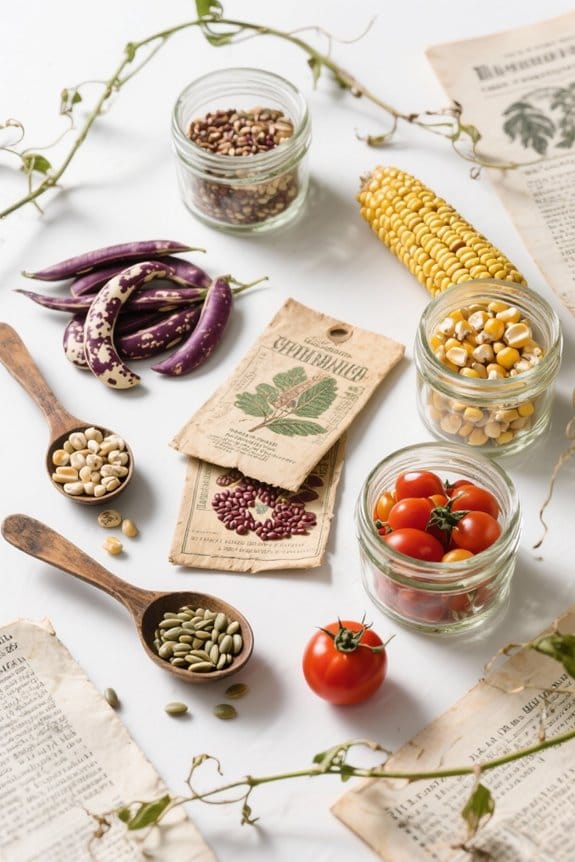
Heirloom seeds represent a vital link to agricultural history, having been cultivated and preserved for generations. These seeds, which have been passed down for 50 to 100 years, originated from subsistence farms in the 1700s and 1800s. They carry unique historical narratives that reflect traditional farming practices and flavors of their time. All heirloom varieties are open-pollinated seeds, allowing them to reproduce true-to-type when saved. This genetic diversity leads to various flavors, colors, and notable disease resistance compared to modern hybrids. The widely accepted definition emphasizes seeds in circulation before World War II, although some debates suggest that the criteria may evolve. Understanding heirloom seeds is essential for appreciating their role in sustainable agriculture and biodiversity. Additionally, heirloom seeds often offer unique flavors not typically found in hybrids, which contribute to their enduring popularity among gardeners and chefs.
Exploring F1 Hybrid Seeds

F1 hybrid seeds represent a significant advancement in agricultural science, resulting from the deliberate crossing of two genetically diverse parent plants. These seeds often display hybrid vigor, leading to increased growth energy, productivity, and improved disease resistance compared to open-pollinated seeds. F1 hybrids are engineered for specific desirable traits, such as enhanced shelf life and greater yields, making them popular in commercial farming. However, they cannot produce true-to-type seeds; saved seeds typically revert to one of the parent plants instead of maintaining hybrid characteristics. This lack of seed-saving capability means gardeners must purchase F1 hybrid seeds annually, contrasting with open-pollinated varieties that allow year-after-year re-planting. Consequently, F1 hybrids are often less suitable for home gardeners focused on sustainability. It’s important to consider germination rates when selecting seeds, ensuring a minimum of 90% for successful growth.
Recommended Products

Squash Seeds - Japanese, Winter - Tetsukabuto - Hybrid -1 Lb ~2496 Seeds - Cucurbita maxima X Cucurbita moschata

Ancho Sanchez F1 Pepper 1/4 LB ~16,800 Seeds - Capsicum annuum

Tomato Seeds - Momotaro - Hybrid -1000 Seeds ~1000 Seeds - Solanum lycopersicum
Advantages of Open-Pollinated Seeds

A diverse array of advantages exists for those choosing open-pollinated seeds in their gardening practices. These seeds allow gardeners to save seeds each season, ensuring that plants remain genetically identical to their parent, which promotes consistent growth. Additionally, open-pollinated seeds enhance genetic diversity, enabling gardeners to cultivate desirable traits, ultimately fostering more resilient gardens. They encompass both self-pollinating and cross-pollinating varieties, the latter requiring specific spacing for true-to-type plants. Moreover, open-pollinated seeds align with sustainable gardening efforts, as they reduce reliance on commercial sources. Importantly, many heirloom varieties, forming part of open-pollinated seeds, are celebrated for their rich flavors and unique characteristics, enhancing the overall gardening experience while preserving valuable plant genetics. By choosing heirloom seeds, gardeners can support a diverse ecosystem in their home gardens, promoting biodiversity and sustainability.
Recommended Products

First Quality Native Wildflower Seeds – Current Lab Test Data Shown on Packet

First Quality Native Wildflower Seeds – Current Lab Test Data Shown on Packet

First Quality Native Wildflower Seeds – Current Lab Test Data Shown on Packet
The Unique Traits of Heirloom Varieties
Unique traits mark heirloom varieties, differentiating them from other types of seeds in the gardening world. Heirloom seeds have been passed down for at least 50 to 100 years, often celebrated for their unique characteristics and exceptional flavors. These seeds connect gardeners to specific families and historical narratives, adding cultural significance to their growing practices. As open-pollinated varieties, heirlooms guarantee plants grow true to type, allowing gardeners to save seeds for future planting while maintaining consistent traits. Additionally, many heirloom plants exhibit remarkable sensory qualities, making them preferred choices for culinary applications. The genetic diversity found in heirloom varieties also contributes to resilience, improving their adaptability in various environmental conditions, thereby enhancing their value in gardening. Like energy-efficient designs, heirloom seeds offer long-term benefits by promoting biodiversity and sustainability in agricultural practices.
Hybrid Seeds: Benefits and Limitations
Hybrid seeds, particularly those developed as F1 hybrids, offer significant advantages in the gardening and farming sectors due to their increased vigor and productivity. These plants arise from controlled crossbreeding of two different varieties, resulting in features like enhanced disease resistance and uniform growth. This allows them to thrive in commercial farming and adverse conditions effectively. However, a limitation exists; hybrid seeds do not produce genetically true-to-type seeds when saved, necessitating new purchases annually. While hybrids provide higher yields, they lack the genetic diversity of open-pollinated and heirloom varieties, which can adapt better over time. Additionally, hybrid seeds tend to be more expensive, with prices ranging from a few cents to over a dollar per packet, reflecting their development costs. Many advanced irrigation systems integrate with smart home devices, enhancing the efficiency and convenience of growing hybrid plants by allowing precise control over watering schedules and conditions.
Recommended Products

Tomato Seeds - Mountain Delight F1 Hybrid -- 1 Oz ~6800 Seeds -- Lycopersicon esculentum

Cucumber Seeds - Eversweet F1 Hybrid -- 1 Lb ~15200 Seeds -- Cucumis sativus

Pepper Seeds - Hot - Ristra Cayenne F1 Hybrid -- 0.25 Oz ~1000 Seeds -- Capsicum annuum
Seed Saving Practices for Different Types
Effective seed saving practices vary considerably depending on the type of seeds being cultivated. Open-pollinated (OP) seeds allow gardeners to save seeds year after year, provided they practice proper isolation to prevent cross-pollination. Isolating these OP varieties, particularly corn, is essential to maintaining true-to-type traits. Heirloom seeds, which are a category of OP seeds, should be grown for at least 50-100 years to preserve their unique characteristics. In contrast, F1 hybrids do not permit effective seed saving, as the offspring do not replicate the parent’s traits. Consequently, gardeners must purchase new F1 hybrid seeds annually. Understanding sunlight requirements helps establish suitable planting areas, which is crucial for successful germination. Adopting these seed saving techniques promotes local biodiversity and helps maintain the resilience of cultivated varieties over time.
Choosing the Right Seeds for Your Garden
Choosing the right seeds for a garden is essential, as it sets the foundation for successful cultivation and harvesting. Gardeners should assess their specific gardening goals, reviewing factors such as space, climate, and desired flavors. Heirloom and open-pollinated seeds allow for saving and replanting each year, offering genetic stability that aids adaptation to local conditions. Conversely, hybrid seeds, particularly F1 hybrids, often provide specific advantages like disease resistance but cannot be saved for future planting. Seed catalogs are valuable tools, containing detailed descriptions and historical narratives that guide decision-making. Therefore, by understanding the distinct characteristics of heirloom, open-pollinated, and hybrid seeds, gardeners can align their selections with their individual gardening objectives. For example, Bachelor Buttons are classified as annuals, offering vibrant garden colors while also attracting beneficial insects to enhance the garden ecosystem.
Recommended Products

First Quality Native Wildflower Seeds – Current Lab Test Data Shown on Packet

Vegetable Garden & Microgreens Sprouting Seeds: Radish - Sango - 25 Lb
First Quality Organic Seeds – Current Lab Test Data Shown on Packet
Environmental and Ethical Considerations in Seed Selection
How does seed selection impact environmental and ethical farming practices? Choosing open-pollinated seeds and heirloom seeds substantially supports agricultural biodiversity, fostering genetic diversity essential for ecosystem resilience and adaptation to climate change. Heirloom seeds often possess unique traits and historical narratives, which preserve traditional agricultural practices. In contrast, hybrids may offer increased productivity and disease resistance but often reinforce corporate control over seed genetics, which can compromise sustainable farming values. Many organic farmers choose open-pollinated and heirloom varieties to promote environmental sustainability. Seed saving from these varieties empowers gardeners to cultivate plants suited to local conditions, fostering community practices while aiming to protect and share agricultural biodiversity. Such choices ultimately influence ecological health and ethical standards in farming. Non-GMO seeds promote environmentally friendly gardening practices, encouraging biodiversity and reducing reliance on commercial seed suppliers.
Frequently Asked Questions
Are Open-Pollinated and Heirloom the Same?
Open-pollinated seeds and heirloom seeds share some similarities, yet they diverge in characteristics. Open-pollinated offer genetic diversity, while heirlooms emphasize tradition. Both support seed saving and align with organic gardening practices, but heirloom roots are historically significant.
Which Seeds Are Better, Open-Pollinated or Hybrid?
Open-pollinated seeds offer benefits like seed saving and diverse flavor profiles, while hybrid seeds provide stability and superior disease resistance. Ultimately, the choice depends on the gardener’s priorities regarding sustainability versus specific agricultural traits.
Are Heirloom Seeds Better Than Hybrid Seeds?
“Apples and oranges” illustrates varying gardening preferences. Heirloom seed benefits include rich flavors and sustainability factors, while hybrid seed advantages emphasize higher yields and disease resistance. Ultimately, suitability depends on individual gardener values and desired outcomes.
What Does It Mean if a Seed Is Open-Pollinated?
An open-pollinated seed means it is produced through natural pollination methods, ensuring genetic diversity. This approach supports seed saving, enhances crop reliability, and positively influences environmental impact by fostering resilient plant populations adapted to local conditions.