As an Amazon Associate, we earn from qualifying purchases. Some links on this site are affiliate links at no extra cost to you. Our recommendations are based on thorough research and editorial judgment.

How to Bury Low-Voltage Landscape Lighting Wire Correctly

To bury low-voltage landscape lighting wire correctly, dig a trench 6 to 12 inches deep, ensuring protection from damage. Use 12 or 14 gauge low-voltage wire rated for direct burial, which should be UL-listed and weather-resistant. Lay the wire straight without sharp bends, and inspect regularly for any issues. Consider using PVC conduit for extra protection in high-risk areas. Proper installation prevents hazards and enhances system reliability; further details are available on optimizing your setup.
Key Takeaways
- Bury the low-voltage wire 6 to 12 inches deep to ensure safety and compliance with local regulations.
- Use direct burial-rated wire, preferably 12 or 14 gauge, to avoid damage and ensure performance.
- Lay the wire straight in the trench without sharp bends to maintain optimal functionality.
- Consider using PVC conduit in rocky or hardscape areas for extra protection against damage and moisture.
- Regularly inspect buried wires every six months for damage, ensuring the longevity of your landscape lighting system.
Importance of Proper Burial of Landscape Lighting Wire
Proper burial of landscape lighting wire is critical for safety and functionality. Burying low voltage wire at a depth of 6 to 12 inches not only protects it from environmental damage, but also reduces tripping hazards for both people and pets. This proper burial technique guarantees that landscape lighting wire remains hidden, contributing to an aesthetically pleasing environment free from unsightly visible wires. Additionally, compliance with local ordinances regarding burial depth is essential for avoiding potential liabilities and maintaining safety standards. Correctly burying the wire helps prolong the lifespan and functionality of the lighting system, which ultimately reduces future repair costs. Attention to these details is fundamental for a safe and efficient landscape lighting installation. Moreover, using weather-resistant, high-quality materials ensures longevity and durability under various weather conditions.
Preparing Your Yard for Landscape Lighting Installation
Preparing a yard for landscape lighting installation requires careful planning and attention to detail. It is vital to assess the soil type; rocky soil may necessitate using conduit to protect low-voltage wiring. Before digging, ground aeration and dethatching can optimize conditions for wiring burial while promoting healthy plant growth. A well-thought-out layout should guarantee that lighting fixtures are placed at least 10 feet from the transformer, allowing for proper power distribution. Local ordinances often specify the minimum burial depth for low-voltage wiring, typically between 6 to 12 inches. Additionally, identifying potential obstacles, such as existing plants and utility lines, is essential to prevent damage during trench digging, facilitating a clean installation process for the wiring. Consider using IP65 rated bollard lights to ensure weather resistance and durability in harsh outdoor conditions.
Local Regulations for Landscape Lighting Installation
Understanding local regulations for landscape lighting installation is vital for homeowners aiming to create a safe and compliant outdoor environment. Many areas mandate a minimum burial depth of 6 to 12 inches for low-voltage wiring. These regulations may also dictate specific installation techniques, such as using conduit in particular soil types that complicate direct burial. Additionally, requirements can vary considerably, making it important for homeowners to consult local ordinances. This guarantees adherence to proper materials and methods. Noncompliance can lead to fines or necessitate the redoing of installations. Homeowners are encouraged to check local building codes for guidance on wiring methods and transformer placements, as these details are essential in creating an effective landscape lighting system. Solar pillar lights offer an energy-efficient option for outdoor illumination, reducing electricity costs while enhancing aesthetics.
Recommended Products
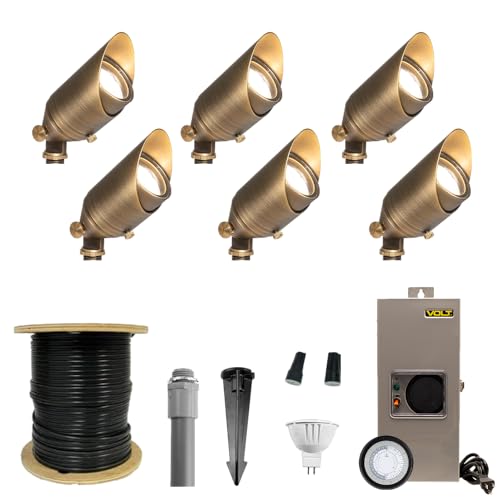
COMPLETE KIT - Includes (6) VOLT Top Dog Scotty cast brass spotlights with 4-foot lead wires, (6) Single-source 5W MR16 LED bulbs (30W halogen replacement) with warm white 2700K color temperature and 38-degree beam spread, (1) 150-Watt Slim Line LED Transformer with mechanical timer, (1) 24-inch length of 3/4-inch PVC conduit for the transformer, (12) DryConn waterproof wire connectors, (6) 10-inch Hammer Stakes, and 100 feet of 14/2 direct burial cable.

【Specification】SPT-2W, 500FT 8/2 Conductors, PVC insulation, pure copper, VW-1 fire resistant, Great for low voltage use.

COMPLETE KIT - Features (6) G2 Fat Boy bronze brass spotlights with 25-foot lead wires (UL Listed); (6) single-source 5W MR16 LED bulbs (30W halogen replacement) with warm white 2700K color temperature and 38-degree beam spread (UL & ETL Listed); (1) 150-Watt Slim Line LED Transformer with mechanical timer (ETL Listed); (1) 24-inch length of PVC conduit for the transformer; (6) 10-inch Hammer Stakes; (1) Pro Junction Hub with 9-inch PVC ground stake; 100 feet of 14/2 direct burial cable.
Choosing the Right Wire for Your Landscape Lighting
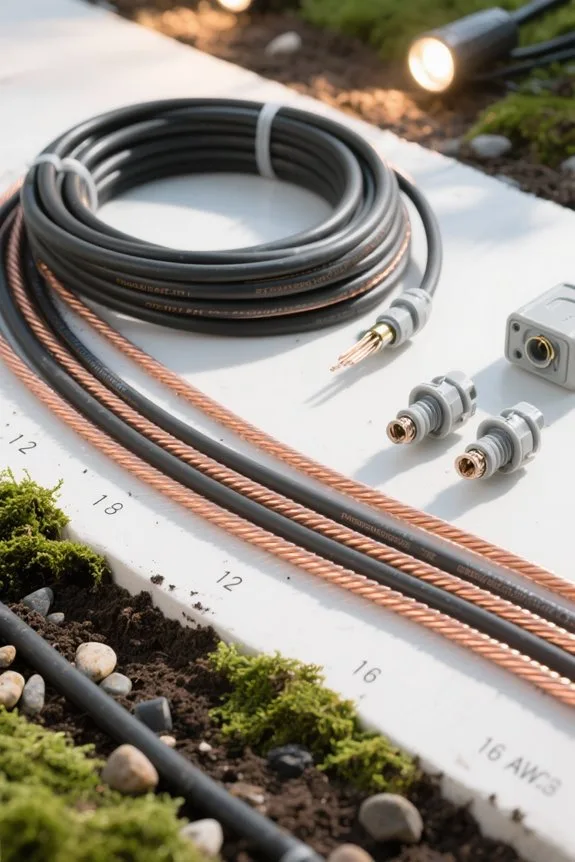
Selecting the right wire for landscape lighting is essential for guaranteeing both safety and efficiency. Choose low voltage cable rated at 12 or 14 gauge, which supports safe operation for low voltage lighting systems. Verify the wire is designed for direct burial and is weather-resistant, as this enhances durability against environmental factors. It is also critical to confirm that the wire is UL-listed and complies with National Electrical Code (NEC) regulations for reliability. Additionally, consider the total wattage of the lighting system to minimize voltage drop; using thicker wire can help achieve this. Finally, always adhere to local codes and guidelines regarding wiring at least six inches deep to guarantee compliance and safety in installation. For reliable plumbing solutions, including vacuum breakers, it’s important to select high-quality materials to ensure long-lasting performance and compliance with safety standards.
Recommended Products

6 BRASS SPOTLIGHTS - The included solid brass (black finish) spotlights feature toolless adjustability for precision aiming of light output, pre-attached ground stakes for quick and easy installation, 25-foot lead wires and pre-installed LED MR16 bulbs (5W | 400 lumens | 38 degrees | 2700K warm white). Ideal for illuminating small trees and bushes, statuary, architectural features and other uplighting applications.

SPECIFICATIONS: 6/3AWG 100 ft rated 600 volts, Durable Copper Construction Features three solid copper conductors with a PVC jacket

SPECIFICATION: 500 Feet, 10AWG*2C, Black, can prevent power drop, suitable for long distance landscape lights installation
Determining the Ideal Depth for Burial
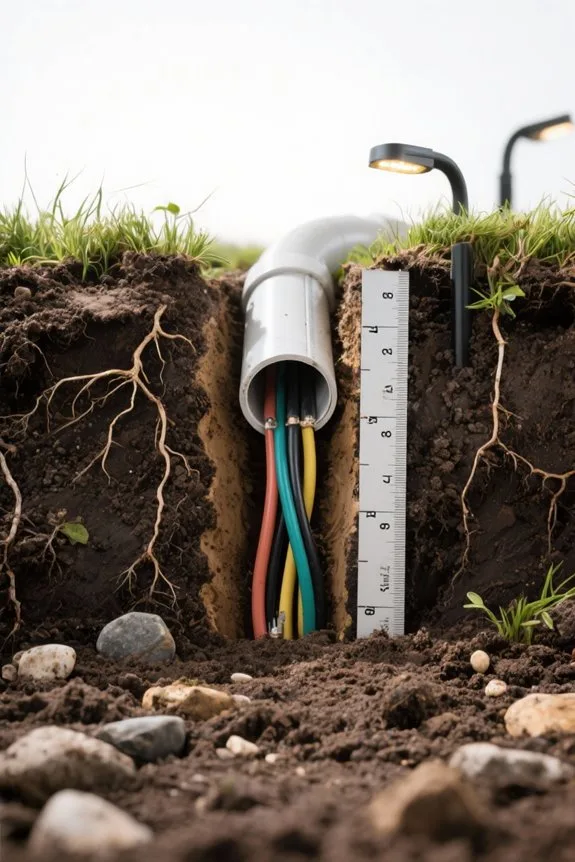
A burial depth of 6 to 12 inches is recommended for low-voltage landscape lighting wire to guarantee both safety and peak performance. Burying the wire at this depth helps prevent water absorption and wire breakage, while also reducing the risk of accidental damage to humans and animals. Homeowners should verify local ordinances, as they may dictate a minimum burial depth which can differ. For areas prone to rodent activity, deeper burial may be necessary to protect the wires from chewing. Additionally, soil type and environmental conditions must be considered; for example, rocky soil may necessitate the use of conduit for added protection. Following these guidelines guarantees maximum functionality and safety for landscape lighting systems. Versatile options for planting such as those used for Asiatic lilies can also be considered when planning landscape lighting, ensuring a cohesive and visually appealing outdoor space.
The Best Process for Burying Landscape Lighting Wire
When burying landscape lighting wire, homeowners typically start by evaluating the site to identify any obstacles, ensuring that the planned layout minimizes disruption. Utilizing a trenching tool, they dig a trench that is 6 to 12 inches deep for low-voltage wiring, adhering to local ordinances for proper burial depth. For added protection, particularly when running wire under sidewalks or driveways, it is advisable to use PVC conduit. The low-voltage wire should be laid straight in the trench without sharp bends, optimizing performance. Once positioned correctly, the wire can be covered with soil, keeping the area tidy and concealed. Regular inspections of the buried wire are essential to check for any signs of damage or issues in the landscape lighting system. Polyurethane soaker hoses have a life expectancy of 5 to 10 years, making them a durable option for garden irrigation systems.
Recommended Products

CABLE TYPE: Southwire 14-2 UF-B (Underground Feeder) cable is designed for direct burial and outdoor wiring applications.

FASTER AUTOFOCUS: Shoot up to 24fps with 0.05s auto focus and wide 315 phase-detection AF points

Solid Brass Construction - The Gardenreet landscape path light with heavy duty solid die-cast brass construction is more durable and reliable than aluminum and plastic fixtures; bronze landscape lights will not rust, age, or peel over time and last a lifetime with a single installation.High-end brass finish, Classical glossy colors that shine in the light and make you win the praise and envy of neighbors
Challenges Homeowners Face When Installing Landscape Lighting
Installing landscape lighting presents several challenges that can hinder a homeowner’s efforts, especially if they are inexperienced in this area. Selecting the correct wiring for low-voltage landscape systems is vital, as incorrect choices can lead to safety hazards and inefficiencies. Additionally, lacking specialized tools, like trenchers and wire cutters, complicates installation, potentially resulting in improper digging and wiring. Homeowners face risks of damaging existing landscape elements or utility lines, which can incur costly repairs. Furthermore, improper installation methods may create difficulties for future repairs, making access to wiring issues problematic. Without sufficient knowledge and experience, planning and executing outdoor lighting systems may result in ineffective and inefficient lighting setups for the homeowner. It’s important to choose weather-resistant designs with high IP ratings to ensure that the lighting fixtures function reliably in various climates.
Tips for Hiding Landscape Lighting Wire
Hiding landscape lighting wire effectively requires careful planning and execution, ensuring the installation enhances the outdoor aesthetic without compromising functionality. To achieve this, bury the low-voltage lighting wire approximately 6 inches underground, especially near walkways and garden beds, for an unobtrusive look. Utilizing soil, mulch, or decorative rocks can seamlessly conceal the wiring in flower beds, contributing to a neat appearance. For hardscape areas, consider using PVC conduit to protect the wire and maintain a clean look above ground. Additionally, running guide wires behind trees or shrubs can help disguise the installation while ensuring accessibility for future maintenance. A systematic burial plan is essential, as it deters rodents and reduces the risk of wire exposure, thereby enhancing safety in outdoor spaces. Consider using adjustable flow rates in your irrigation systems to cater to specific plant watering needs, ensuring efficient and targeted watering solutions.
Advantages of Using Conduit for Protection
The use of conduit for protecting landscape lighting wire serves several important functions that enhance the longevity and reliability of the system. Conduit provides exceptional protection against physical damage and environmental factors such as moisture. This is especially important in areas that experience heavy rainfall or flooding, as moisture can lead to corrosion and electrical failure of the wire. Conduit also serves as a barrier against rodent damage, deterring animals from nibbling on or burrowing through the wiring. Different types of conduit, like PVC or rigid metal, offer varied levels of security, allowing users to choose based on specific landscape conditions. With a burial depth requirement of only 6 to 12 inches, conduit simplifies installation while ensuring protection against accidental damage. Additionally, energy-efficient LED bulbs consume less electricity while delivering higher lumen output, which can further enhance the performance and sustainability of your landscape lighting system.
Recommended Products

PROFESSIONAL-GRADE UTILITY LOCATOR – Locate underground electrical lines, telecom cables, irrigation wires, and metallic pipes with precision over 1 mile (1.6 km) and depths up to 20 feet (6 m) with the 551 underground wire locator.
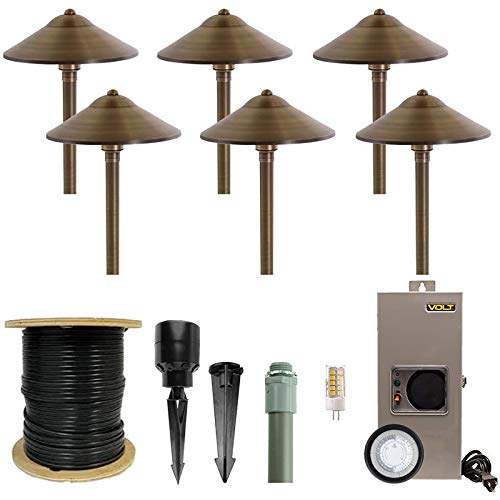
COMPLETE PATH & AREA LIGHTING KIT - Includes six (6) solid cast brass Max Spread path lights, one (1) premium 150-watt high performance transformer designed for LED landscape lighting, six (6) 3W LED G4 bi-pin bulbs, one (1) Pro Junction Hub that uses clamp-type connectors, one (1) conduit, 100 feet of direct burial cable and six (6) easy-install Hammer Stakes. Everything you need for a professional landscape lighting system, bundled for additional savings!

Southwire WIRE BUILD 12/2UFW/GX500FT 20A 12/2UF-WGX500
Long-Term Care and Maintenance of Landscape Lighting Systems
Maintaining a landscape lighting system requires regular attention to confirm peak performance and longevity. Homeowners should utilize low and weather-resistant, direct-burial rated wiring to guarantee durability and reduce future maintenance services. Inspect the system regularly, focusing on areas like wiring connections, which must be sealed to protect against dirt, moisture, and corrosion. Additionally, upgrading to smart timers can enhance efficiency while installing moisture-proof connectors promotes long-term reliability. Homeowners should consider conducting inspections every six months to identify issues such as damaged wires or overloaded transformers before they lead to costly repairs. Engaging professional maintenance services can provide guidance and support, emphasizing the importance of licensed and code-compliant installations for peace of mind. Consider using durable materials like PVC or stainless steel for components to resist corrosion and enhance the longevity of your lighting system.
Benefits of Hiring a Professional Installer
When considering the installation of a landscape lighting system, hiring a professional installer can prove to be a wise decision, as it often simplifies the process. Professionals guarantee that the system is installed correctly, adhering to local regulations and safety codes. This compliance reduces risks of legal issues and potential hazards associated with electrical wiring. Furthermore, experienced installers select high-quality materials and tools, enhancing the durability of the system. By preventing damage to existing landscape elements or utility lines, homeowners avoid costly repairs. Additionally, professional installers offer warranties and ongoing support, which contribute to the system’s longevity and efficiency. Overall, entrusting installation to an expert can lead to reduced long-term costs, as fewer repairs will be needed.
Recommended Products

COMPLETE PATH & AREA LIGHTING KIT - Includes six (6) path lights, one (1) 150W low voltage transformer, one (1) mechanical timer, six (6) 3W 2700K LED G4 bulbs, six (7) 10-inch Hammer Stakes, twelve (12) waterproof wire connectors, one (1) conduit, and 250 feet of direct burial cable. Everything needed for a professional outdoor lighting system, bundled for additional savings!

EXPANSION KIT - Purchase a low voltage transformer separately or use this kit as-is to expand an existing outdoor lighting system. It includes all of these components, bundled together to save you time and money: (4) VOLT Infiniti 30 cast brass integrated LED spotlights with 4-foot lead wires, (8) DryConn waterproof wire connectors, (4) 10-inch Hammer Stakes, and 100 feet of 14/2 direct burial cable.

6 BRASS SPOTLIGHTS - The included solid brass (bronze) spotlights feature toolless adjustability for precision aiming of light output, pre-attached ground stakes for quick and easy installation, 25-foot lead wires and pre-installed LED MR16 bulbs (5W | 400 lumens | 38 degrees | 2700K warm white). Ideal for illuminating small trees and bushes, statuary, architectural features and other uplighting applications.
Frequently Asked Questions
How Deep Should You Bury Low-Voltage Landscape Wire?
Low-voltage landscape wire should typically be buried 6 to 12 inches deep. Burial depth considerations impact moisture resistance and maintaining cable integrity, essential for preventing water damage and ensuring longevity, especially in wildlife-prone areas.
How to Bury a Low Voltage Lighting Cable?
To bury a low-voltage lighting cable, follow wire installation tips by digging 6 to 12 inches deep. Employ wire protection methods, such as PVC conduit, while ensuring landscape design aesthetics remain intact for a visually appealing outcome.
How to Dig Trench for Low Voltage Lighting?
To dig a trench for low-voltage lighting, employ effective trenching techniques. Consider the soil’s condition for easier digging, and utilize conduit for wire protection, ensuring a consistent width and depth for ideal installation.
What Is the Rule of Thumb for Landscape Lighting?
The rule of thumb for landscape lighting emphasizes strategic lighting placement and maintaining adequate spacing for ideal landscape aesthetics, while ensuring wire insulation remains protected against environmental effects and potential damage from wildlife.


