As an Amazon Associate, we earn from qualifying purchases. Some links on this site are affiliate links at no extra cost to you. Our recommendations are based on thorough research and editorial judgment.

The Benefits of Deep Watering vs. Frequent Shallow Sprinkling

Deep watering saturates soil to a depth of 6 to 8 inches, fostering strong root systems that promote drought resilience and improve nutrient uptake. This method requires watering only 1 to 2 times per week, reducing water usage and maintenance tasks. In contrast, frequent shallow sprinkling encourages weaker roots and increases the risk of disease due to uneven moisture distribution. Understanding these differences can lead to better lawn health and efficient watering practices, with more insights available ahead.
Key Takeaways
- Deep watering develops robust root systems that enhance drought resistance, while shallow sprinkling encourages weak, shallow roots that struggle during dry spells.
- Deep watering reduces the frequency of irrigation to 1-2 times a week, helping conserve water and lower maintenance efforts compared to frequent shallow sprinkling.
- Deep watering promotes consistent soil moisture across the lawn, while shallow sprinkling can lead to uneven moisture distribution and brown patches.
- Deep watering decreases the risk of fungal diseases by avoiding consistently moist topsoil, a common issue with frequent shallow watering practices.
- Deep watering enhances nutrient uptake efficiency in grass, contributing to overall lawn health, while shallow watering limits plants’ access to essential nutrients.
Understanding Deep Watering
Deep watering is an effective irrigation technique that focuses on saturating the soil to a depth of 6 to 8 inches, which supports the development of robust, deep root systems in plants. This method enhances root development by encouraging roots to penetrate deeper, promoting better access to soil moisture. As the roots reach deeper layers, plants gain improved drought tolerance, allowing them to thrive during dry periods. Typically, deep watering sessions last between 30 to 40 minutes, making them longer compared to traditional shallow watering methods. Additionally, a well-implemented deep watering routine reduces water loss due to evaporation, thereby increasing irrigation efficiency. Establishing deep roots also enhances plants’ stability, nutrient uptake, and overall resilience against environmental stressors. Incorporating eco-friendly materials in irrigation systems, like recycled rubber in soaker hoses, further supports sustainable gardening practices and efficient water use.
Understanding Shallow Watering
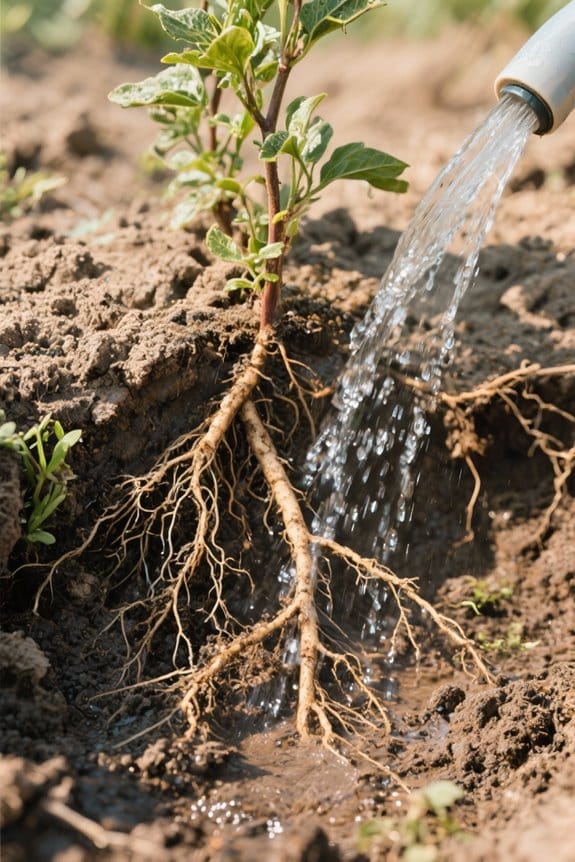
How does shallow watering impact plant health and root development? Shallow watering encourages the root system to stay near the surface, typically moistening only a few inches of soil. This method, which generally involves watering for about 20 minutes daily, can lead to weaker roots that require frequent irrigation. Additionally, moisture evaporation from the soil surface during hot weather can stress plants. While shallow watering helps establish surface roots for newly planted lawns and patio plants, it does not promote drought resilience long-term. As a result, plants may struggle to access deeper moisture levels during dry spells. To guarantee robust plant health, it is important to water deeply, allowing roots to reach stable moisture levels and develop more strength. Using multi-pattern spray nozzles available in coil garden hoses can provide the flexibility needed for both shallow and deep watering, catering to different plant needs effectively.
Advantages of Deep Watering
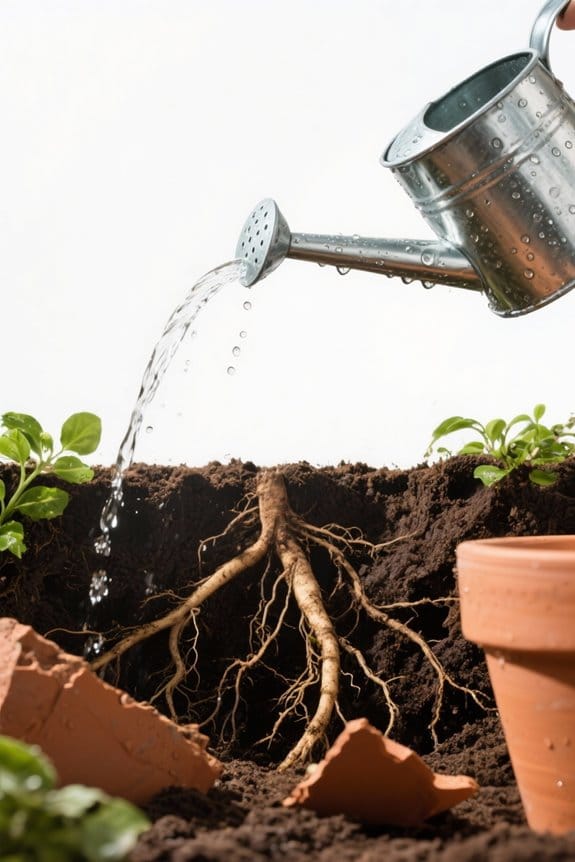
A key benefit of deep watering lies in its ability to cultivate robust root systems in plants, which markedly enhances their stability and nutrient uptake. This practice guarantees that soil remains moist to depths of 6 to 8 inches, encouraging roots to grow deeper. As roots reach lower soil levels, plants become less dependent on surface moisture, reducing water loss from evaporation. Deep watering also increases resilience during extreme weather, resulting in improved survival rates for plants during droughts and heat waves. By adopting deep watering methods, homeowners can reduce the frequency of watering required, preventing issues related to overwatering, such as soil saturation, diseases, and weed growth, ultimately leading to healthier lawns and optimized irrigation systems. Incorporating efficient irrigation solutions such as soaker hoses can further enhance deep watering practices by providing consistent moisture distribution and conserving water.
Recommended Products

EFFORTLESS, EFFICIENT WATERING: The 700 Series 1/2" Inner Diameter Soaker Hose delivers slow, even watering right at the roots - where plants need it most. It provides a consistent water weep from end to end, giving your garden deep, gentle hydration without waste. It's truly unlike any soaker hose you've used before.

GENTLE WATERING: Diffuses the flow of the water, ensuring it doesn’t dig up your plants and soil.

Disadvantages of Shallow Watering
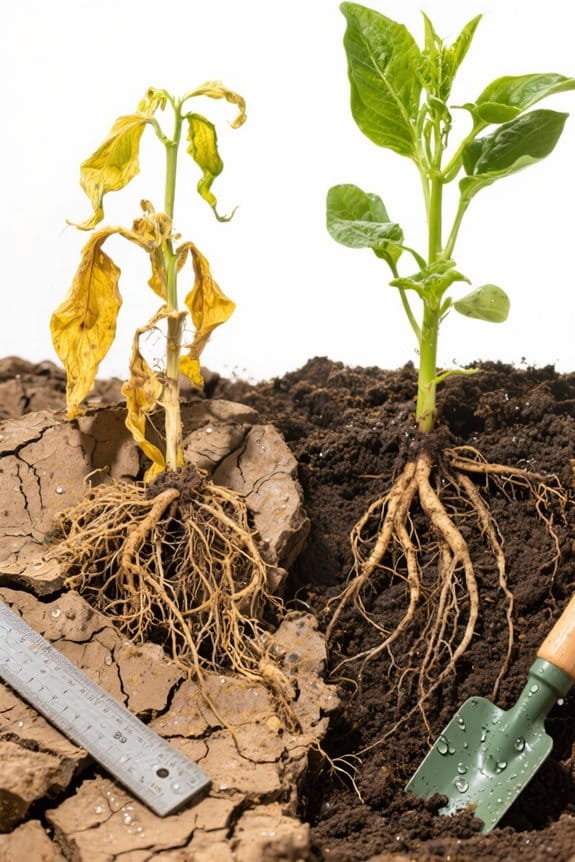
Shallow watering presents several disadvantages that can negatively impact the health and sustainability of plants. This practice encourages the development of a shallow root system, which makes plants less resilient to drought conditions. Additionally, frequent shallow sprinkling can create uneven moisture distribution, resulting in brown or dead patches. As the top layer of soil remains consistently moist, shallow watering increases the risk of fungal diseases, neglecting the deeper moisture needs of roots. Furthermore, this method leads to higher evaporation rates, consuming more water and reducing irrigation efficiency. Over time, reliance on shallow watering fosters an environment where weeds thrive, as they can more easily access surface moisture compared to plants with deeper root systems, ultimately compromising garden health. Implementing a drip irrigation system can significantly enhance water efficiency by providing targeted watering that minimizes waste and supports healthy plant growth.
When to Water: Timing Considerations
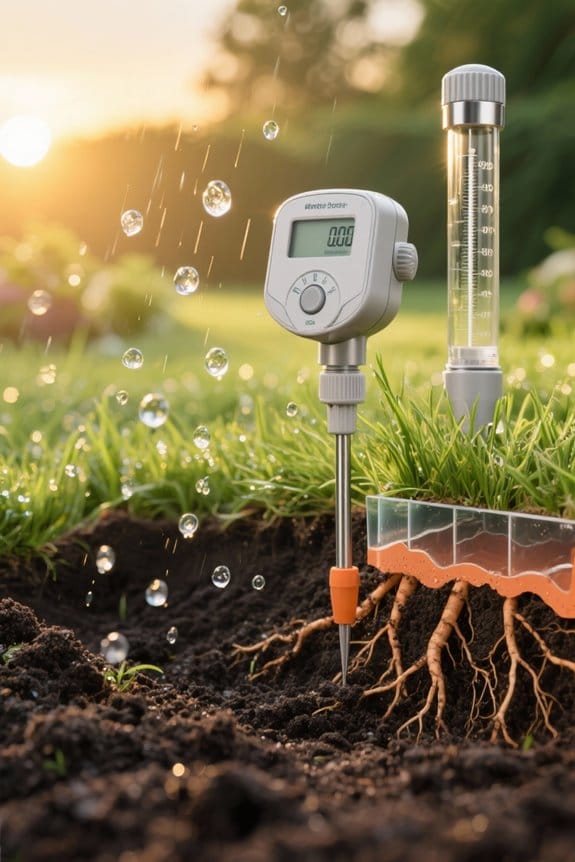
Watering plants at the right time greatly impacts their overall health and growth. The ideal time to water is early morning, specifically between 4 a.m. and 10 a.m., allowing soil to absorb moisture before the sun causes evaporation. For effective deep watering, a frequency of 1 to 2 times a week is generally adequate, ensuring moisture penetrates deeply and promotes robust root growth. In spring, watering every two weeks is recommended, while summer may necessitate up to twice a week due to increased evaporation rates. Seasonal adjustments in watering frequency, such as once a month in winter, accommodate varying soil type needs and enhance overall water efficiency, consequently supporting healthier plants through appropriate watering practices. It is important to select weather-resistant materials for irrigation supplies to ensure durability and longevity even in harsh weather conditions.
Recommended Products

For planters, plants and trees 1-2 gallons in size (or root ball diameters of about 7 inches to 10 inches) - Soil Moisture Stabilizer - prevents soils from getting too wet (root rot) or too dry (tree suffering). Soil will remain at a healthy, moist level for the plant or sapling to thrive. If the soil seems too dry, look at how the plant is doing or use a moisture meter to measure. Make sure to use potting or garden soil.

【SUBMERSIBLE PUMP】Deep well submersible solar water pump, made of high quality 304 stainless steel, corrosion resistance, heat resistance, high temperature resistance. Alloy mechanical seal, longer working life and high reliability. High lift, large flow, small size, easy to carry. Suitable for using in ships, fishing boats, fish ponds, agricultural irrigation and etc.

Standard 3/4" Garden Hose Thread Connections
Techniques for Effective Deep Watering
Effective deep watering techniques are essential for guaranteeing that plants receive sufficient moisture, promoting healthy root development. To achieve deep root saturation, it is recommended to water the soil to a depth of 6 to 8 inches. Methods such as drip irrigation and soaker hoses can effectively deliver water directly to the root zone. These methods minimize surface evaporation and help retain moisture, allowing plants to thrive. During warmer, drier conditions, watering sessions should last at least 30 to 40 minutes to guarantee adequate saturation. To prevent puddling, which indicates overwatering, it is important to adjust the flow rate accordingly. Additionally, monitoring soil moisture using a garden trowel can guide when to water again, particularly if the soil is only slightly damp at a 4-inch depth. A comprehensive drip irrigation kit can significantly reduce water waste by up to 70%, making it an efficient choice for maintaining adequate soil moisture levels.
Recommended Products
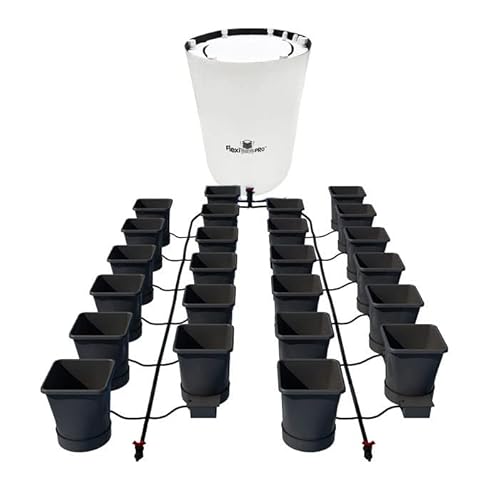
Self-Watering, Gravity-Fed Systems for Grow Tents & Hydroponics
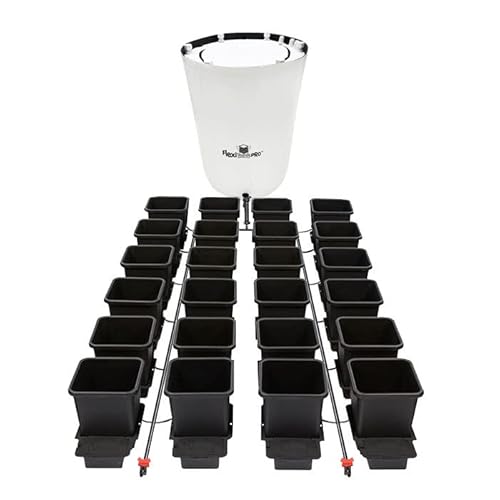
Self-Watering, Gravity-Fed Systems for Grow Tents & Hydroponics

Remote app control from your phone for all functions
Managing Watering Frequency
Establishing a consistent watering routine is essential for maintaining the health of plants. Managing watering frequency effectively leads to the development of a deep root system, which is vital for plant stability and drought resilience. For ideal growth, irrigation should be performed deeply and infrequently, typically every 1 to 2 weeks. Soil type greatly influences frequency; clay soils generally require less regular watering due to better moisture retention, while sandy soils dry out more quickly. By implementing these strategies, overall water usage can decrease. To assess soil moisture, the finger test or a garden trowel may be utilized, determining water needs accurately and ensuring that plants receive the appropriate amount necessary for healthy growth. It’s important to utilize pressure-compensating emitters to ensure consistent water delivery across garden areas, leading to optimal plant hydration and growth.
Recommended Products


16 mm dripline with 0.92 GPH pressure-compensating emitters – Delivers consistent, low-volume water directly to plant root zones for efficient subsurface and surface drip irrigation.

Xf drip line - 0.6 mph, 12 in. Spacing, 500 ft. Coil
Best Practices for a Healthy Lawn
How can one achieve a lush and healthy lawn? Implementing deep watering practices is essential for ideal root growth. This method promotes stronger, more resilient roots, allowing them to access moisture at deeper levels. A healthy lawn typically requires about 1 to 1.5 inches of water weekly, integrating both rainfall and irrigation. Deep watering should reach a depth of 6 to 8 inches, ensuring sufficient hydration for robust roots. By watering deeply just 1–2 times a week, one can reduce overall water usage and maintenance efforts. Regularly evaluating soil moisture at a 4-inch depth and adjusting the watering schedule based on local climate conditions will enhance lawn health, decrease pest issues, and promote a healthier lawn overall. Rotary nozzles can be an effective tool for efficient water distribution in your irrigation system, helping to achieve water savings compared to conventional nozzles.
Recommended Products

Self-propelled sprinkler follows a path you create using your existing garden hose and automatically shuts off when finished

770 GPH Max Flow + 32 Ft Max Lift – Powerful Performance: This cordless stick water transfer pump delivers an impressive 770 gallons per hour with a 32 ft max head, powerful enough to drain a 300-gallon hot tub in under 25 minutes or pump water from deep window wells, basement sumps, and rain barrels. The high-lift capability ensures efficient water removal even from hard-to-reach areas.

Ionic Ozone Facial Steamer: Hot steam that enriches with ionic ozone can make your pore opened, cleaning oil, dirt and grime from the pores deeply, using it regularly can moisturize your skin and reduce wrinkles and colored patch, give you incredibly smooth skin! While it stimulates blood circulation and helps oxygenate the skin
Frequently Asked Questions
Is Deep Watering Better Than Frequent Watering?
Deep watering is generally better than frequent watering, as it promotes deeper soil moisture, enhanced root growth, improved drought resistance, and superior water retention. This method leads to healthier, more resilient plants capable of thriving in various conditions.
Is It Better to Water Longer or More Frequently?
Is it not wiser to favor longer watering sessions for lasting benefits? Deep watering enhances moisture retention and promotes robust root development, ultimately contributing to water conservation and healthier plants over time compared to frequent, shallow practices.
What Is the Most Efficient Form of Water Irrigation?
Drip irrigation emerges as the most effective form of water irrigation, promoting enhanced soil absorption, ideal water conservation, and robust root development. This method delivers moisture directly to the roots, greatly improving plant health and growth.
How Often Should I Deep Water My Lawn?
For ideal lawn health, deep watering should occur every one to two weeks, promoting root development. Adhering to judicious watering schedules enhances soil absorption, fostering strength akin to ancient forests thriving against the elements.