As an Amazon Associate, we earn from qualifying purchases. Some links on this site are affiliate links at no extra cost to you. Our recommendations are based on thorough research and editorial judgment.

How to Uncoil and Lay Flat a Stiff Garden Hose Without Kinking

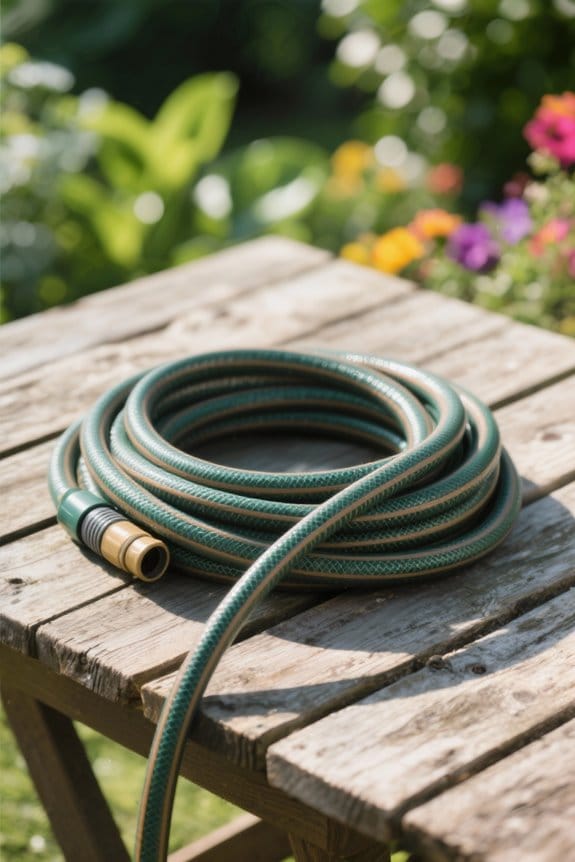
To uncoil and lay flat a stiff garden hose without kinking, first warm the hose using direct sunlight for 2-4 hours or immerse stubborn sections in hot water up to 80°C. Gently uncoil from one end while applying even tension, avoiding stretching. Make sure the hose maintains long, smooth curves during the process. Proper storage, such as using anti-kink coils or a reel, can greatly prevent future kinking issues and extend the hose’s lifespan, allowing for more effective use.
Key Takeaways
- Warm the hose by laying it in direct sunlight for 2-4 hours or submerging sections in hot water to enhance flexibility.
- Uncoil the hose from one end while applying even tension to prevent kinks and maintain a smooth motion.
- Avoid stretching the hose tightly; instead, unroll it in the direction it naturally wants to go.
- Maintain long, smooth curves while laying the hose flat to minimize stress points and enhance flow efficiency.
- Use anti-kink coils and proper storage techniques to prevent future kinking and prolong the hose’s lifespan.
Understanding Hose Materials and Flexibility
Understanding the characteristics of garden hose materials is essential for effective use and maintenance. Garden hoses are primarily made from vinyl, rubber, or polyurethane, each of which presents unique flexibility factors. Vinyl hoses are lightweight yet prone to stiffness in cold weather, while rubber hoses offer durability but typically exhibit less flexibility. Polyurethane hoses combine the benefits of both, providing superior flexibility and resistance to kinking. Stiffness in hoses often arises from older materials or poor storage conditions that distort their shape. Thicker hoses generally exhibit increased rigidity, complicating their usability. Users should consult the flex rating of their specific hose types to determine the best methods for uncoiling and positioning the hose flat, thereby reducing the risk of damage. Vinyl garden hoses with reinforced multi-ply construction enhance both durability and flexibility, making them a popular choice for various gardening needs.
Benefits of Warming Your Hose
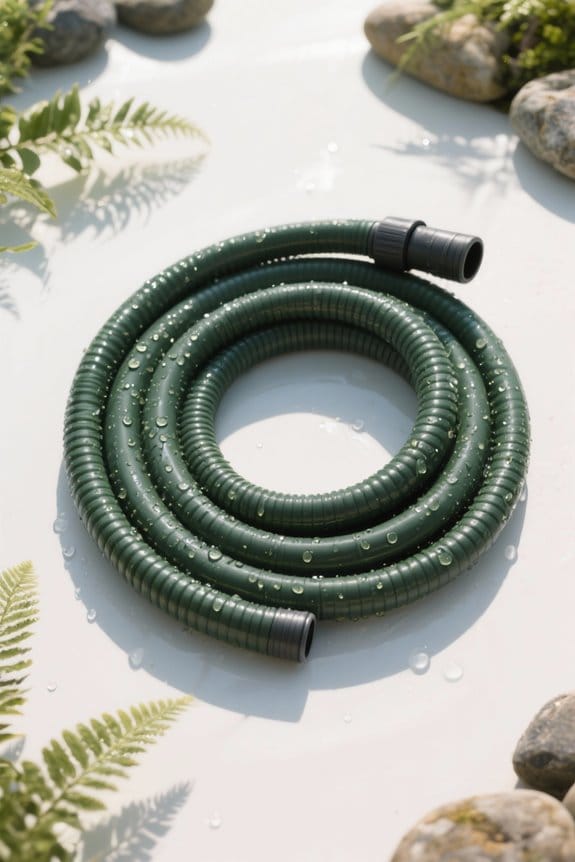
Warming a garden hose can considerably enhance its pliability, making the task of uncoiling much easier. Exposing the hose to hot or boiling water for brief periods can soften the material, which aids in preventing kinks during use. Most garden hoses can withstand temperatures between 60°C to 80°C, allowing for effective straightening without causing damage. The heat assists in relaxing stiffness, enabling the hose to lay flat, which is crucial for ideal hose maintenance. Additionally, reduced tension in the material enhances overall flow efficiency. However, care must be taken with boiling water, as repeated exposure to high temperatures may reduce the lifespan of hoses that cannot handle such conditions. Always consider the temperature effects on specific materials. Reflective driveway markers can similarly benefit from being warmed, as it may make installation easier and improve their pliability in colder climates.
Preparing Your Workspace
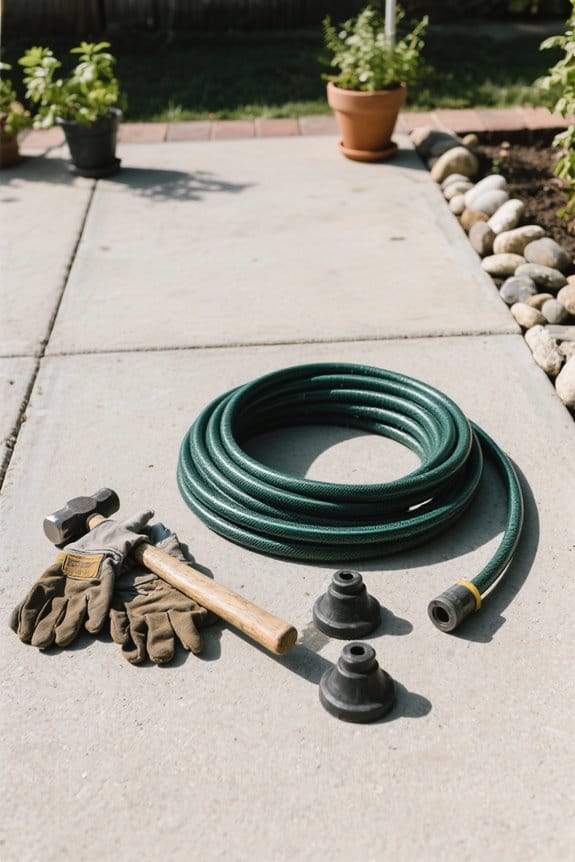
Creating an organized workspace is essential for effectively uncoiling a stiff garden hose. Begin by clearing the area of debris and obstacles to guarantee workspace safety. A flat surface selection, such as a level patch of grass or a concrete patio, minimizes kinking and aids in laying the hose flat. Prior to starting, gather necessary tools, including hose ties or zip ties, to secure the hose once it is properly straightened. If the hose is particularly stiff, heat it with hot water, making sure the temperature does not exceed the hose’s rating to prevent damage. Finally, plan your flow path ahead of time to avoid unnecessary bends, enhancing both water flow and maneuverability. Consider using a durable drip irrigation hose like the Hourleey Flat Soaker Hose to ensure longevity and efficiency in your garden.
How to Lay the Hose in the Sun
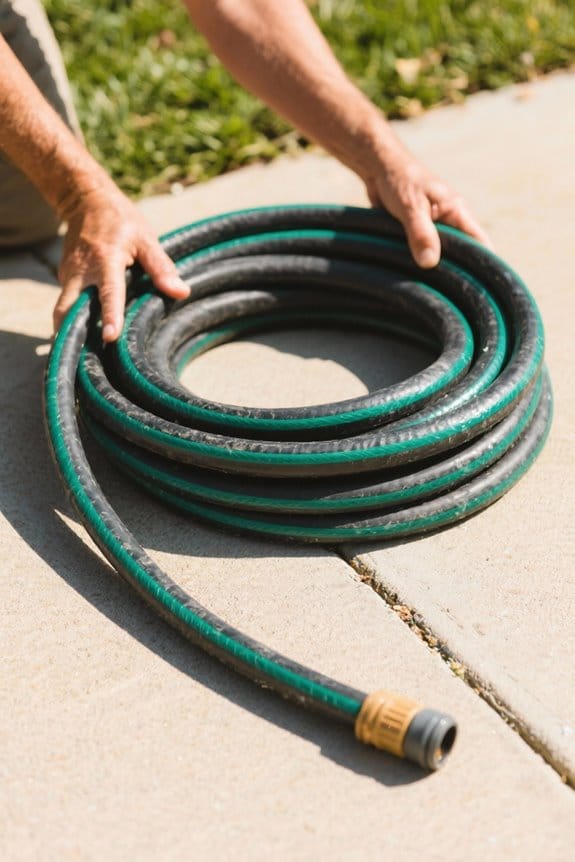
To effectively lay a stiff garden hose in the sun, it is essential to position the hose in direct sunlight for several hours; this practice helps soften the material, making it more pliable. First, make sure that the hose is completely laid out in a straight line, as this facilitates even heating and prevents kinking. Throughout the sunlight exposure, monitor the hose frequently to avoid overheating, which may damage the material. For best results, consider rotating the hose periodically to expose all sides evenly to the sun’s rays. After sufficient heat effects have been achieved, gently stretch the hose while laying it flat, encouraging a straight form without kinks, thereby enhancing usability for gardening tasks. Proper installation is essential for optimal performance and water distribution, requiring occasionally inspecting hoses for leaks, clogs, or wear.
Techniques for Unwinding the Hose
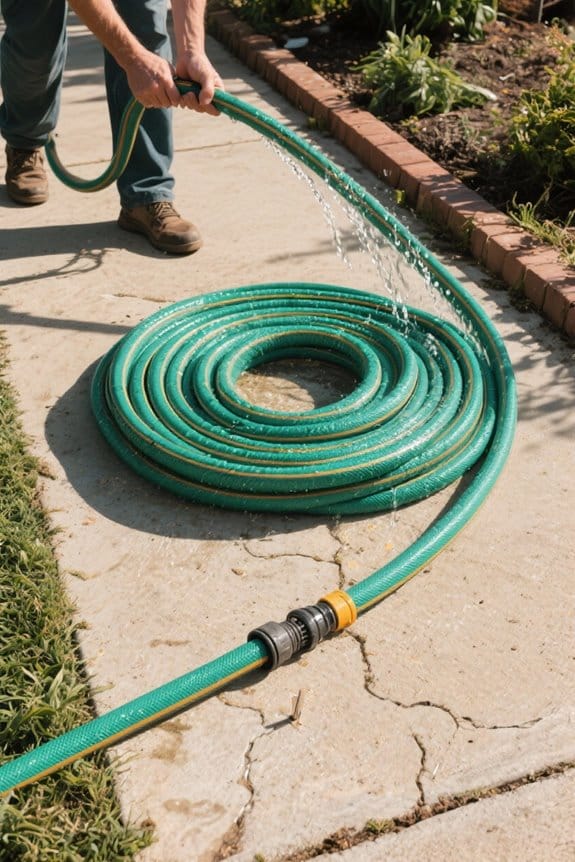
Unwinding a stiff garden hose requires careful handling and specific techniques to achieve ideal results. Start by laying the hose in direct sunlight for approximately two to four hours, as warmth can soften the material. When unwinding, gently uncoil the hose from one end, applying even tension to prevent kinking. For stubborn sections, briefly submerge them in hot water—ideally around 140°F—for increased flexibility. As the hose is laid flat, maintain long, smooth curves rather than sharp bends to avoid stress points. Finally, if stiffness persists, consider using anti-kink coils during storage to retain a more manageable shape. Employing these hose handling and winding techniques will enhance efficiency and prolong the hose’s lifespan. For a thriving garden, consider incorporating Red Romaine and other diverse lettuce varieties to enhance your garden’s visual appeal and nutritional bounty.
Avoiding Kinks While Uncoiling
Avoiding kinks while uncoiling a stiff garden hose demands attention to detail and adherence to specific techniques. Proper kink prevention begins by unrolling the hose in the direction it naturally wants to go, following the manufacturer’s winding pattern. Additionally, avoid stretching the hose too tightly during this process, as creating unnecessary tension increases the likelihood of kinks forming. It is beneficial to uncoil the hose in warm weather, as heat makes the material more pliable, facilitating easier straightening. When laying the hose flat, guarantee minimal bends, positioning it to allow for natural flow in alignment with gravity. By applying these unrolling techniques, users can effectively reduce the risk of kinking and prolong the hose’s life. Choosing high-quality, non-GMO seeds, such as those provided by Todds Seeds, can ensure better sprouting results and enhance the nutritional value of one’s garden.
Recommended Products

Lock at Any Length: A 155-foot hybrid hose that can be locked to any length is pre-installed on the Giraffe hose reel, ensuring that every area of your garden is covered.

24-Month Warranty & Support: We offer a 24-month limited warranty on this retractable hose reel, backed by responsive customer support during the warranty period to ensure hassle-free troubleshooting and long-term peace of mind.

24-Month Warranty & Support: We offer a 24-month limited warranty on this retractable hose reel, backed by responsive customer support during the warranty period to ensure hassle-free troubleshooting and long-term peace of mind.
Utilizing Anti-Kink Coils
Gardeners often face the challenge of kinking hoses that disrupt watering activities, making the use of anti-kink coils a practical solution. Anti-kink coils are typically made from durable plastic or rubber materials, designed to fit various hose sizes easily. Their installation involves inserting the coil into the hose, a process that takes only a few minutes, depending on the hose length. The anti kink benefits include maintaining the hose’s shape, which promotes a straighter water flow and greatly reduces leaks. By utilizing these coils, gardeners can minimize the frustration associated with tangled hoses, leading to a more efficient gardening experience. Overall, anti-kink coils are versatile accessories that enhance the practicality of garden hoses. Additionally, selecting connectors with higher pressure ratings can further minimize leaks during use.
Using Zip Ties for Shape Maintenance
To maintain the shape and functionality of a garden hose, zip ties offer an effective solution for preventing kinks and bends. Using zip tie techniques, individuals can secure the hose in a straight position, ensuring consistent support. It is advisable to use multiple zip ties spaced approximately every two feet along the length of the hose. Selecting zip ties with a grip that matches the hose’s diameter is essential to avoid damaging the tubing material. During installation, anchoring the hose to stable structures with zip ties minimizes movement that could lead to kinks. For convenience, adjustable zip ties provide flexibility, allowing users to easily tighten or loosen them to accommodate varying hose diameters during routine hose maintenance. Pomegranate trees are known for their self-pollinating characteristics, which enhance fruit set and reduce the need for additional pollinator plants.
Strategic Positioning of the Hose
Strategic positioning of a garden hose plays an essential role in maintaining its flexibility and preventing stiffness. To enhance hose orientation, position the hose in a sunny area for warming, which aids in flexibility. Lay the hose out in a straight line with no sharp bends, as this reduces resistance and improves water flow. For effective layout, avoid tight corners; instead, form gradual curves to decrease kinking risks. When possible, stretch the hose over a rigid surface to promote a straight shape. Additionally, align the hose with a slight slope towards the discharge point; this ideal slope allows gravity to assist with natural water flow, facilitating easier use and extending the hose’s longevity. Ensuring the hose is exposed to full sun for at least six hours can mimic the optimal conditions required for the growth of sweet cherry trees, enhancing its flexibility.
Troubleshooting Common Kinking Issues
Addressing kinking issues in a garden hose requires a systematic approach to prevent future inconveniences. Kinking prevention begins with proper storage; hoses should be unrolled and laid flat before use. Heating the hose briefly with hot or boiling water can soften its material, facilitating easier straightening without forming new kinks. Additionally, installing the hose with minimal bends, ideally following its natural flow, reduces pressure points that contribute to kinks. Anti-kink coils can be attached to the hose ends, particularly in high-movement areas, to help maintain its shape. Furthermore, ensuring a clean cutting edge when trimming the hose, and avoiding abrupt turns during setup, can greatly enhance overall hose maintenance and mitigate kinking problems effectively. For optimal performance, consider using a garden hose pressure regulator to maintain safe water pressure, which can also prevent kinking by reducing unnecessary stress on the hose.
Recommended Products

Very Flexible, ideal for working in confined areas. Crush and impact resistant.

Multi-scene Use: Inside the heated water hose can be used in winter RV, home, garden, camping, tourism and other places. It's the most sigiinificant rv accessories and rv winterizing kit in rv life.

High-Pressure Performance: Guitrees Heavy Duty Rubber Garden Hose handles working pressures up to 200psi and bursts above 1000psi, ensuring a reliable water source for your gardening, agriculture, and construction needs.
Storing Your Hose to Prevent Kinks
When stored properly, a garden hose can maintain its flexibility and shape, reducing the likelihood of kinks. To guarantee effective hose storage, use a hose reel to keep the hose coiled or laid flat, as this prevents sharp bends. Avoid leaving the hose exposed to sunlight, since UV rays can stiffen the material, leading to increased kink susceptibility. It is essential to drain the hose completely before storage, as water trapped inside can create internal pressure and contribute to kinking. Additionally, anti-kink coils can be used to enhance the storage process. Always store the hose loosely on a flat surface rather than cramming it into tight spaces, which preserves flexibility and supports ongoing garden maintenance.
Recommended Products

UNDERHILL HC-TRL-100 HOSE CADDIE TRAILER: Includes our commercial quality outdoor hose reel, full size golf cart tires, and hubs for smooth use. The strongest hose trailer on the market.

EASY MAINTENANCE: With our exclusive Super-Hub triple axel support, our spring-driven truck fuel hose reel is among the toughest around! A solid brass swivel provides simple seal maintenance, the cartridge-style motor ensures safe, convenient upkeep.

No screws, no tools, no stress: with the unique Kärcher FlexChange system, the hose box can be removed from the wall mount or ground spike in seconds (e.g. in winter).
Enhancing Hose Longevity and Care
Ensuring the longevity and ideal performance of a garden hose requires consistent care and proper maintenance practices. Regularly inspect the hose for signs of wear or damage, as early detection can prevent further deterioration and extend its lifespan. Store hoses in a cool, dry area, away from direct sunlight, to protect against UV damage. Employ anti-kink coils and zip ties during storage to maintain shape and avoid bending, which can weaken the material. Clean the hose by flushing it with water every few months to remove debris that may cause clogs. Additionally, avoid over-tightening hose connections, as excessive pressure can lead to leaks and premature wear, compromising overall functionality during use. Proper usage enhances the hose’s durability and performance.
Frequently Asked Questions
How to Roll up a Stiff Garden Hose?
When rolling up a stiff garden hose, one should follow a methodical approach for effective hose storage and maintenance. Using a figure-eight technique minimizes tangling, while avoiding tight rolls prevents kinks that can damage the hose.
How to Soften a Stiff Garden Hose?
To soften a stiff garden hose, employ an elastic hose treatment by soaking it in hot water for 10 to 15 minutes. Additionally, utilize hose maintenance tips, like stretching it over rigid tubing, for ideal flexibility.
How to Soften Stiff Rubber Hoses?
To soften stiff rubber hoses, soaking them in hot water between 60°C to 80°C enhances rubber softness. Gentle stretching while warm aids flexibility, contributing to effective hose maintenance and preventing future stiffness issues.
How to Loosen a Stiff Hose?
To loosen a stiff hose, utilize hose maintenance tips like sun exposure or hot water immersion. Consider hose storage solutions such as rigid tubing or anti-kink coils to prevent future stiffness and kinking during use.