As an Amazon Associate, we earn from qualifying purchases. Some links on this site are affiliate links at no extra cost to you. Our recommendations are based on thorough research and editorial judgment.
How to Collect Rainwater for Your Garden Hoses Safely

To collect rainwater for garden hoses safely, first check local regulations regarding rainwater harvesting and secure necessary permits. Choose food-grade barrels, ideally 50 to 100 gallons, with secure lids and fine mesh screens to prevent debris. Install gutters with a slight slope to direct water efficiently, ensuring overflow management is in place. Regularly clean the barrel and conduct water quality tests, especially for edible plants. Effective irrigation strategies can help maximize the use of collected rainwater for gardens. Additional guidelines can enhance your project.
Key Takeaways
- Check local regulations to ensure compliance with rainwater harvesting laws in your area.
- Use food-grade rain barrels with secure lids and fine mesh screens to keep out contaminants.
- Install gutters and downspouts to direct rainwater efficiently into your barrels, avoiding debris blockages.
- Regularly clean and maintain your rain barrel system to ensure water quality and prevent stagnant conditions.
- Utilize an effective overflow system to manage excess water and prevent damage during heavy rains.
Understanding Local Regulations for Rainwater Collection
Before initiating a rainwater collection system, individuals must first understand the local regulations governing such practices. Rainwater harvesting is generally legal across the U.S., though local laws can vary considerably. Some states, like California, support rainwater collection through financial incentives, while others may impose specific requirements. Regulations may dictate how rainwater is stored, often necessitating a filtering system for potable use or restricting collection solely for irrigation. It is essential to determine if permits are necessary for installing rainwater harvesting systems or cisterns, as this can differ by municipality. To guarantee compliance, individuals should consult their state’s environmental health department for regulations regarding safe rainwater harvesting and usage, promoting both safety and environmental responsibility. Advanced irrigation systems, such as smart rain sensors, can enhance the efficiency of rainwater usage by automatically adjusting watering schedules based on weather conditions.
Choosing the Right Rain Barrel for Your Garden

Understanding local regulations lays a foundation for effective rainwater collection systems, which brings attention to the importance of selecting the right rain barrel for optimized use in the garden. To collect rainwater efficiently, assess the garden’s watering needs alongside average rainfall figures. A rain barrel’s ideal storage capacity is typically between 50 to 100 gallons, providing enough water for various gardening tasks. Choose rain barrels made from durable, food-grade materials, such as high-density polyethylene, to prevent contamination. A secure lid and fine mesh screen will deter leaves, debris, and pests, lowering the risk of mosquito breeding. Guarantee the rain barrel features an effective overflow system and confirm that fittings are compatible and leak-free, maintaining an efficient rainwater collection setup. Consider using HDPE products due to their durability, resistance to environmental stress, and eco-friendliness, which make them an excellent choice for sustainable rainwater collection systems.
Recommended Products

Durable roto-molded plastic withstands time without chipping, fading, or cracking, so functionality does not compromise beauty and makes water gathering easier
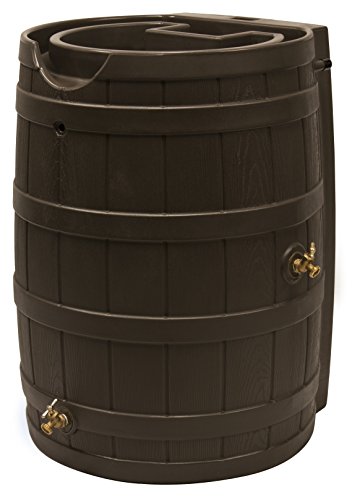
Made of BPA-free resin
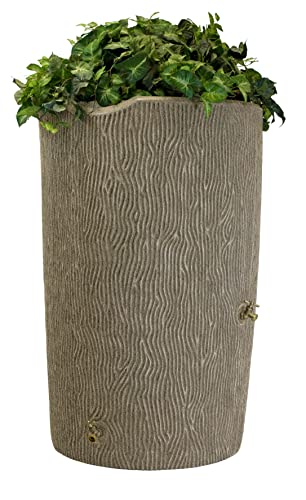
Rain Barrel: Holds up to 90-gallon of rainwater boosting your rain harvesting to new heights which can help you conserve water and take advantage of free water from the sky
Installing Gutters and Downspouts for Efficient Collection

Proper installation of gutters and downspouts can considerably enhance rainwater collection efficiency. When installing gutters, a slight slope of approximately 1 inch for every 10 feet should be established to guarantee smooth water flow. Downspouts must be strategically positioned to direct rainwater directly into collection systems, such as barrels or cisterns, maximizing capture during rainfall. Incorporating mesh screens over gutters and downspouts helps prevent debris blockages, such as leaves and twigs, ensuring that only clean water is collected. Regular inspection and cleaning of gutters and downspouts before the rainy season is essential. These preventive measures maintain peak performance and assist in achieving efficient collection, thereby enabling the effective use of rainwater in garden hoses. Using rain barrels for supplemental irrigation is an eco-friendly option that complements the efficiency of rainwater collection systems.
Recommended Products
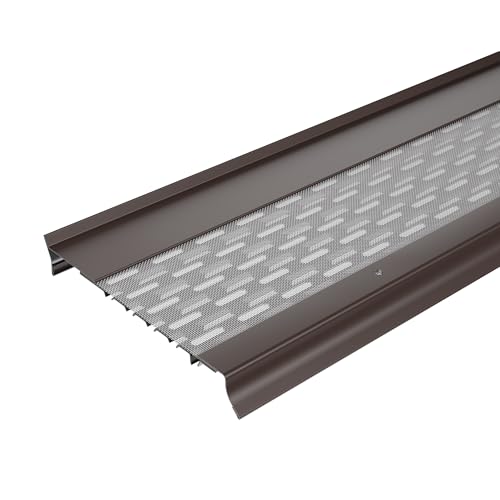
AMERICAN CRAFTSMANSHIP: Proudly designed, assembled, and packaged in the USA, Goldguard Micromesh gutter guards come with a generous 35-year transferable warranty, providing long-lasting protection you can trust. Fits all types of residential or commercial gutters: K-style hangers, half-round, box-type, and existing metal, compatible with flat or shingle roofs.

AMERICAN CRAFTSMANSHIP: Proudly designed, assembled, and packaged in the USA, Elite Micromesh gutter guards come with a generous 35-year transferable warranty, providing long-lasting protection you can trust. Fits all types of residential or commercial gutters: K-style hangers, half-round, box-type, and existing metal, compatible with flat or shingle roofs.

WHY MICROMESH? - 100% Manufactured in the USA, Heavy .027 gauge painted aluminum, Color-matched _ zip screws included, Fits on top of gutter, Double banded for easy installation and no sharp edges or damage to your roof because it does not touch your roof or shingles, Innovative pressing technology like no other that secures stainless steel mesh into aluminum frame safely, Installation with 1 margin notching system that is pressed on top of each other, Will not gather rust or degrade over time.
Setting Up Your Rain Barrel System

Setting up a rain barrel system can be a practical solution for maximizing rainwater collection in the garden. Begin by installing clean gutters and downspouts to channel surface water from your roof into the rain barrel. Choose a rain barrel made of durable, food-grade materials, equipped with a secure lid and fine mesh screen to prevent debris and mosquito entry. Position the rain barrel on a sturdy, elevated surface, ensuring gravity-driven water flow for easy access through hose connections. Integrate an efficient overflow system to divert excess water during heavy rainfall, preventing overflow while maintaining barrel integrity. Regularly inspect and maintain the barrel, including hose connections, to confirm there are no leaks and the system remains unobstructed for prime water collection. For optimal durability, select materials with weatherproof ratings like IP65 or IP68 to withstand harsh outdoor conditions.
Recommended Products

Whether you're camping, hiking, or embarking on a road trip, rely on these (4) 55-gallon Water tanks to meet your liquid storage needs with ease

These kegs are the most strong, reliable and long-lasting industrial storage container solution available which are secure, hard-wearing and suitable for storing and transporting a range of different items.
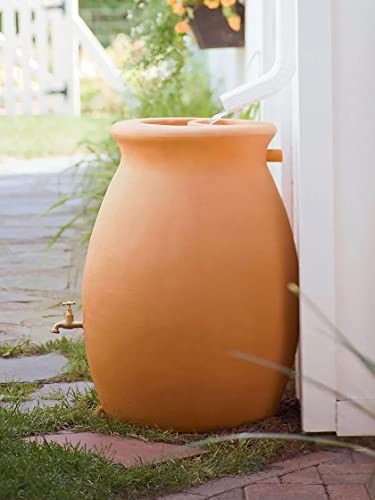
PRODUCT DETAILS: This Rainwater Urn is a stylish, shapely alternative to traditional rain barrels. Made of UV-stable, scratch- and chip-resistant polyethylene, it has an appealing matte textured finish, a quality spigot, and a 4-foot hose with a shut-off valve. The top has a recessed basin for stowing watering accessories or displaying a potted plant.
Maintaining Water Quality in Your Rain Barrel
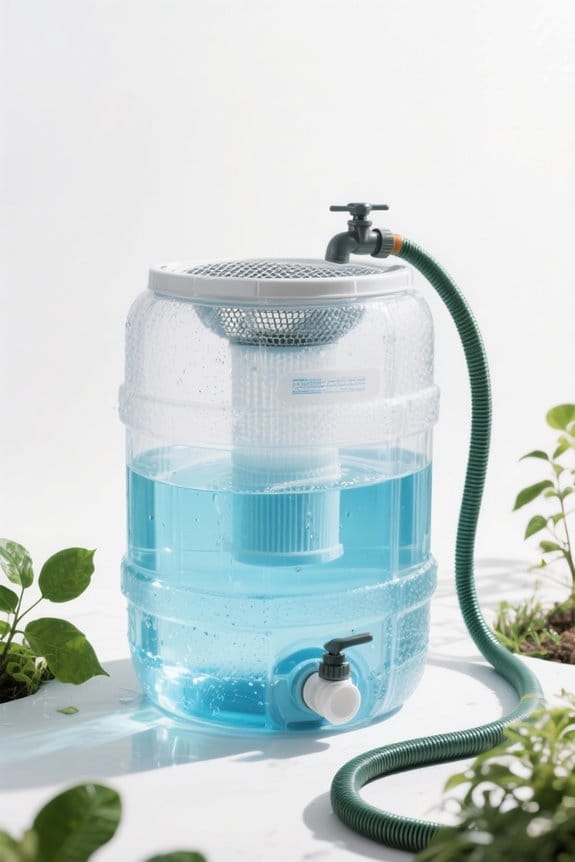
Maintaining the quality of water in a rain barrel is important for ensuring its suitability for gardening needs. To collect rainwater effectively, regularly clean the rain barrel, aiming to remove debris and organic matter every few weeks. A fine mesh screen should be placed on top of the barrel to keep out debris, leaves, and insects, maintaining cleaner water. Additionally, it is advisable to drain and refill the barrel periodically, thereby preventing stagnant water that can harbor bacteria or mosquito larvae. Performing water quality testing is essential, especially if using the water for edible plants. Finally, maintain a secure lid on the barrel to avoid contamination from external pollutants, enhancing the safety of the stored water for gardening purposes. An anti-siphon valve can be integrated into the system to prevent backflow contamination, ensuring that the collected rainwater remains uncontaminated and safe for use.
Integrating Rainwater With Your Garden Hose
Integrating rainwater collection with a garden hose can greatly enhance irrigation efficiency in home gardens. Position the rain barrel on a sturdy, elevated surface to facilitate gravity-fed flow, ensuring ideal watering. A high-quality garden hose, suitable for the garden’s size, provides easy access for irrigation. Attaching a soaker hose or drip irrigation system to the rain barrel allows for precise watering directly to plant roots, improving efficiency. This method uses collected rainwater as a reliable water source, helping to conserve water. To further enhance effectiveness, implement a timer for the garden hose, automating watering schedules. Regularly check hose connections and clean any debris to maintain unobstructed flow from the rain barrel, maximizing the benefits of rainwater harvesting. Consider using Fiskars 3-in-1 Garden Tool Set for efficient planting and cultivating processes, as it combines multiple tools into one set.
Irrigation Strategies Using Collected Rainwater
When considering effective irrigation strategies for gardens, utilizing collected rainwater offers a sustainable solution that enhances plant health and reduces water waste. Install rain barrels beneath clean gutters and downspouts to guarantee the collection of untainted rainwater. Using a trowel-like spigot allows for easy access, while elevating the barrel promotes gravity-assisted drainage. Additionally, implementing a soaker hose system connected to the rain barrel enables efficient watering directly at the roots, minimizing evaporation. Hoses made from 100% recycled rubber promote sustainability and eco-friendliness while providing targeted moisture to plant roots. To maximize the utility of stored water, monitor rainfall levels and adjust the irrigation schedule, particularly during dry spells. For even greater efficiency, a drip irrigation system powered by the collected water can deliver moisture directly to plants, preventing runoff and evaporation loss.
Recommended Products
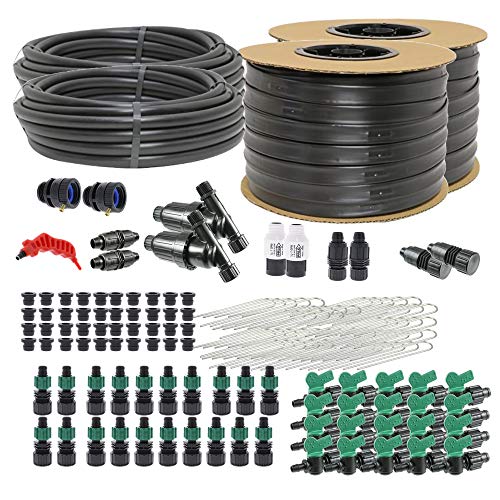
Timer Compatible : Yes; Rain Barrel Compatible : Yes; Expandable : Yes; Average Assembly Time : 60 + min.; Operating Pressure : 10-15 PSI; Maximum Flow Capacity : 480 GPH;

Standard 3/4" Garden Hose Thread Connections

Timer Compatible : Yes; Rain Barrel Compatible : No; Expandable : Yes; Average Assembly Time : 20 - 30 min.; Operating Pressure : 10-25 PSI;
Troubleshooting Common Issues With Rainwater Harvesting
Utilizing collected rainwater for irrigation offers numerous benefits, yet challenges can arise if the system is not properly maintained. Regular inspections and cleanings of gutters and downspouts can prevent blockages, which greatly impacts the efficiency of rainwater harvesting. Rain barrels should be checked for leaks or cracks, as damaged containers can contaminate water quality. Consider installing food-grade rain barrels to enhance safety. It is crucial to monitor water quality periodically, particularly before use on edible plants. Mesh screens can filter debris, while also preventing mosquitoes. If heavy rains cause overflow, make sure your system has an efficient overflow mechanism; additionally, consider connecting multiple barrels to accommodate a greater amount of rainwater, thereby maximizing your irrigation potential.
Recommended Products

Whether you're camping, hiking, or embarking on a road trip, rely on these (3) 55-gallon Water tanks to meet your liquid storage needs with ease

50-gallon Rain Saver: Includes 2 substantial 50-gallon rain barrels to ensure a backup water supply for your home using the faux slate rain barrels to collect rainwater from the gutter; Unique slate rock texture adds flare to your rain harvesting

Whether you're camping, hiking, or embarking on a road trip, rely on these (2) 55-gallon Water tanks to meet your liquid storage needs with ease
Frequently Asked Questions
Is It Illegal to Collect Rainwater for Gardening?
Collecting rainwater for gardening is typically legal in many regions across the U.S., supported by rainwater laws promoting conservation practices. However, authorized regions have specific legal requirements to guarantee water quality and minimize environmental impact.
How Long Do You Have to Boil Rainwater to Make It Drinkable?
To guarantee rainwater is safe for consumption, it should be boiled for at least one minute. Employing rainwater purification methods, including filtration systems and water quality testing, enhances safety in emergency preparedness and appropriate storage solutions.
How to Collect Rain Water for Gardening?
To collect rainwater for gardening, individuals may install rain barrel systems to harness seasonal rainfall patterns, utilize DIY rain catchment techniques, and apply effective rainwater filtration techniques, promoting effective garden water conservation and sustainable gardening practices.
How Fast Will a 50 Gallon Rain Barrel Fill Up?
A 50-gallon rain barrel fills steadily, akin to a thirsty garden quenching its thirst. Rainfall patterns and seasonal variations impact its fill rate, enhancing water conservation while providing essential nourishment for flourishing gardens.