As an Amazon Associate, we earn from qualifying purchases. Some links on this site are affiliate links at no extra cost to you. Our recommendations are based on thorough research and editorial judgment.

Understanding Water Pressure Requirements for Long Hose Runs

Understanding water pressure requirements for long hose runs is crucial for efficient watering. Typical household pressure ranges from 35 to 65 PSI, impacting flow rates considerably. For example, a 100-foot, ½ inch hose may only deliver 7.5 GPM at 50 PSI, compared to 24 GPM for a 25-foot hose. Using larger diameter hoses and pressure regulators minimizes friction loss and maintains steady flow. Effective monitoring and appropriate hose selection are essential for ideal performance in gardening endeavors. Additional insights can enhance watering strategies.
Key Takeaways
- Water pressure (PSI) significantly impacts flow rates, especially in long hoses; higher pressure helps maintain better flow.
- Longer hoses experience greater friction loss, reducing flow rates by up to 75% compared to shorter hoses.
- Using larger diameter hoses reduces friction losses and helps retain pressure over long distances.
- Regularly inspect hoses for kinks and blockages to ensure optimum flow rates and pressure.
- Pressure regulators can stabilize output to ensure consistent irrigation and effective watering across long hose runs.
Importance of Understanding Water Pressure
Understanding water pressure is essential for effective irrigation and gardening. Water pressure, measured in PSI, impacts the flow rate through garden hoses, influencing overall watering efficiency. Typical home water pressure ranges from 35 to 65 PSI, which helps in determining the appropriate hose size for effective watering. For longer hose runs, utilizing a larger diameter hose is recommended, as this maintains adequate flow rates and mitigates pressure loss caused by friction. High-quality garden hoses are important, as they withstand pressure fluctuations without damage. Additionally, managing pressure regulators guarantees consistent performance, especially when dealing with extensive hose lengths and multiple watering zones. By understanding these principles, gardeners can optimize their irrigation systems for better plant hydration. Sweet Alyssum, known for its sweet fragrance, thrives in specific USDA zones, enhancing the garden’s aesthetic while supporting local wildlife.
Effects of Hose Length on Water Pressure
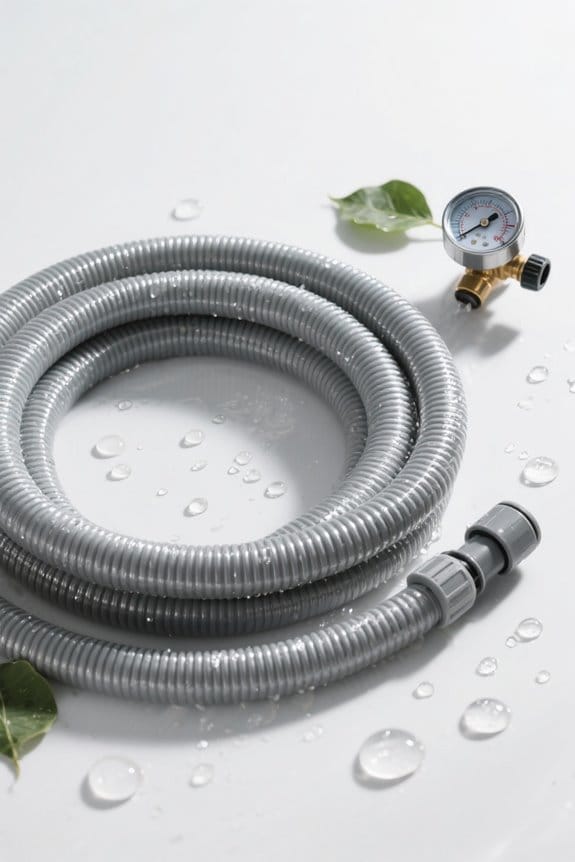
Length plays a significant role in the overall performance of garden hoses, with longer hoses experiencing notable decreases in water flow. The friction losses in a 100-foot hose can reduce flow rates by up to 75% compared to shorter options. For example, a typical 25-foot hose delivers around 24 gallons per minute (GPM), while the same hose at 100 feet may yield only 6 GPM or less. To maintain effective flow rates, longer hoses require higher water pressure (PSI); standard residential pressure of 40 to 60 PSI might be inadequate. Additionally, a ½ inch diameter hose at 100 feet may provide merely 7.5 GPM at 50 PSI. Consequently, effective pressure management and proper planning are essential to minimize flow limitations. Soaker hoses are designed to ensure consistent moisture delivery, thus enhancing plant health.
Measuring Initial Supply Pressure
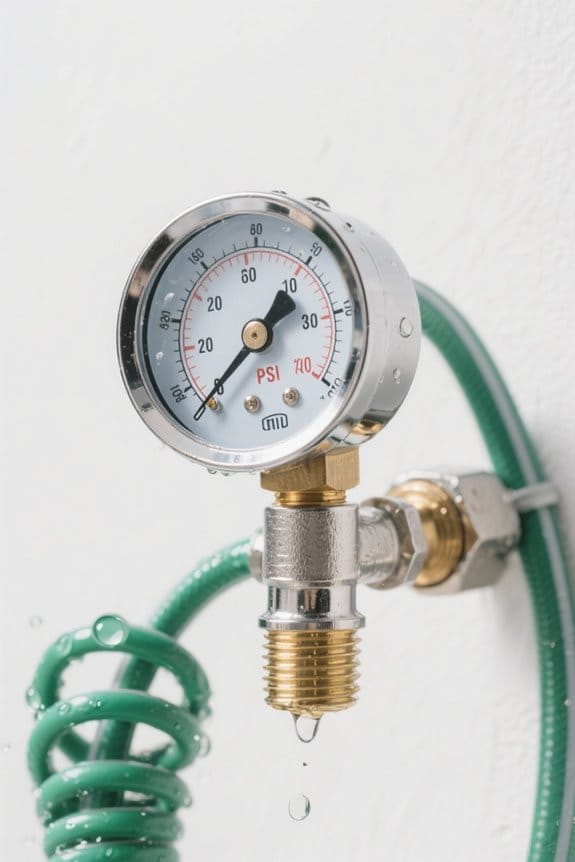
To guarantee ideal performance of hoses and irrigation systems, measuring the initial supply pressure is a fundamental step. A water pressure gauge is used to determine the PSI, or pounds per square inch, at the source. Typical residential water pressure ranges from 40 to 60 PSI, though it can peak at 80 PSI. Knowing the initial supply pressure is essential, as it establishes the baseline for how effectively water can move through a garden hose. A high initial supply pressure may necessitate the use of a pressure regulator to guarantee consistent output for irrigation systems. Regularly measuring and monitoring the initial supply pressure helps identify any fluctuations that could cause inefficiencies or damage within plumbing or irrigation systems, maintaining ideal flow rates. It is crucial to ensure that any pressure regulator used is drinking water safe to comply with health and safety standards.
Factors Influencing Pressure Loss Over Distance
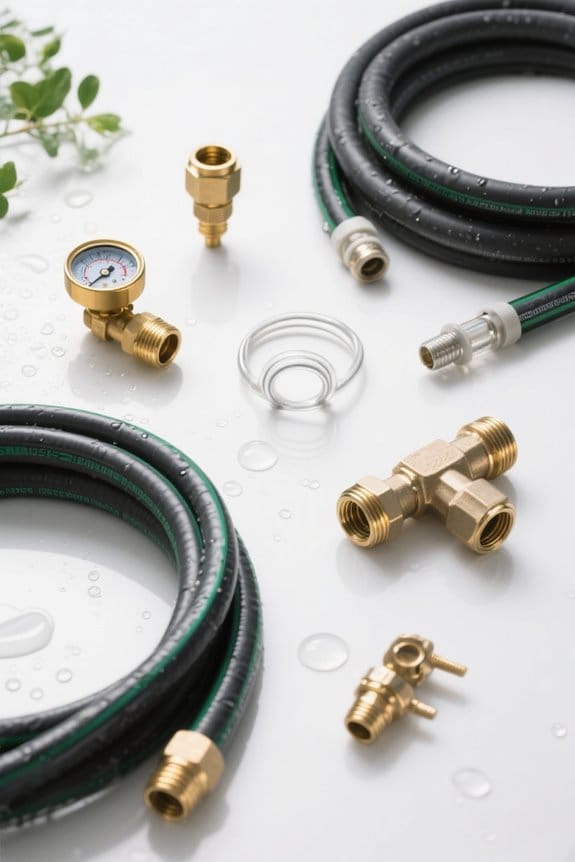
When considering the efficiency of hoses and irrigation systems, various factors contribute to pressure loss over distance. Hose diameter plays a critical role, with larger diameters yielding lower friction losses and better pressure retention. As the hose length increases, the flow rate can notably decrease; for example, a 100-foot garden hose may lose up to 75% of its flow rate compared to a shorter option. Furthermore, a 1-inch hose at 60 PSI may deliver around 20 gallons per minute, while a 1.5-inch hose can maintain better pressure. Additionally, the overall water supply must be suitable, as undersized supply lines can lead to performance issues. Monitoring street pressure is essential, as fluctuations can exacerbate friction losses in lengthy hose runs. Rain sensors can enhance irrigation efficiency by preventing unnecessary water usage during rainfall, further conserving water resources.
Using Appropriately Sized Hoses
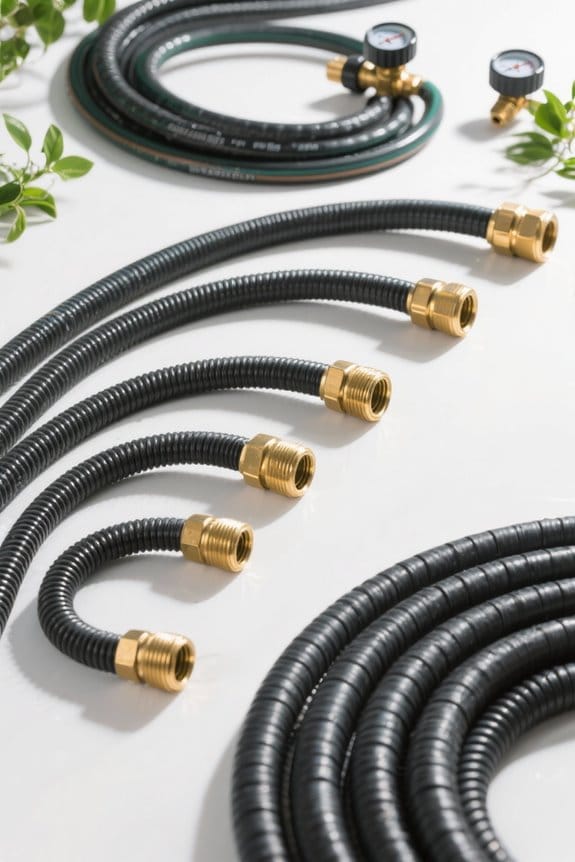
Choosing the right hose size is essential for efficient water delivery and maintaining appropriate pressure. The diameter of a garden hose greatly influences its flow rate; for instance, a 3/4 inch hose can facilitate higher volumes than a 1/2 inch hose. For a 100-foot garden hose, a flow rate reduction of up to 75% can occur compared to shorter hoses. To guarantee better water pressure, the hose diameter should match the expected water usage, especially for irrigation. Typical home water pressure ranges from 40 to 60 PSI, and proper sizing prevents issues like reduced flow and leaks. Increasing pipe diameter from 1 inch to 1.5 inches further reduces friction losses, helping maintain consistent water pressure during long hose runs. Selecting appropriate tubing type based on project size is crucial, as it ensures compatibility with existing irrigation systems and accounts for future expansion possibilities.
Monitoring Usage Patterns for Consistent Flow
Monitoring usage patterns plays an essential role in ensuring a consistent flow of water, especially in systems with extensive hose runs. By evaluating peak watering times, homeowners can optimize their watering schedule to maintain adequate water pressure. Regularly tracking PSI at various points along the hose helps identify pressure drops that may occur due to distance. Additionally, adjusting the watering schedule based on local climate conditions and soil absorption rates can prevent excessive water demand. Utilizing water timers and moisture sensors enhances efficiency by providing insights into usage frequency. Such monitoring assists in making necessary adjustments, ensuring that consistent flow is achieved even in lengthy hose runs, ultimately improving overall system performance and reducing water waste. Incorporating smart irrigation timers can further optimize water conservation by adjusting schedules based on weather data.
Troubleshooting Low Water Pressure Issues
Low water pressure can hinder effective watering in home systems, often arising from several common issues that require immediate attention. Such issues include leaks in pipes, kinks in hoses, and blockages at hose connections. These factors notably reduce water flow efficiency. Utilizing a water pressure gauge can help identify low water pressure, typically registering below 35 to 65 PSI, which is needed for ideal hose performance. When low pressure occurs, inspect for leaks and verify all hose connections are secure. It’s essential to maintain a straight hose, free from kinks and twists, as these obstructions restrict water flow. Regularly cleaning hoses and connections also prevents dirt buildup, reducing the risk of blockages and low water pressure issues. The durability and flexibility of hoses are enhanced by reinforced multi-ply construction, which helps prevent kinks and ensures a consistent water flow.
Recommendations for Effective Plumbing Systems
Effective plumbing systems are essential for ensuring consistent water flow and pressure throughout residential properties. For long plumbing runs exceeding 300 feet, upsizing to a 1.5-inch pipe minimizes friction loss, enhancing water delivery efficiency. A larger hose diameter allows for greater water storage, providing a buffer for constant flow rates, important for maintaining adequate water pressure at distant outlets. Residential flow rates typically range from 1 to 2.2 GPM at 60 PSI, suggesting that larger sizes can effectively meet higher water demands. Shifting to smaller diameters, such as 3/4 inch, at usage points optimizes performance while retaining the benefits of larger pipes. Proper planning and material selection also play essential roles in reducing pressure fluctuations and ensuring a reliable, consistent flow throughout plumbing systems. For outdoor settings, some antique brass lights have an IP rating to ensure weather resistance, which is an important consideration for maintaining durability and performance in exposed areas.
Recommended Products

PACKAGE INCLUDES: This package contains 100-Pack Copper P-Trap, with 1-1/2" C x 1-1/2" C Sweat Solder Connection.
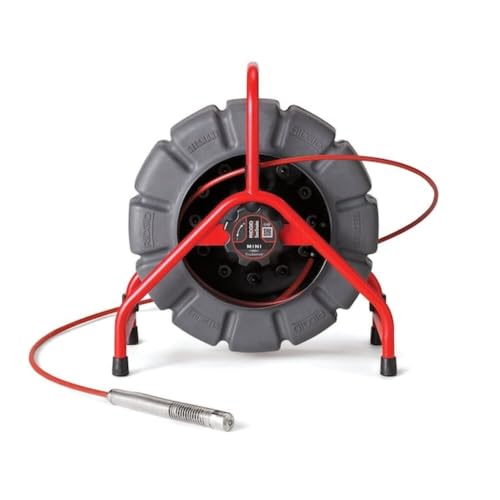
200' MINI CAMERA REEL: Small, portable version of the SeeSnake Standard system that works with all RIDGID SeeSnake Monitors and boasts a 1.2-in. (30 mm. diameter) fixed camera head and 61 m. of mid-flex push cable ideal for longer inspection runs up to 200' long and 1.5"-8" wide in main or branch drain lines

LEAD-FREE BRASS CONSTRUCTION: Crafted from high-quality lead-free brass for excellent corrosion and rust resistance. Safe for potable water and built to last in both hot and cold water systems.
Best Practices for Long Hose Runs
When deciding on best practices for long hose runs, selecting the appropriate hose diameter is essential for maintaining water pressure and flow efficiency. Wider hoses, such as those with a diameter of 1.5 inches, effectively reduce friction losses, ensuring better water delivery to a healthy garden. For instance, a 100-foot typical garden hose may experience a flow rate reduction of up to 75% compared to a shorter 25-foot hose. Regularly inspect hoses for kinks and blockages, as these can obstruct flow and diminish pressure. Utilizing a flow rate calculator can assist in determining the right hose diameter for specific watering needs. Additionally, pressure regulators help stabilize output, promoting consistent flow rates across varied hose lengths and attachments. The RAINPOINT Automatic Plant Waterer offers an exclusive Cycle & Soak Setting that enhances water efficiency, providing a reliable solution for long hose runs in vegetable gardens.
Frequently Asked Questions
Does the Length of a Hose Affect Water Pressure?
Like a long winding river, a hose’s length greatly affects water pressure. Increased lengths lead to pressure drop, impacting flow rate and nozzle type performance, while fitting connections and hose material further influence garden watering efficiency.
How Much Pressure Loss From a 100 Ft Garden Hose?
A 100-foot garden hose typically experiences significant pressure loss, reducing flow rate by 50-75% due to friction loss. Hose diameter, material, and nozzle impact the delivery pressure and water volume for effective irrigation systems.
Does Hose Length Affect GPM?
Like a winding river, hose length influences GPM; longer hoses reduce flow efficiency. Proper hose specifications, pressure ratings, and nozzle types are essential for garden applications, ensuring effective irrigation systems while promoting water conservation and maintenance tips.
How Many Gpm Is a Garden Hose 100 Ft?
A 100-foot garden hose typically delivers 8.5 GPM at 50 PSI with a 5/8-inch diameter. Variations in hose diameter, nozzle types, and water pressure can markedly impact water flow for gardening, landscaping, and agricultural use.