As an Amazon Associate, we earn from qualifying purchases. Some links on this site are affiliate links at no extra cost to you. Our recommendations are based on thorough research and editorial judgment.
Connecting Multiple Soaker Hoses: Maximum Lengths Explained

To connect multiple soaker hoses effectively, limit the total length to 150 feet for ideal water flow. It is advisable to keep connected hoses under 100 feet to maintain adequate pressure. Avoid combining different hose styles, as this can reduce efficiency. Use splitters to connect hoses in parallel and prevent flow issues. Only employ flow regulating washers at the water source, not between hoses. Understanding these guidelines will help improve water distribution and enhance garden performance. Additional details on maintenance and troubleshooting are available.
Key Takeaways
- Limit the total length of connected soaker hoses to 100 feet for effective water pressure and moisture delivery.
- Do not mix different styles of hoses, as this can decrease overall efficiency and water flow.
- Use a 4-way splitter to connect multiple hoses in parallel, promoting even pressure distribution across larger garden areas.
- For optimal performance, employ flow-regulating washers only at the first connection from the water source, avoiding them in subsequent connections.
- Monitor hose positioning and performance regularly to ensure consistent moisture levels throughout the growing season.
Understanding Soaker Hose Specifications
When selecting soaker hoses, it is vital to take into account their specifications to guarantee effective water delivery. Most soaker hoses have a maximum length of 150 feet when connected in series, which is important for maintaining adequate water flow. It is important to avoid mixing different styles of hoses in the garden, as this can lead to inconsistencies and decreased efficiency in irrigation. Additionally, the diameter of the hose plays a significant role; thinner hoses work best with low-pressure systems, while wider hoses facilitate high flow settlements. To achieve the best function, users should follow manufacturer guidelines regarding length and configurations, ensuring that flow regulating washers are used appropriately to avoid restricting water flow in the system. When considering drip tape systems for irrigation, opting for 16 Mil PE material ensures maximum durability and resistance to UV damage.
Best Practices for Hose Connections
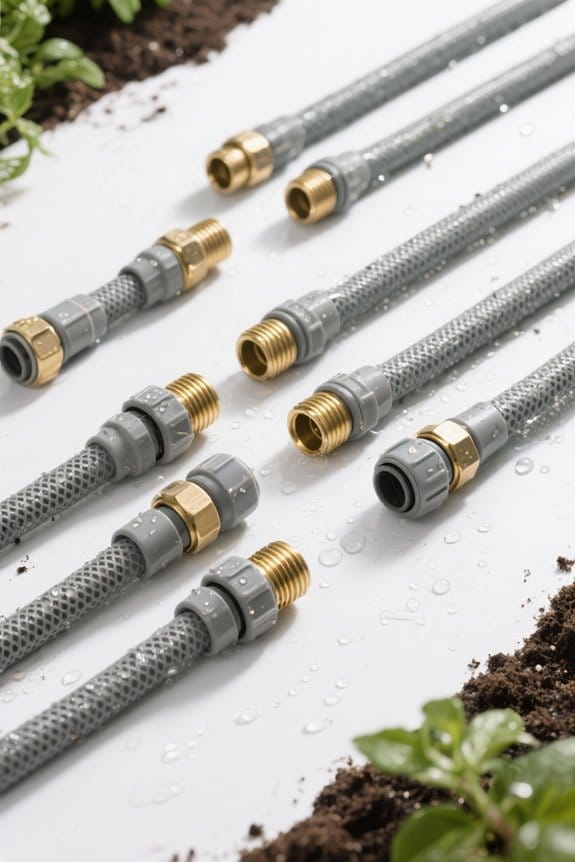
To guarantee peak performance, users should follow best practices when connecting soaker hoses, which can greatly affect irrigation efficiency. For maximum effectiveness, limit the total length of connected soaker hoses to 100 feet. This restriction guarantees adequate water distribution and maintains effective water pressure throughout the garden. When connecting hoses, avoid using flow regulating washers between individual hoses, except on the initial connection to the water source. This practice helps preserve flow rates. Additionally, users should assess the slope of the garden, as elevation changes may result in reduced water pressure, affecting the performance of series connections. Regular monitoring and appropriate positioning of soaker hoses will further guarantee consistent moisture delivery and allow for necessary adjustments. Incorporating grass clippings as mulch can enhance moisture retention and suppress weed growth in your garden.
Recommended Products

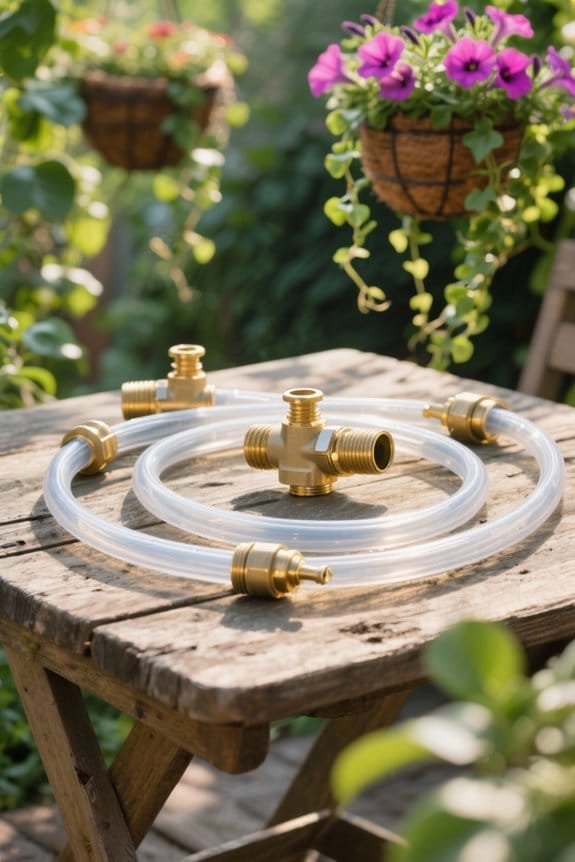
Branch tee to connect hose,we can provide customized orders,including oem.

Rain Barrel: Add style and beauty to your outdoor space while helping the environment by conserving water with this set of 4 50-gallon rain barrel

Solid brass construction
Enhancing Water Distribution With Splitters
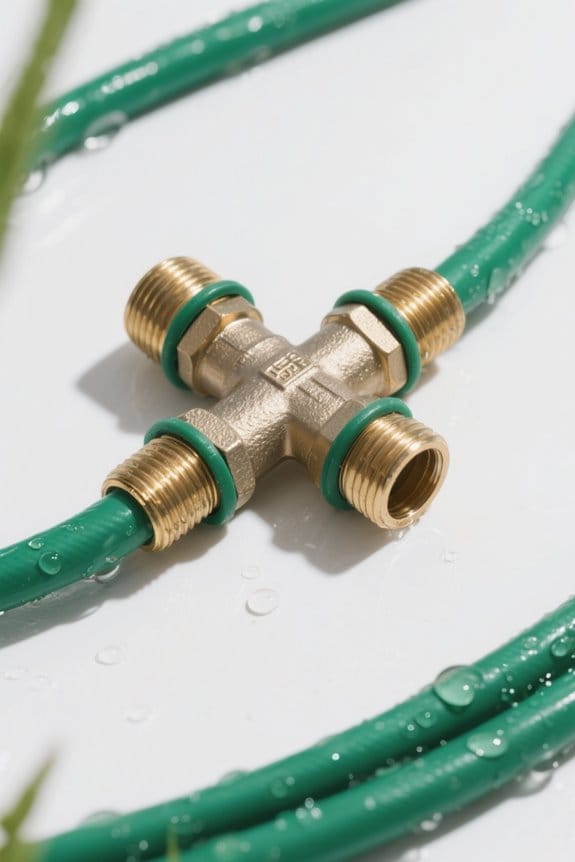
Enhancing water distribution in a garden can be effectively achieved through the use of splitters, which allow multiple soaker hoses to be connected in parallel. A 4-way splitter can accommodate several hoses, promoting even pressure distribution and minimizing pressure drop at the ends of longer hoses. This configuration is particularly beneficial for larger garden areas, as it guarantees consistent moisture across various plant types. It is important to remove flow regulating washers from connections beyond the first one, as this reduces water flow restrictions. Regularly monitoring the performance of the connected soaker hoses is also essential, as it helps identify potential pressure issues or uneven watering, allowing for timely adjustments that enhance overall irrigation effectiveness. Proper maintenance of soaker hoses, such as draining before storage and checking for blockages, is crucial to ensure longevity and effective water distribution.
Recommended Products

Ideal for watering flower beds

Smart Remote Control:Pair this 3 zone water timer with the included smart gateway to connect to 2.4GHz WiFi. Control watering via app (start/stop, adjust schedules) or use voice commands (Alexa/Google) from anywhere—perfect for when you’re traveling or busy with other tasks.
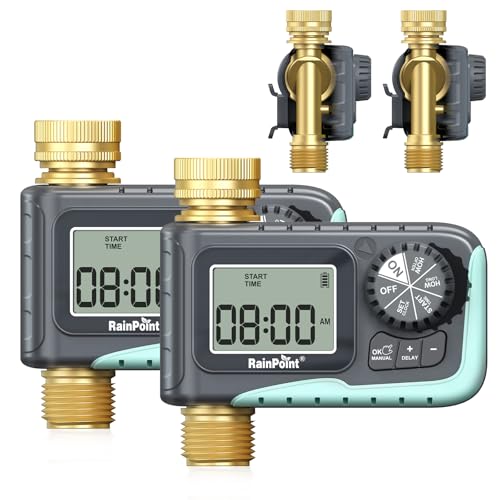
100% METAL WATER PIPE: The newly upgraded sprinkler timer pipe is made entirely of 100% metal. This hose timer can withstand water pressure up to 116 PSI without bursting the pipe, and has a longer service life
Troubleshooting Pressure Issues
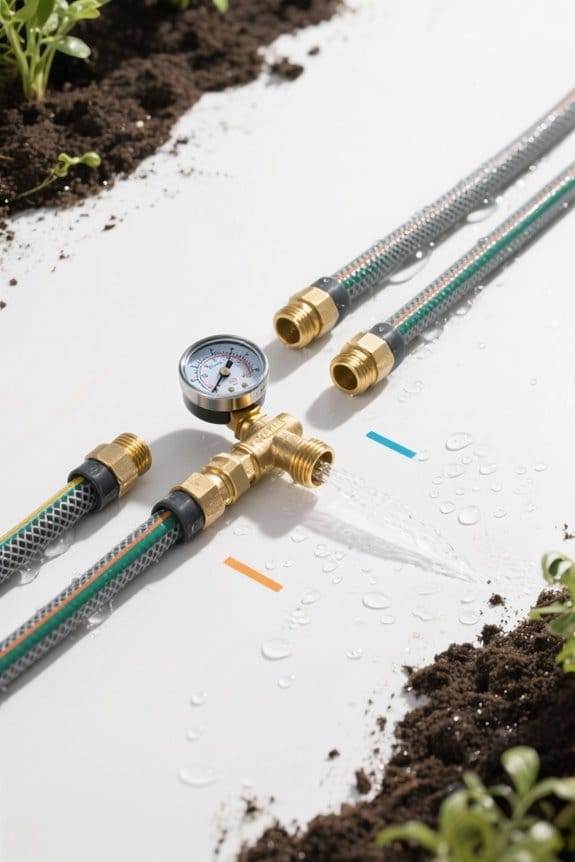
Pressure issues can frequently arise when connecting multiple soaker hoses, especially when they are arranged in series. It is recommended to limit the total length to 150 feet to maintain ideal pressure levels. High water pressure at the beginning may not effectively reach the end of longer hoses, causing dry spots in the garden. A splitter can help maintain even water distribution and minimize pressure loss within the system. Regular monitoring of pressure levels is essential, particularly when hoses are on sloped ground, as this can lead to uneven pressure. Employ flow-regulating washers only at the first connection from the water source; this strategy helps prevent excessive pressure loss through the subsequent hoses, ensuring a more consistent water supply throughout. Additionally, sufficient water pressure is crucial for optimal performance, generally requiring a range of 10-25 PSI to ensure that the soaker hose system functions effectively without causing water wastage or pressure drop.
Recommended Products

Maintains water pressure between 20-30 psi (25 psi nominal). 0-6.8 GPM (gallons per minute) flowrate. Maximum Inlet Pressure: 145 psi.
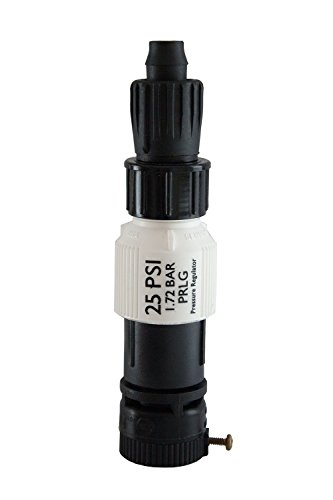
Ensure accurate and reliable drip system performance with this all-in-one faucet to drip irrigation connection kit. Connect your drip irrigation system to your water supply, keep out debris with a filter, maintain optimally low flow water pressure, and prevent backflow all with a single pre-assembled unit.

Professional-grade pressure control system maintains consistent water pressure between 20-30 PSI (25 PSI nominal) with flow rate capacity of 0-6.3 GPM, ideal for drip irrigation and soaker hose applications. Maximum inlet pressure rating: 155 PSI.
Seasonal Considerations for Soaker Hoses
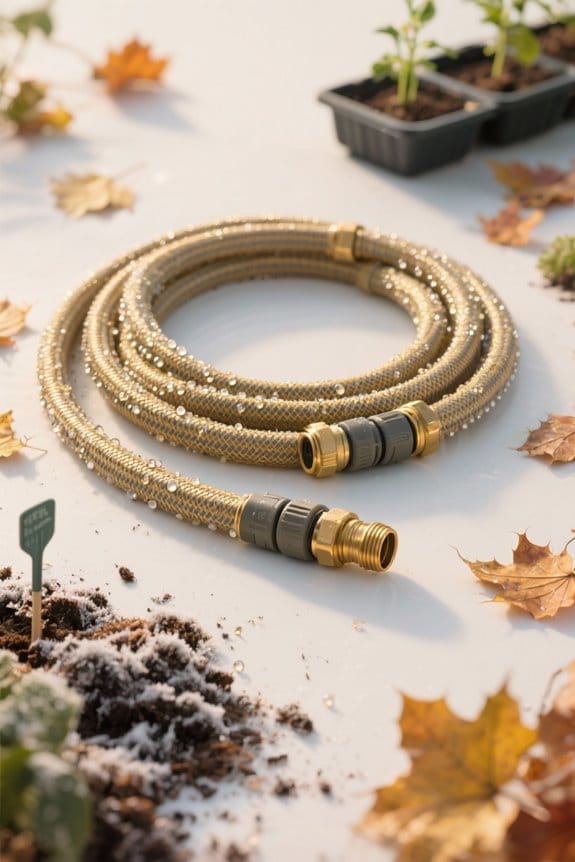
While adjusting the positioning of soaker hoses throughout the seasons may seem tedious, it is vital for achieving ideal moisture levels in gardens. Seasonal considerations for hose positioning are important and depend on weather patterns, soil moisture needs, and plant growth stages. For instance, keeping hoses in perennial beds until late fall guarantees consistent moisture during the growing season. However, winter preparation may necessitate removing or protecting hoses to prevent damage from freezing temperatures, which can cause cracks. Regular monitoring of each hose’s effectiveness is critical, as this facilitates maximum water distribution. Evaluating the hose setup annually allows for necessary seasonal adjustments for soaker hoses, improving performance in the next growing season and ultimately helping plants thrive. Utilizing eco-friendly materials in soaker hoses supports sustainable gardening practices, contributing to healthy plant growth and environmental stewardship.
Frequently Asked Questions
How Many Soaker Hoses Can You Hook Together?
Soaker hoses can typically be connected in series, up to a recommended maximum of 150 feet. For ideal watering efficiency, installation tips emphasize using splitters and avoiding mixed styles to guarantee consistent water flow.
What Is the Maximum Length for a Soaker Hose?
The maximum length for a soaker hose typically ranges up to 250 feet under ideal conditions. Understanding soaker hose materials and effective watering techniques enhances garden watering systems and fosters healthier plant growth throughout diverse landscapes.
What Is the Downside of Expandable Hoses?
Expandable hoses often suffer from reduced water pressure and durability issues, leading to uneven watering. Their usage limitations include tangling and kinking, which further compromises their effectiveness, especially over longer distances in various weather conditions.
Can You Connect Two 50 Foot Hoses Together?
Connecting two 50-foot hoses can enhance soaker hose efficiency. For example, a gardener with a sprawling layout might utilize this technique, adjusting watering practices to guarantee ideal moisture distribution across diverse plant beds and slopes.