As an Amazon Associate, we earn from qualifying purchases. Some links on this site are affiliate links at no extra cost to you. Our recommendations are based on thorough research and editorial judgment.


Edible Landscaping: Integrating Vegetables Into Flower Borders

Edible landscaping involves integrating vegetables into flower borders, enhancing both visual appeal and biodiversity. Carefully select plants with compatible growth needs, such as Swiss chard, kale, and colorful peppers. Utilize structural elements like dwarf fruit trees for dynamic layouts. Regular maintenance, including pruning and monitoring for pests, is essential for healthy growth. Implement seasonal planting strategies to maximize yields throughout the year. Explore various combinations of edible and ornamental plants to create productive and attractive garden spaces. Further insights can guide the integration process effectively.
Key Takeaways
- Combine vibrant vegetables like Candy Cane peppers and Swiss chard with ornamental flowers to enhance visual appeal and attract beneficial insects.
- Choose companion plants such as onions and herbs, which repel pests while adding color and culinary value to your flower borders.
- Assess plants’ sunlight, shade, and water needs to ensure compatibility and support healthy growth in your integrated landscape.
- Plan varied heights and seasonal plantings to create visual interest and maximize productivity within your garden space.
- Regular maintenance, including pest monitoring and pruning, is essential for supporting the health of both edible and ornamental plants.
The Beauty of Edible Landscapes
When gardeners consider the aesthetic appeal of their outdoor spaces, they often overlook the potential for integrating edible plants. An edible landscape combines colorful vegetables, like Swiss chard and kale, with ornamental plants to enhance overall beauty. Vibrant varieties, such as Candy Cane peppers and strawberries, bring visual interest while offering culinary benefits. Decorative herbs, including chives and parsley, contribute flavorful additions and charming foliage, improving garden borders. Mixing edible crops with flowering plants promotes biodiversity, attracting beneficial insects that help manage pests. Structural elements, such as dwarf fruit trees and visually appealing vegetable patches, create a dynamic garden layout that remains productive and attractive throughout the growing season, blending functionality with decorative appeal. Incorporating heirloom and organic vegetable seeds can support biodiversity and sustainability in your edible landscape, ensuring a thriving and resilient garden.
Choosing the Right Plants for Integration
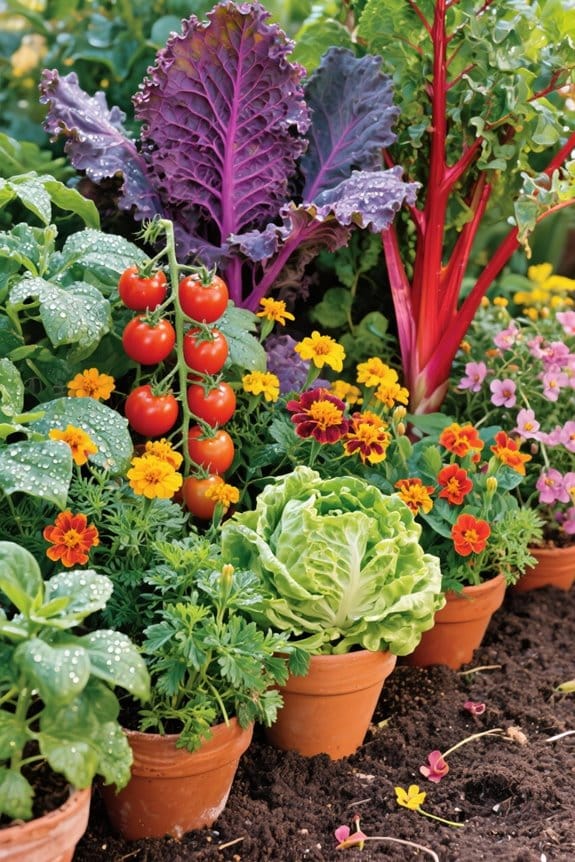
Choosing the right plants for integration into an edible landscape requires careful consideration, as specific selections can enhance both beauty and yield. Incorporate colorful edible plants such as Swiss chard and kale, which provide nutritional value with vibrant leaves. Companion plants like onions can effectively repel pests that threaten ornamental garden health. Include herbs such as chives and parsley, offering culinary benefits alongside attractive flowers. Assess the growth requirements of each plant, ensuring their sun, shade, and water needs align to promote healthy integration. Additionally, consider dwarf fruit trees and berry-producing shrubs to add structural beauty to floral arrangements while yielding delicious fruits throughout the growing season. Thoughtful selections will create a visually appealing, productive landscape. When selecting plants for your garden, consider using strip sprinkler nozzles to ensure precise watering and efficient irrigation across your landscape.
Benefits of Mixing Vegetables With Flowers

Mixing vegetables with flowers can greatly enhance both the aesthetics and functionality of a garden space. An edible garden benefits from the vibrant colors and varied textures of flowers intermixed with nutrient-rich vegetables, making the flower bed visually appealing year-round. Plants like Swiss chard and kale provide lush foliage that attracts attention while contributing to garden productivity. This combination fosters a diverse ecosystem, which attracts beneficial insects and deters common pests, promoting healthier growth for all plants. Additionally, integrating plants such as Candy Cane peppers within flowers creates confusion for pests, thereby reducing chemical pest control needs. Overall, the synergy of vegetables and flowers encourages continuous harvests and maximizes the available space in any garden setting. An efficient way to ensure optimal growth and water usage in such mixed gardens is by using a 360 Adjustable Drip Irrigation System, which provides customizable spray and enhanced water flow.
Colorful Edible Options for Your Garden
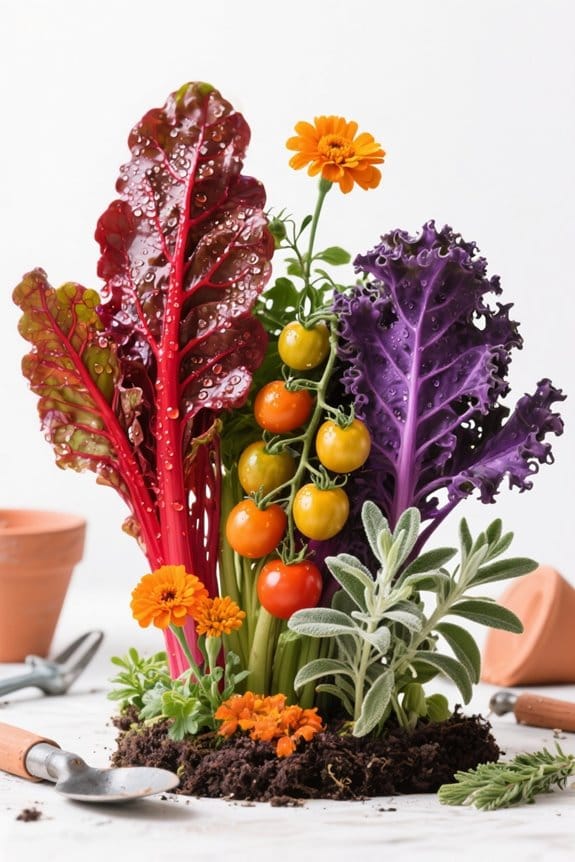
Incorporating colorful edible plants into a garden not only enhances visual appeal but also promotes sustainability and productivity. Bright Lights Swiss Chard, with its vibrant stems in pink, yellow, and coral, adds stunning visual interest while providing nutritious greens. Candy Cane Peppers shift from striped white and green to yellow, orange, and red, enhancing aesthetics with their attractive foliage. Kale contributes large, textured leaves for diverse flower beds, serving as a versatile vegetable. Strawberries, showcasing bright-red fruits and charming blooms, fit well in flowerbeds or containers, yielding delicious harvests. Additionally, mixing purple cauliflower and red basil with ornamental plants creates a landscape that is both beautiful and productive, ensuring an engaging garden experience year-round. Sweet potatoes, particularly the Beauregard variety, offer vibrant foliage and nutrient-rich tubers, making them an excellent choice for integrating into edible landscapes.
Planning Your Edible Flower Borders
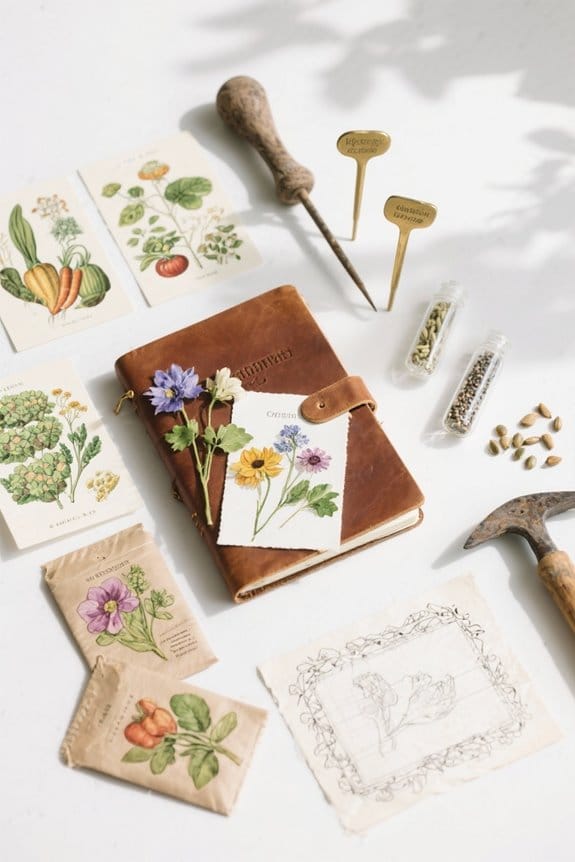
A well-planned edible flower border can transform an ordinary garden into a vibrant and productive space. To achieve this, select a mix of visually appealing edible plants, such as Swiss chard alongside vibrant candy cane peppers, guaranteeing they provide both aesthetics and nutrition. Plants should share similar requirements for light and water to promote healthy growth, yielding maximum productivity. Incorporating a variety of heights, like tall kale and low-growing chives, creates visual interest and effective layering in the flower garden design. Plan for seasonal variations by including a mix of annuals and perennials, such as strawberries and herbs, to guarantee continuous beauty and harvest throughout the growing season, enhancing the benefits of your edible landscaping project. Consider using heirloom seed kits to ensure a diverse and high-yield garden that thrives in various growing conditions.
Companion Planting for Pest Control
Companion planting serves as a strategic method for naturally managing pests while enhancing the growth of vegetables and flowers. By intentionally placing certain plants together, gardeners can create harmonious environments. For example, marigolds can be planted alongside tomatoes to repel nematodes and aphids, promoting healthier yields. Meanwhile, basil planted with tomatoes not only enhances flavor but also deters flies and mosquitoes. Additionally, onions and garlic protect roses from aphids, encouraging robust growth. When combined, carrots and onions mask carrot flies through the onion’s strong aroma, effectively reducing pest attraction. Incorporating chives around roses offers not just aesthetic appeal but functional pest control, attracting beneficial insects and safeguarding plant health in garden borders. A diverse selection of flower varieties enhances aesthetic appeal and ecological value, supporting local ecosystems by attracting pollinators.
Creative Layouts: Vertical and Horizontal Spaces
While garden design may seem overwhelming, utilizing both vertical and horizontal spaces can create a functional, aesthetically pleasing edible landscape. Vertical spaces, such as arbors and trellises, allow for climbing vegetables, including scarlet runner beans. These structures maximize space and attract pollinators. On the horizontal front, raised beds or tiered planters enhance accessibility while organizing diverse crops in layers. Grouping plants by height, with taller vegetables behind shorter flowering plants, optimizes sunlight access and enhances sightlines. Additionally, ornamental vegetables like kale and Swiss chard can provide striking visual contrasts within flower borders. Incorporating these elements not only supports high-yielding crops but also creates eye-catching focal points that enhance the overall design and interest of the garden. To further support sustainable gardening, integrating eco-friendly materials like those used in soaker hoses can promote water conservation and healthy plant growth.
Incorporating Herbs for Aromatic Appeal
Incorporating herbs into an edible landscape substantially enhances both aesthetic appeal and functional purposes, especially when considering their aromatic properties and culinary versatility. Herbs like chives, producing pale purple flowers, can add color and culinary benefits to flower borders. Fragrant border plants such as basil and mint provide sensory appeal while attracting pollinators, contributing to a thriving ecosystem. Additionally, thyme and parsley effectively fill gaps in flower beds, enhancing foliage interest throughout the growing season. Striking herbs like lavender and bee balm, known for visually appealing and fragrant flowers, further enhance mixed plantings. Groundcover herbs, including oregano and creeping thyme, suppress weeds and beautify the garden landscape, providing practical uses alongside ornamental charm. Additionally, incorporating heirloom seeds into herb gardens promotes biodiversity and sustainability, offering unique varieties that contribute to ecological balance.
Seasonal Considerations for Edible Landscapes
Planning an edible landscape requires careful attention to seasonal changes, as these fluctuations greatly affect crop yield and health. A well-designed vegetable garden benefits from timely succession planting, utilizing crops like early-spring French sorrel followed by tomatoes and squash in warmer months. Incorporating cold-tolerant plants, such as kale and Swiss chard, can extend harvests into late fall and early spring. Understanding plants’ specific light, shade, and water requirements optimizes their placement within flower borders. Additionally, employing seasonal diversity attracts beneficial insects, enhancing biodiversity while managing pests naturally. Vertical growth options, like scarlet runner beans, utilize space efficiently, provide visual interest, and yield fresh produce, ensuring that the garden remains productive and aesthetically pleasing throughout the year. The Hourleey Flat Soaker Hose is an excellent choice for efficient water conservation in edible landscapes, as it delivers moisture directly to the roots and saves up to 80% water compared to traditional methods.
Maintenance Tips for Thriving Gardens
To guarantee a thriving garden, regular maintenance practices must be established and systematically followed. Gardeners should monitor their plots for pests and diseases frequently, as combining vegetables, such as scarlet runner beans, with ornamental plants can confuse pests and limit infestations. A consistent watering schedule is recommended, especially during early mornings or late afternoons, to reduce evaporation. Periodic fertilization with organic options like compost or fish emulsion supports growth, while mulching helps retain moisture, suppress weeds, and maintain soil temperature. Additionally, pruning herbs and vegetables regularly enhances air circulation, encourages bushier growth, and improves yields. For those interested in sustainable gardening, utilizing an eco-friendly Element SoakerPRO System can efficiently deliver moisture directly to plant roots, reducing evaporation and enhancing watering effectiveness. By adhering to these maintenance tips, gardeners can ascertain not only the health of their edible plants but also the aesthetic appeal of their flower borders.
Harvesting From Your Flower Borders
Harvesting edible plants from flower borders can enhance both culinary experiences and garden aesthetics. Edible crops, such as kale and Swiss chard, offer vibrant foliage while providing nutritious produce. Herbs like chives and parsley can be snipped anytime for fresh flavor, contributing to both culinary and visual appeal. Additionally, edible flowers, including nasturtiums and marigolds, serve decorative purposes and can be harvested for salads. Incorporating vertically-growing plants, such as scarlet runner beans on trellises, optimizes space and adds vertical interest. Regular evaluations of flowering and vegetable crops help guarantee timely harvesting and prevent overcrowding, enhancing overall yield. By integrating harvesting strategies into flower borders, gardeners can enjoy both beauty and bounty in their landscapes.
Inspiring Examples of Edible Landscapes
Inspiring edible landscapes often exemplify the integration of beauty and functionality, combining ornamental plants with edible varieties to create a visually stunning garden. For example, Swiss chard adds vibrant pink, yellow, and coral stems to flower borders, enhancing color while providing nutrition. Similarly, kale’s large, textured leaves serve a dual purpose, beautifying the ornamental bed and offering culinary value. Candy Cane peppers, with their variegated leaves and colorful fruits, contribute visual appeal alongside traditional blooms. Strawberries function effectively as groundcovers, displaying bright red fruits and lovely flowers. Finally, chives, showcasing pale purple blossoms, seamlessly blend into ornamental gardens, offering both aesthetics and culinary benefits. Such combinations exemplify the principles of effective edible landscaping within diverse garden settings.
Frequently Asked Questions
What Is the Rule of 3 in Landscaping?
The Rule of 3 in landscaping emphasizes using groups of three plants to establish visual balance and create a three part harmony within design. This approach enhances aesthetic appeal while making landscapes feel more cohesive and engaging.
What Vegetables and Flowers Grow Well Together?
Companion planting techniques reveal that Swiss chard, chives, and kale thrive alongside vibrant flowers. Color combinations enhance aesthetics, benefiting gardens with Candy Cane peppers and strawberries, which attract pollinators while providing edible yields and visual delight.
What Is the 70/30 Rule in Gardening?
The 70/30 rule in gardening promotes a garden layout where 70% consists of ornamental plants and 30% of edible crops. This balance enhances aesthetics while encouraging effective companion planting for healthier, more productive gardens.
How to Integrate Edible Plants Into a Garden?
To integrate edible plants into a garden, one can employ companion planting techniques, select appropriate seasonal rotations, and ascertain plants with similar needs are grouped together for ideal growth and harmonious design.