As an Amazon Associate, we earn from qualifying purchases. Some links on this site are affiliate links at no extra cost to you. Our recommendations are based on thorough research and editorial judgment.

The Science of Soaker Hoses: How They Deliver Water to Roots

Soaker hoses, made from recycled rubber or heavy-duty PVC, feature tiny pores that allow water to seep directly to plant roots. They operate best under low pressure, maximizing efficiency while minimizing evaporation. Typically available in lengths of 25, 50, or 100 feet, they should be positioned near the base of plants and can be covered with mulch for enhanced moisture retention. Regular maintenance is necessary to prevent clogs and guarantee effective performance, leading to healthier plants and gardens. More details on setup and care follow.
Key Takeaways
- Soaker hoses deliver water directly to plant roots through tiny pores, allowing slow, even seepage.
- The hoses operate best under low water pressure, enhancing efficient moisture distribution.
- Positioned near plant bases, soaker hoses concentrate watering exactly where it’s needed most.
- Covering hoses with mulch helps retain moisture, further promoting healthy root growth.
- Regular maintenance, like flushing out clogs, ensures optimal functionality and consistent water delivery.
What Is a Soaker Hose?
A soaker hose is a specialized gardening tool designed to deliver water efficiently and effectively to plants. It features tiny pores along its length that allow water to seep out slowly, directly providing moisture to the roots. Constructed from materials like recycled rubber or PVC, soaker hoses come in various lengths, including 25, 50, or 100 feet. They operate at low water pressure, which means users do not need to fully open the spigot for effective watering, enhancing efficiency. By focusing water at the root level, soaker hoses reduce evaporation and minimize water waste, promoting healthy root growth. This irrigation system maintains soil moisture without wetting plant leaves, reducing the risk of plant diseases. UV stabilization prevents aging and cracking from sunlight exposure, ensuring the long-term durability of the soaker hoses.
How Does a Soaker Hose Work?
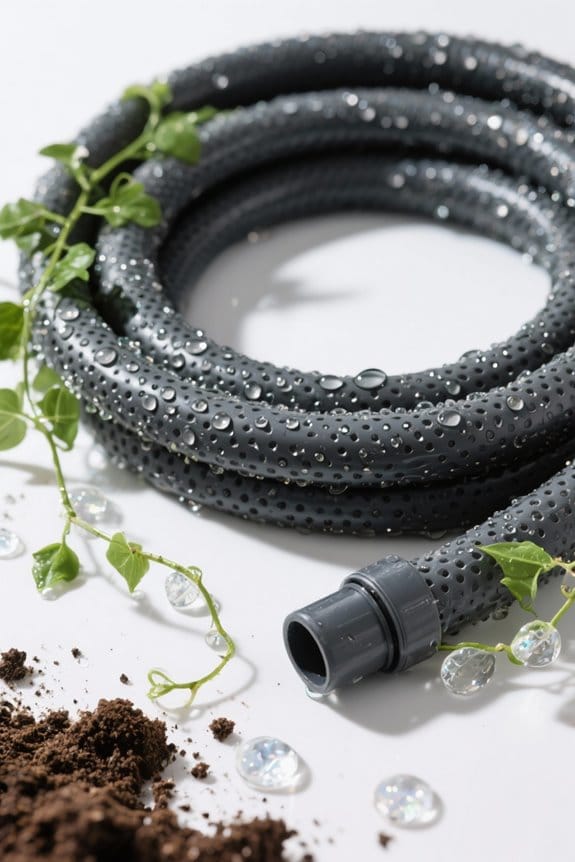
Utilizing a soaker hose can greatly enhance the efficiency of garden watering practices. Soaker hoses feature tiny pores along their length, which allow water to seep out slowly and evenly. They connect to a standard outdoor spigot and operate best under low water pressure, preventing the need for complex setups. Typically available in lengths of 25, 50, or 100 feet, these hoses can be positioned near the base of plants, delivering water directly to the root zone. The porous material maximizes watering efficiency by concentrating moisture where it is most needed and minimizing evaporation. By preventing excess moisture from reaching foliage, soaker hoses greatly reduce water waste, contributing to healthier plants and improved irrigation systems. In addition, UV-resistant materials like recycled rubber or heavy-duty PVC ensure durability and weather resistance, enhancing the soaker hose’s long-term performance.
Benefits of Using Soaker Hoses
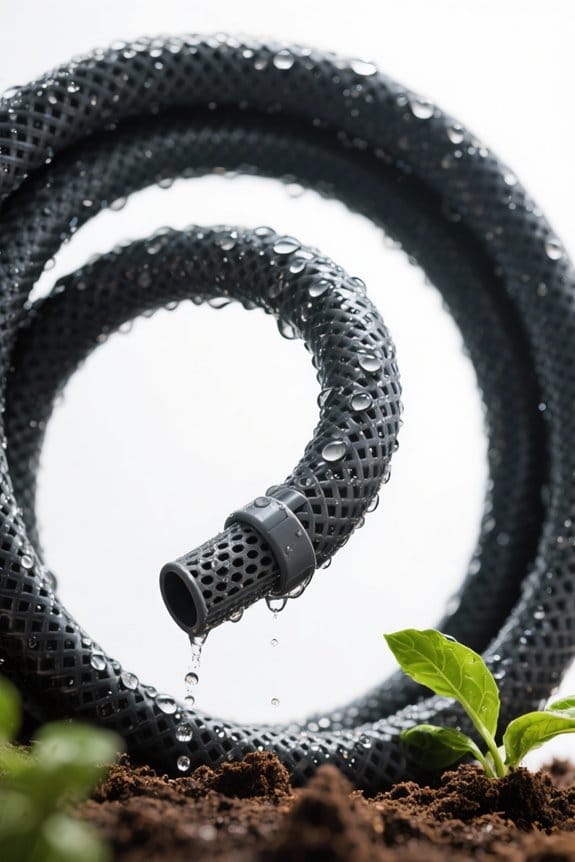
Soaker hoses offer several practical benefits that can greatly improve gardening efficiency. By delivering water directly to the root zone, these hoses maximize watering efficiency, resulting in healthier plants while reducing water waste. They function under low pressure, promoting slow, even seepage through small pores, which minimizes evaporation and runoff. Gardeners can enhance moisture retention by covering the hoses with mulch, further improving hydration for trees and other plants. Additionally, soaker hoses can be connected to timers and rain sensors, automating the irrigation process and conserving water resources. Compared to traditional methods, using soaker hoses reduces the risk of water-related diseases by preventing excess moisture accumulation on foliage, ensuring that resources are efficiently utilized. Furthermore, durable materials like recycled rubber ensure longevity and weather resistance, making soaker hoses a reliable choice for sustainable gardening.
Setting Up a Soaker Hose System
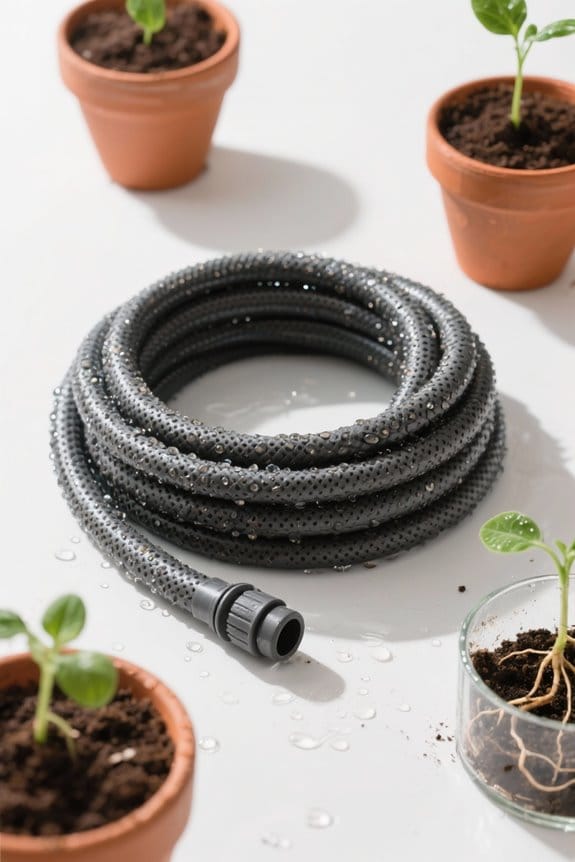
Establishing a soaker hose system requires careful planning and measurement to confirm efficient watering throughout the garden. First, measure the garden area to determine the necessary hose length. When laying out the soaker hoses, position the capped end at least 1 foot away from small trees and 2 feet from larger trees to guarantee effective water distribution to trees and shrubs. Use garden pegs to secure the hoses in place, and consider hose splitters for larger areas requiring multiple hoses. Initially, run the system for 10 to 15 minutes to establish steady water dispersal. Regularly check the hoses for clogs or damage, and consider a timer with a rain sensor to optimize water usage and automate watering schedules effectively. For additional options, evaluate eco-friendly systems like the Element SoakerPRO System, which efficiently delivers moisture while reducing evaporation.
Measuring Water Output and Soil Moisture
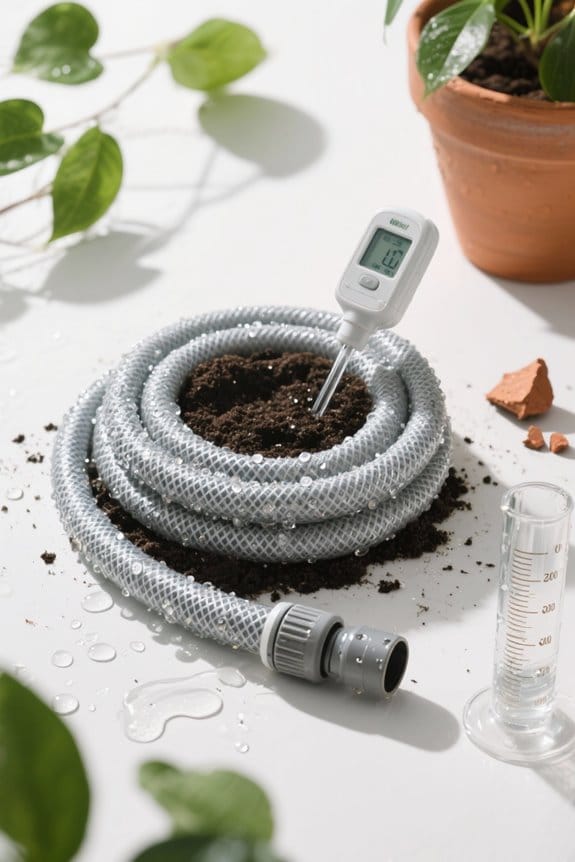
How can gardeners guarantee their soaker hoses effectively deliver the right amount of water? First, measuring water output is essential; this can be done by placing a soaker hose in a bucket for one hour to collect water and record the volume. Typically, soaker hoses output is rated in gallons per foot per hour, varying by diameter and manufacturer. To verify adequate soil moisture, check the depth of moisture penetration, aiming for at least 2 inches around the hose. For herbaceous plants, water should seep 6 to 8 inches deep, while woody trees and shrubs require even deeper soaking. Regularly monitoring soil moisture is critical to avoid over or under-watering, guaranteeing that water reaches the roots efficiently. Soaker hoses operate optimally under water pressure requirements between 10-25 PSI, ensuring that the water flow is consistent and efficient for deep soil penetration.
Maintenance and Troubleshooting Tips
Regular maintenance of soaker hoses is crucial for guaranteeing ideal watering performance. Homeowners should regularly inspect their hoses for clogs and damage, as mineral deposits and soil can accumulate in the pores, disrupting water flow. To maintain prime functionality, it is advised to flush the hose periodically by running water through it at a higher pressure, ideally around 60 psi, for several minutes. Additionally, verify that hoses are not kinked or twisted during setup, as these conditions can restrict water flow, leading to uneven watering. Selecting a soaker hose made from UV-resistant materials can enhance its durability and reduce the need for frequent replacements. If persistent pressure issues or markedly reduced water output occur, replacing the soaker hose every few seasons is recommended to sustain efficient irrigation and healthy plant growth.
Frequently Asked Questions
Do Soaker Hoses Distribute Water Evenly?
Soaker hoses indeed distribute water evenly, enhancing irrigation efficiency and promoting soil moisture. By regulating pressure, they guarantee consistent delivery, ultimately benefiting plant health and mitigating concerns about uneven saturation in diverse soil types.
Which Irrigation Method Uses Perforated Hoses to Deliver Water Directly to the Soil or Plant Roots?
Drip irrigation utilizes perforated tubing to deliver water directly to soil and plant roots. This method promotes water conservation, minimizes waste, and enhances efficient irrigation, making it a valuable tool among modern garden tools for peak growth.
Do Plant Roots Absorb Water at Night?
Yes, plant roots absorb water at night, benefiting from heightened root system activity. This nighttime water absorption supports moisture retention techniques, enhancing plant efficiency gains while aligning with circadian rhythms impacting hydration levels during the day.
How Does a Soil Soaker Hose Work?
A soil soaker hose works by utilizing low water pressure to release moisture through tiny pores. Proper installation tips and regular maintenance practices enhance efficiency, especially when comparing hose materials for different garden environments.