As an Amazon Associate, we earn from qualifying purchases. Some links on this site are affiliate links at no extra cost to you. Our recommendations are based on thorough research and editorial judgment.

Creating a Seed Starting Schedule Based on Your Frost Date

To create a seed starting schedule based on frost dates, first determine your last frost date using local frost calculators. Typically, plan to start frost-sensitive crops indoors 6-8 weeks before this date. For cold-tolerant vegetables, direct sow 2-4 weeks before the last frost. Use seed packets for specific guidance on planting times. Monitor weather forecasts for late frost risks, and prepare protective measures like row covers or mulch. Further insights into plant timing and care can enhance your gardening success.
Key Takeaways
- Determine your local last frost date using frost date calculators to establish a starting point for your planting schedule.
- Identify which vegetables you want to grow and check seed packets for recommended seed starting weeks before the last frost date.
- For frost-sensitive crops, plan to start seeds indoors 6-8 weeks before the last frost date to ensure healthy seedlings.
- For cold-tolerant vegetables, direct sow seeds 2-4 weeks before the last frost date for optimal growth.
- Create a digital calendar or use reminders to track seed starting dates, transplanting dates, and necessary hardening-off periods.
Understanding Frost Dates and Their Importance
Understanding frost dates is crucial for gardeners aiming to optimize their planting schedules, as these dates signal the average last light freeze in spring and the first freeze in fall. The last frost date plays a critical role in determining when it is safe to start planting tender crops, which are more susceptible to cold. By consulting a frost date calculator, gardeners can pinpoint specific frost dates based on their hardiness zone. Developing a planting schedule that incorporates local frost dates can protect seedlings from the risk of frost. Additionally, understanding different frost types—light, moderate, and severe—enhances vegetable gardening strategies. Monitoring local microclimates also guarantees adjustments are made, particularly for seed starting and cold stratification processes. To create a serene outdoor space, incorporating solar-powered LED light options can enhance garden ambiance while emphasizing sustainability.
Calculating Your Last Frost Date

How can a gardener determine the ideal time to plant without risking frost damage? The last frost date offers a critical reference point. This date represents the average last occurrence of light freezes, which varies by location; for example, it is March 15 in Atlanta and around May 8 in Nova Scotia. Using frost date calculators, gardeners can pinpoint their local last frost date, aiding the planning of their planting calendar. This guarantees timely seed starting, especially for sensitive to cold plants. It is essential to monitor weather forecasts for unexpected frosts, even after the last frost date. Gardeners should be prepared with protective measures, such as row covers or frost blankets, available after evaluating the total risk for frost damage on seedlings. Additionally, garden kneelers and seats can provide comfort and support for gardeners when preparing their planting areas, especially for those who experience joint pain.
Recommended Products

Cold-Weather Plant Protection: Medium-weight fabric helps shield annuals, bedding plants, vegetables, and young garden plants from frost and freezing temperatures during colder months

3m (117") x 33.3m (109'), will shrink approximately 5% crosswise and 6% lengthwise over time

Cold-Weather Plant Protection: Medium-weight fabric helps shield annuals, bedding plants, vegetables, and young garden plants from frost and freezing temperatures during colder months
Preparing Your Planting Schedule

To effectively prepare a planting schedule, gardeners should begin with establishing their last expected frost date, which will shape all subsequent planting decisions. Following this, it is essential to compile a list of desired vegetables, noting specific seed starting and transplanting dates based on the frost date. Utilizing seed packets can inform gardeners about the recommended number of weeks before the last frost date for starting seeds indoors or for direct sowing outdoors. Gardeners may benefit from incorporating reminders in a digital calendar to keep track of important planting tasks. Furthermore, consulting local extension offices or gardening resources can provide tailored advice on frost dates and appropriate planting times suited to their specific region, enhancing their planting schedule’s effectiveness.
Recommended Products

All-Weather Durability: Pro-Tect tested and proven to withstand up to 9,200 pounds or 30 inches of snow load, and winds up to 100 mph (product must be anchored as specified in the Backyard Discovery instruction manual); Patent pending

🌱 Unmatched Growth Environment:Engineered for serious gardeners, our 4mm twin-wall polycarbonate panels create the perfect sanctuary for your plants. Virtually shatter-resistant, they expertly balance protection and growth by blocking 99.9% of harmful UV rays while allowing 70% light transmission. This diffusion prevents plant burn and extends your growing season, keeping your garden thriving year-round.

REDEEM 36 SEEDLING CREDITS: Includes a unique QR code to redeem 36 seedling credits for pesticide free, non GMO vegetables, herbs, leafy greens, fruits, and lettuce so you can start growing faster with pre grown seedlings.
Timing for Direct Sowing vs. Starting Indoors
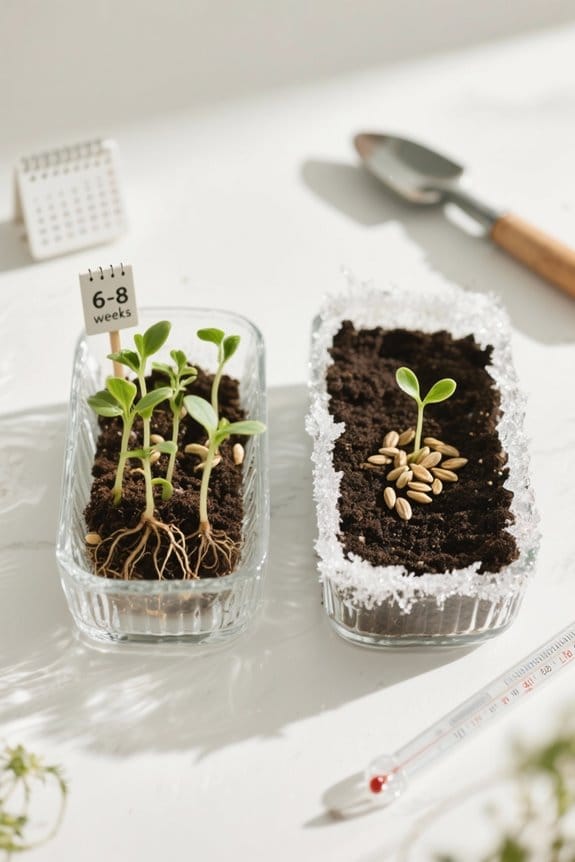
When deciding between direct sowing seeds and starting them indoors, gardeners must consider the specific requirements of their chosen crops. Seeds for frost-sensitive crops should be started indoors 6-8 weeks before the last expected frost date to guarantee successful transplanting. Conversely, cold-tolerant vegetables can be directly sown as soon as soil conditions permit, typically 2-4 weeks before the frost date. It is imperative for gardeners to consult seed packets for specific guidelines regarding start dates. Additionally, indoor seedlings require a hardening off period of about one week prior to outdoor planting, allowing them to acclimatize to external conditions. This process minimizes transplant shock and promotes healthier growth in the garden. Sorting out these timing nuances is vital for peak planting success. For those looking to establish a lawn, choosing a grass seed mix that thrives in your climate can complement your gardening efforts, as seen with options like the Scotts Turf Builder Grass Seed Sun & Shade Mix which is effective in full sun and dense shade.
Recommended Products

Food plot seed blend contains four even mixed parts of ladino, white, red, & crimson clover seeds.

VERSATILE BIENNIAL FORAGE CROP: Our Alsike Clover Seed offers a flexible solution for hay, grazing, and pasture mixes, making it an ideal choice as deer food plot seed, and diverse agricultural needs. Growing at 24 to 48 inches tall, its adaptability makes it especially useful in cooler regions, performing reliably as a short-lived perennial often treated as a biennial.

ATTRACTS DEER & WILDLIFE WITH LOW MAINTENANCE: Our deer food plot seed is specially formulated to attract whitetail deer and other wildlife, our mix supports healthy herd development with minimal upkeep. Once established, it requires little maintenance, allowing for hassle-free food plot management, making it ideal for both small and large-scale projects.
Essential Crops to Start Early

Starting crops early can markedly enhance the gardening season, especially when selecting the right varieties for early sowing. Home gardeners can begin planting vital vegetables like carrots, beets, and peas 10-12 weeks before the spring frost date, allowing for an early spring harvest. Additionally, cool-season crops such as spinach and arugula should be sown 6-8 weeks prior to the last expected frost date, benefiting from cooler soil temperatures. Hardy annuals like larkspur and bachelor buttons can be started 12-14 weeks before the frost date, ensuring robust root systems. Garlic, shallots, and onions are best sown around the first frost date for successful overwintering and early yields. Monitoring local frost dates remains essential for timing the sowing of sensitive crops accurately. For gardeners looking to rejuvenate damaged areas, using a grass seed mix like Scotts Turf Builder Tall Fescue Mix during early planting times can help achieve quick growth and lush lawns.
Recommended Products

Non-GMO Bulk Midwest Wildflower Seed Mix 25 Species of Wildflower Seeds

Non-GMO Bulk Calendula Seeds - Fancy Mix Calendula officinalis

100% Pure, Non-GMO Seeds - No fillers, favorites only! Includes 25 easy-to-grow species: Cornflower Dwarf Blue, Shasta Daisy, Dames Rocket, Catchfly, Sweet William, Candytuft, Cornflower Tall Blue, Lance Leaf Coreopsis, Mixed Red Shirley, Wild Cosmos, Blanket Flower, Black Eyed Susan, Wild Perennial Lupine, Purple Coneflower, Russel Lupine, Plains Coreopsis, Siberian Wallflower, Blue Flax, Scarlet Flax, Annual Red Phlox, Cosmos Bright Lights, Gloriosa Daisy
Protecting Your Seedlings From Late Frost
Protecting seedlings from late frost is essential for guaranteeing a successful gardening season. Gardeners should monitor weather forecasts closely to anticipate the first frost dates, allowing for timely protection of frost-sensitive crops. Lightweight covers such as row covers or frost blankets can provide effective insulation against cold snaps. For an economical option, DIY cloches made from empty milk or water jugs with their bottoms removed can shield vulnerable seedlings. Additionally, incorporating mulch around seedlings retains soil warmth and protects roots from potential frost damage. It is advisable to have a provisional plan ready for protection, especially if planting occurs near the last expected frost. These measures help guarantee healthy growth throughout the gardening season. Venetian bronze lights can add a touch of elegance and sophistication to your garden space, enhancing its overall appeal while ensuring style compatibility with your home decor.
Recommended Products

COMPLETELY COVERS YOUR PLANTS & ALLOWS THEM TO BREATHE: The smaller sizes work great for smaller or individual plants and shrubs, the larger sizes work great for wrapping trees or used as row covers. They are made from industrial grade non woven polypropylene fabric, making the fabric permeable and allowing your plants to breathe, but effectively trapping heat and keeping your plants warm.

You are purchasing 500 natural bamboo canes. Length 3' x 3/8" Diameter, 8-10mm

Thickened Frost Cloth -- This plant frost cover is made of lightweight, breathable, and durable 1.5 oz/yd non-woven polypropylene fabric.
Adjusting Your Schedule for Climate Variability
Adjusting planting schedules due to climate variability is increasingly important for successful gardening. As last frost dates become less predictable, gardeners must consider local conditions when determining seed starting times. For instance, Atlanta’s last frost date is March 15, while Nova Scotia’s occurs on May 8. Utilizing a frost date calculator can help tailor schedules based on regional climate data and microclimates. It is advisable to monitor soil temperatures regularly; hardy crops thrive at 50-55°F, while tender crops prefer 60°F or higher. Provisional plans, such as row covers, can protect seedlings once the average frost date has passed, thereby enhancing resilience against unexpected late frosts, ensuring a fruitful growing season amidst climate variability challenges. To further optimize outdoor spaces, incorporating low voltage path lights can enhance both safety and aesthetics, ensuring a beautiful garden ambiance even during unpredictable weather conditions.
Frequently Asked Questions
When to Plant Based on Frost Date?
To determine ideal planting times, one must consider frost date determination, including frost-resistant crops, indoor seedling growth, seed variety selection, transplant timing, and regional gardening practices influenced by weather patterns and proper soil preparation for outdoor planting.
Did Scientists Germinate a 32,000 Year Old Seed?
Yes, scientists celebrated the successful germination of ancient seeds, showcasing impressive seed viability through innovative preservation techniques. These germination experiments from the Arctic tundra illuminate plant genetics and historical agriculture amid climate change challenges.
What to Plant 4 Weeks Before the First Frost?
Four weeks before the first frost, gardeners can plant seed varieties like garlic and spinach in planting containers. Proper soil temperature, pre-soaking seeds, managing pests, and a consistent watering schedule enhance germination rates and guarantee healthy growth.
What to Start 12 Weeks Before the Last Frost?
Twelve weeks before the last frost, gardeners should start seed varieties like snap beans, cucumbers, and summer squash. Effective soil preparation, indoor germination practices, and careful seedling care guarantee successful transplant timing and pest management.