As an Amazon Associate, we earn from qualifying purchases. Some links on this site are affiliate links at no extra cost to you. Our recommendations are based on thorough research and editorial judgment.

Drip Tape vs. Soaker Hoses: Which Is Better for Row Crops?

Drip tape, made of collapsible polyethylene with emitters 12 inches apart, delivers about 0.4 gallons of water per minute per 100 feet directly to crop root zones. This targeted method promotes consistent moisture and reduces water waste. In contrast, soaker hoses, which are porous, often result in uneven watering and require more maintenance. Drip systems typically last 10-15 years, while soaker hoses last only 1-3 years. Exploring various irrigation options can provide further insights into effective farming practices.
Key Takeaways
- Drip tape delivers consistent water directly to the root zone, while soaker hoses often provide inconsistent moisture due to their porous nature.
- Installation of drip tape requires specialized tools, offering customizable water delivery, unlike the easier setup of soaker hoses.
- Drip systems are designed to last 10-15 years, while soaker hoses typically need replacement every 1-3 years due to clogs and degradation.
- Drip tape conserves water effectively, potentially reducing water bills by up to 30%, making it more cost-efficient in the long run.
- Regular maintenance of drip systems ensures optimal performance, whereas soaker hoses are more susceptible to clogs that impair their function.
Understanding Drip Tape and Soaker Hoses
When considering irrigation options, understanding the differences between drip tape and soaker hoses is essential for achieving ideal watering results. Drip tape consists of collapsible polyethylene tubing equipped with emitters spaced 12 inches apart, providing consistent water delivery. It outputs approximately 0.4 gallons per minute per 100 feet, targeting the root zone of crops effectively. In contrast, soaker hoses are constructed from porous materials that allow water to seep out, potentially leading to inconsistent water output. While their lower initial cost is attractive, soaker hoses often do not provide equal distribution, risking both overwatering and underwatering. Regarding efficiency and durability, drip tape presents a more reliable choice for systematic irrigation, ensuring adequate soil moisture throughout the growth stages. Additionally, heavy-duty fittings, like copper connectors, contribute to the overall performance and longevity of soaker hoses.
Recommended Products


3/4" Mainline Tubing Allows Higher Flow and Longer Rows
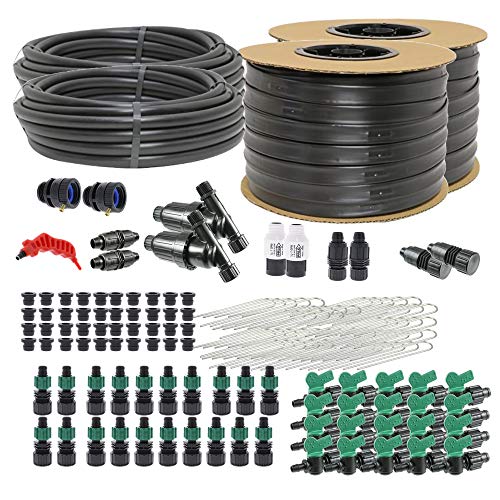
Timer Compatible : Yes; Rain Barrel Compatible : Yes; Expandable : Yes; Average Assembly Time : 60 + min.; Operating Pressure : 10-15 PSI; Maximum Flow Capacity : 480 GPH;
Installation and Setup Comparison

The installation and setup of drip tape and soaker hoses present distinct advantages and challenges for gardeners. Drip tape installation requires a specialized laying tool, like a Double Wheel Hoe, facilitating efficient placement along crop rows. This method allows for individual control of water delivery through row starter valves, enhancing customization for various plants. Additionally, drip tape can be buried under mulch to reduce evaporation. Conversely, soaker hoses are simpler to install, typically being laid directly on the soil surface, though they often need adjustments for ideal coverage. While drip tape systems adapt to seasonal changes and different row configurations, soaker hoses work best in static, level layouts, making a clear distinction in efficiency and practicality for gardeners. Many water timers, like the RAINPOINT Water Timer, allow for easy management of multiple zones and customized watering schedules, making them compatible with both drip tape and soaker hose systems.
Recommended Products
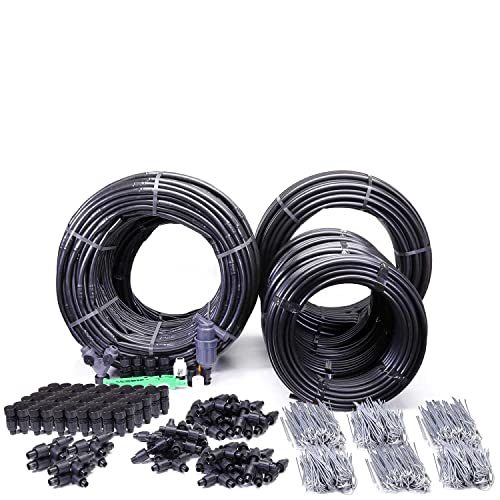

Along with 20 x Drip Tape Row Starts + 20 x Drip Tape End Plug + 3 x Drip Tape Couplers + 10 x 1/4" Goof Plugs (1 x 10 pack) + 1 x Punch Tool + 100 x 1/2" Hold Downs - (1 x 100 pack) + 1 x Galcon Bluetooth Flip Open LCD Timer + 1 x Galcon Alternator Valve + 2 x 10 PSI Pressure Regulator. Ideal for Row Crops and Garden Beds needing low pressure, low volumes of water.
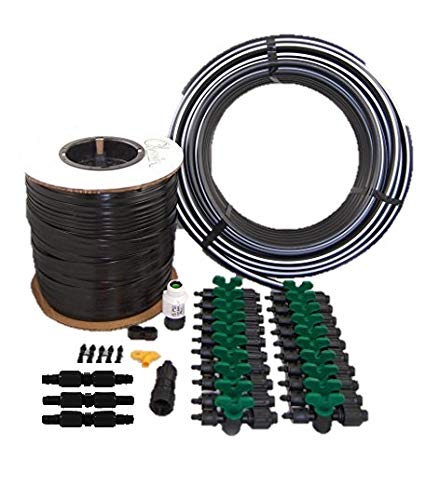
Truck Farmers Garden Kit - Complete watering system for your vegetable garden.
Watering Efficiency and Effectiveness

Watering efficiency and effectiveness are essential factors in selecting between drip tape and soaker hoses for garden irrigation. Drip irrigation systems deliver water directly to the root zones at a consistent rate of 0.4 gallons per minute per 100 feet, optimizing moisture distribution. This targeted approach enhances water conservation by minimizing evaporation losses, unlike soaker hoses, which often lead to uneven watering. Additionally, pressure compensating emitters guarantee uniform distribution, reducing wet spots that promote weed growth. The durability of drip tape systems, lasting 10-15 years, contrasts with the 1-3 year lifespan of soaker hoses. This longevity further establishes drip tape as a superior choice for maintaining watering effectiveness in vegetable gardens across various conditions. Dragonfly solar lights are another eco-friendly option for garden enhancement, offering durable and waterproof illumination that can complement irrigation systems by enhancing garden aesthetics.
Recommended Products


Efficient and Uniform Watering: Our 5/8" Drip Tape, with a generous 3281FT length and 6" spacing roll, is designed for precise watering. Each hole in the tape emits a consistent 0.75 GPH (Gallons Per Hour), ensuring your flowers, plants, and fruits receive the perfect amount of water for optimal growth and health

Seamless construction provides maximum strength
Maintenance and Longevity

Maintaining garden irrigation systems is essential for ensuring long-term efficiency and performance. Drip irrigation systems typically have a lifespan of 10-15 years, while soaker hoses last just 1-3 years due to wear and tear. Regular maintenance, including inspections for leaks and checking emitter functionality, is vital for the longevity of drip systems. These systems are designed to resist clogs, enhancing water delivery effectiveness. In contrast, soaker hoses are more vulnerable to clogs and degradation from UV exposure. If a soaker hose is damaged, it often requires complete replacement, whereas drip systems can be quickly repaired with replacement parts. Ultimately, proper maintenance improves the effectiveness and durability of the irrigation system in use. Soaker hoses, often made from recycled materials, provide an eco-friendly option for sustainable gardening while promoting water conservation.
Recommended Products


WI-FI CAPABLE SMART CONTROL WITH HYDRAWISE: Upgrade to Wi-Fi with the plug-in WAND module (sold separately), connect to Hydrawise software for remote irrigation management, monitor and adjust watering schedules anytime from your smartphone or desktop.
Cost Analysis and Long-term Benefits
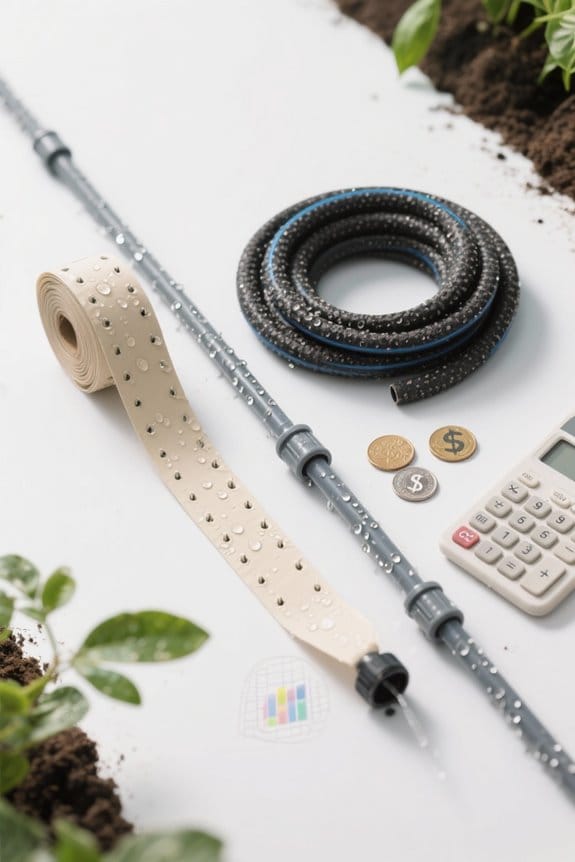
Cost analysis reveals important differences between drip tape and soaker hoses with respect to initial investment and long-term benefits. Drip systems typically require a higher initial investment, but they provide significant long-term savings due to their water efficiency. A drip tape system can reduce water bills by up to 30% compared to traditional methods, thanks to its targeted delivery of water, which minimizes waste. Soaker hoses, while cheaper upfront, often face issues like clogging and need replacement every 1-3 years, leading to increased maintenance costs. In contrast, with proper care, drip tape can last 5-7 years, promoting consistent plant health and reducing labor costs. As a result, overall cost considerations favor drip systems for sustainable farming practices. Additionally, UV-resistant materials used in drip systems ensure prolonged durability, making them ideal for changing climates.
Recommended Products

High-Quality Material: Professional quality drip hose made by high quality, UV resistant materials, unmatched resistance to chemicals. Be a Gardening Master with the help of our superior and complete Drip Tape Row Irrigation Kit: 2 x 1,000' Rolls Low-Flow Drip Tape + 1 x 100' Roll 1/2" Mainline Tubing + 1 x Home Garden Filter + 2 x 1/2" Easy Loc Female Hose Beginnings + 2 x 1/2" Easy Loc Couplers.

Along with 1 x 1/2" Figure 8 End + 10 x Drip Tape Row Starts + 10 x Drip Tape End Plug + 1 x Drip Tape Coupler + 10 x 1/4" Goof Plugs (1 x 10 pack) + 1 x Punch Tool + 20 x 1/2" Hold Downs - (2 x 10 pack) + 1 x Galcon Bluetooth Flip Open LCD Timer . Ideal for Row Crops and Garden Beds needing low pressure , low volumes of water.

Dual-Zone Wireless Water Timer with Weather-Adaptive Control – Manage two independent watering zones with one device, replacing two G2S timers. Control your irrigation system remotely via mobile/web apps, with automatic weather-based adjustments for water conservation
Frequently Asked Questions
Is Drip Tape Better Than Soaker Hose?
Drip tape often outperforms soaker hoses with respect to drip efficiency, durability, and crop yield, benefiting soil health and weed control while offering better water conservation. However, installation ease and user preference can influence choice.
Which Is the Best Method of Irrigation for Row Crops?
“Water wisely, reap abundantly.” The best method for row crop irrigation combines soil moisture monitoring, water conservation techniques, and efficient nutrient delivery methods, enhancing crop growth efficiency while minimizing irrigation system maintenance and costs for drought-resistant crops.
What Is the 30/30 Rule for Drip Irrigation?
The 30/30 rule enhances drip efficiency by applying 30 gallons per hour every 30 feet, optimizing soil moisture, promoting water conservation, improving crop health, facilitating effective irrigation scheduling, and maximizing yield impact with proper system maintenance.
What Is Better for Watering Garden Soaker Hose or Drip Line?
Drip lines deliver up to 90% water efficiency, outperforming soaker hoses in garden watering. While soaker hose benefits include simplicity, drip line efficiency promotes better crop moisture, enhances plant growth, and optimizes irrigation costs and soil health.